
The Pentagon didn't just fire three journalists at Stars and Stripes on August 21. It sent a message: report on what this war is actually doing to American service members, and you're gone.
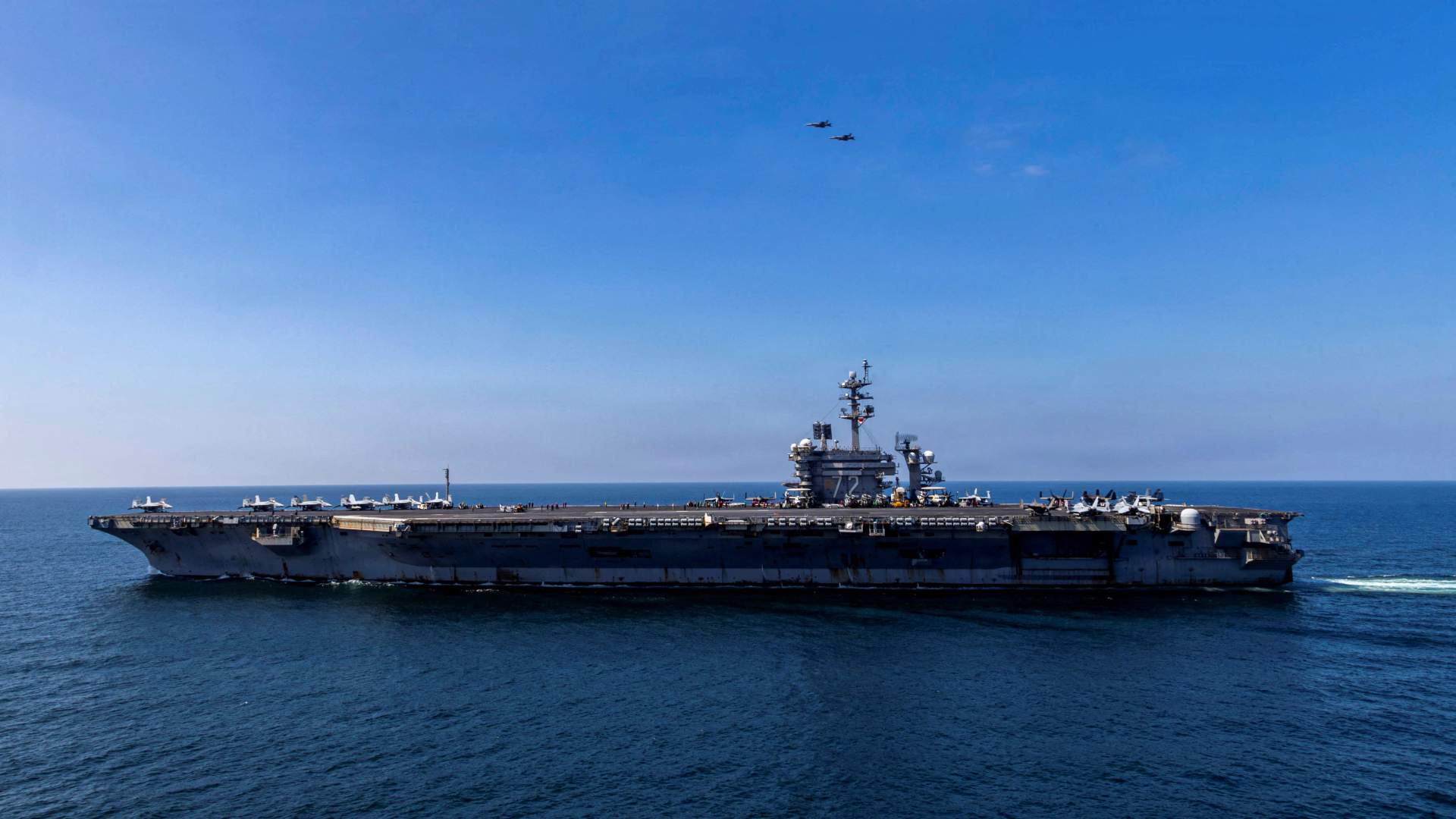
Editor-in-Chief Erik Slavin, Publisher Max Lederer, and Middle East correspondent Lara Korte were terminated after the military newspaper published an August 11 report documenting the deteriorating conditions aboard the USS Abraham Lincoln — an aircraft carrier that had been at sea for 250 consecutive days, supporting combat operations against Iran with no end in sight. The story described what those 5,000 sailors had been enduring: food and water shortages, disrupted mail service, broken plumbing, moldy showers, and a mental health crisis so severe that multiple sailors had attempted to jump overboard.
The Pentagon's response was not to investigate the conditions. It was to kill the messenger.
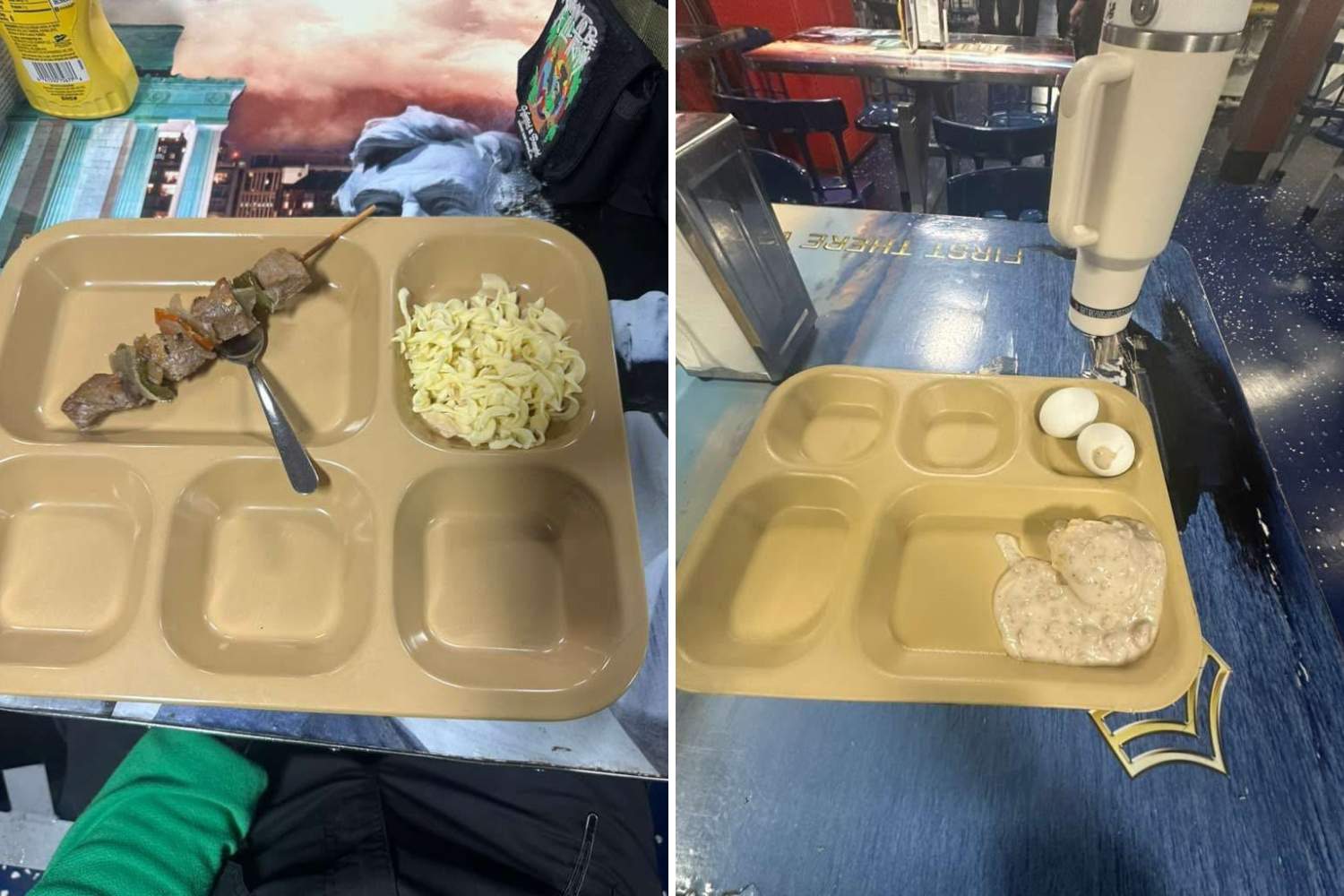
Two photos of food trays shared by family members showing small, inadequate meal portions served to sailors aboard the USS Abraham Lincoln during combat operations.
The Reporting That Got Them Fired
Stars and Stripes had been building toward this story for months. In April, photos emerged from sailors aboard the Lincoln showing meals reduced to what Rep. Mike Levin described as "half a cup of rice and two tortillas." Images shared with family members and obtained by USA Today depicted a mid-April dinner consisting of a small handful of boiled carrots, a dry meat patty, and a gray slab of processed meat — portions that would barely sustain a person, let alone a sailor working 18-hour combat shifts. The Navy responded by staging photographs of fresh meals and shipping them to Fox News, a PR counteroffensive that did nothing to address the underlying supply chain collapse.
In August, the situation had metastasized beyond food. Lara Korte, Stars and Stripes' Middle East correspondent, reported on an emotional town hall meeting in San Diego where roughly 200 military spouses confronted Acting Navy Secretary Hung Cao and senior officials. One spouse tearfully told the room she had received a text from her husband that day saying "he hopes he doesn't wake up tomorrow."
Korte's reporting, corroborated by the Navy Times, revealed that multiple sailors had attempted to jump overboard. Annabelle Loma told the Navy Times that her husband had tried to go over the side after his deployment kept being extended with no explanation. Another sailor's wife described her husband physically restraining a crewmate who was attempting to jump. Stars and Stripes agreed to withhold the identities of all active-duty sailors and spouses who spoke, citing fears of reprisal.
The ship had been redirected from a Pacific deployment in November to the Middle East after the U.S.-Israel war with Iran erupted. It was originally scheduled to return in May. By August, the crew had spent only two days on land in nine months — a brief stop in Guam in December and another in Oman in July, where many sailors were confined to a secure compound and couldn't leave. A sailor told Stars and Stripes that morale had collapsed: "Nothing to really look forward to at this point. All we want is a date home."
The Day After
The August 11 report was published on a Monday. According to the federal lawsuit filed on August 27, the Pentagon ordered Lederer to fire Slavin and Korte the very next day — Tuesday, August 12. The official rationale was "insubordination," tied to a CBS Sunday Morning interview from July 5 in which Slavin had stated that censorship of news for service members would constitute a "red line" he would not cross. Korte had appeared in the same segment, saying she worked for Stars and Stripes — "not for the Pentagon or for any administration or policymaker."
But the timeline tells the real story. The Pentagon took no action for five and a half weeks after the CBS interview aired. The day after Stars and Stripes published its USS Abraham Lincoln investigation, the firing orders came down. As the complaint puts it: "the spark that moved [the Pentagon] to act" was the Lincoln report, not the television appearance.
Lederer refused to comply with the order. Instead, he announced his retirement. The Pentagon fired him anyway, accelerating his separation before his planned September 30 departure. Navy Capt. William Urban, an active-duty officer, had already been installed as a new "military deputy to the publisher" without Lederer's knowledge — effectively placing the paper under direct military control.
A Year of Dismantling
This didn't come out of nowhere. The Trump administration has been methodically stripping Stars and Stripes of its independence since taking office — part of a broader assault on press freedom that has seen the Justice Department weaponized against journalists and the president himself call for treason charges against reporters covering the Iran war.
In March 2026, the Pentagon outlined a "modernization" overhaul that barred the paper from using certain wire services and running comics and syndicated features. Content, the memo stated, must be consistent with "good order and discipline" — a phrase borrowed from the Uniform Code of Military Justice, typically used to govern soldier conduct, now repurposed to regulate what a newspaper can print.
In April, the Pentagon fired Jacqueline Smith, the Stars and Stripes ombudsman — a position established by Congress in 1991 specifically to safeguard the paper's editorial independence. She was dismissed without explanation. The Defense Department had earlier labeled the publication "woke," a rhetorical weapon in the broader culture war that Hegseth and his allies have been waging against any institution that refuses to serve as a propaganda organ.
Stars and Stripes was founded during the Civil War. It has reported on American troops in every major conflict since — through two World Wars, Korea, Vietnam, Iraq, and Afghanistan — with a congressionally mandated guarantee of editorial independence. That guarantee was designed to prevent exactly what is happening now: the military chain of command deciding what service members are allowed to know about their own conditions.

Screenshot from a sailor's video showing grimy shower and toilet conditions aboard the USS Abraham Lincoln during its extended combat deployment.
What They Don't Want You to See
The conditions documented aboard the Lincoln are not in dispute. They are corroborated by multiple independent sources: sailors themselves, their families, members of Congress, military health experts, and now, video evidence.
In mid-August, a sailor posted footage from inside the carrier showing clogged and overflowing toilets, grimy shower stalls with stained floors, and deteriorating living spaces. The sailor described conditions as "atrocious," asking in disbelief: "Y'all expect me to take a doo-doo in this, y'all?" The footage spread rapidly on social media before being removed from TikTok.
Rep. Jason Crow, a former Army Ranger who served in Afghanistan and Iraq, warned that the strain on Lincoln's crew was "building week by week." A 2025 military medical study published in Military Medicine found that nearly half of deployed sailors reported inadequate mental health support, concluding that "given the high rates of military suicide, including within the navy, efforts to improve healthcare access on ships are urgently needed."
Vice Adm. Curt Renshaw, commander of U.S. Naval Forces Central Command, acknowledged at a separate town hall regarding evacuated Bahrain families that "we literally have been making this up as we go, because nothing is conceived to go on this length of time." The same chaos governing the evacuation of 1,300 military family members from Bahrain — now entering its seventh month with no return timeline — has been the operating reality for the Lincoln's crew.

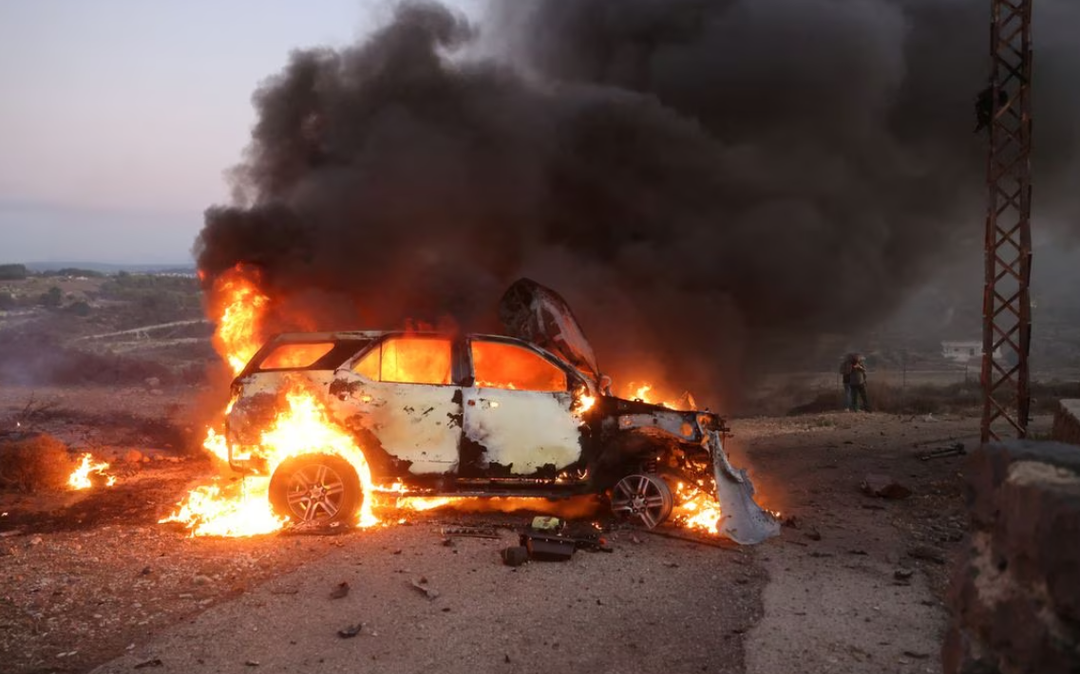
Flames and smoke engulf the Breaker residential tower in Manama, Bahrain after an Iranian drone strike on February 28, 2026.
The Cover-Up as Policy
Defense Secretary Pete Hegseth dismissed the Lincoln reports as "completely misrepresented." Acting Navy Secretary Cao called the accounts "dishonest." CENTCOM commander Adm. Brad Cooper wrote a Wall Street Journal op-ed doing damage control. And Fox News host Joey Jones, in a display of the cruelty that passes for patriotism in certain circles, responded to sailors' reports of deteriorating mental health by asking: "How weak are you?"
This is the machinery of a cover-up. Not the sophisticated, shadowy kind — the blunt, thuggish kind. You report that sailors are going hungry and jumping off aircraft carriers, and the Secretary of Defense calls you a liar. You refuse to fire your reporters for telling the truth, and you lose your job of 19 years. You state on national television that you won't censor the news, and you're hit with an "insubordination" charge.
The three journalists are now suing the federal government in D.C. District Court, alleging First Amendment violations and illegal retaliation. The complaint notes that Stars and Stripes reporters are "authorized to report on the Defense Department 'good and bad'" and that military commanders are legally prohibited from controlling the paper's content — a separation that Congress deliberately built into law to prevent the exact scenario unfolding now.
What This Means
The firing of Stars and Stripes' leadership is not a personnel dispute. It is a test case for whether the American military can suppress reporting on its own conduct during an active war — and whether anyone will stop them.
The sailors aboard the USS Abraham Lincoln did not sign up to be propaganda props. They signed up to serve. They have spent nine months in a combat zone, eating inadequate food, showering in mold, and watching their shipmates deteriorate to the point of suicide attempts. The least they are owed is someone willing to tell their story.
Pete Hegseth and the Pentagon have made clear that they consider that story a threat. Stars and Stripes proved them right — and paid the price.
Sources & Methodology
Methodology
This article is based on the original reporting by Stars and Stripes, corroborated by the Guardian, CBS News, CNN, AP, BBC, Newsweek, and Salon. Primary sources include the federal First Amendment lawsuit filed in the U.S. District Court for the District of Columbia on August 27, 2026 (Slavin, Korte, Lederer v. Department of Defense), and the August 11 Stars and Stripes report on USS Abraham Lincoln conditions. Additional context drawn from military family interviews, viral social media documentation, and academic research on deployed sailor mental health.
Filed Under
Frequently Asked Questions
- Who was fired from Stars and Stripes?
- Erik Slavin (editor-in-chief), Max Lederer (publisher), and Lara Korte (reporter) were all terminated on August 21, 2026, the day after Stars and Stripes published its investigation into conditions aboard the USS Abraham Lincoln.
- What did Stars and Stripes report that triggered the firings?
- The August 11, 2026 report documented food and water rationing, broken plumbing, moldy showers, and multiple sailors attempting to jump overboard aboard the USS Abraham Lincoln during its 250-day combat deployment against Iran. The report included testimony from a town hall where a spouse read her husband's text saying he hoped he wouldn't wake up tomorrow.
- Has a lawsuit been filed?
- Yes. On August 27, 2026, Slavin, Korte, and Lederer filed a federal First Amendment lawsuit in the U.S. District Court for the District of Columbia alleging illegal retaliation for protected journalism.
- What role did Pete Hegseth play?
- Hegseth launched a 'modernization' review of Stars and Stripes in January 2026, issued a March memo citing 'good order and discipline' under the UCMJ as justification for editorial control, and pressured publisher Lederer for months to fire the journalists. When Lederer refused, he was forced into retirement and replaced without his knowledge.