
Richard Medhurst’s Arrest: A Symbol of Political Persecution
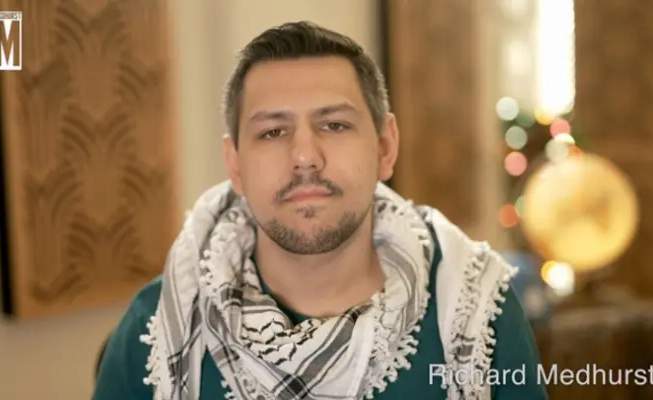
Richard Medhurst
London, August 21, 2024 – On August 15, British-Syrian journalist Richard Medhurst was arrested at Heathrow Airport by six police officers under Section 12 of the UK's Terrorism Act, marking a significant escalation in the UK government’s crackdown on dissent. Known for his critical reporting on Israel and the U.S.-UK foreign policy in the Middle East, Medhurst was detained for nearly 24 hours, during which he was subjected to solitary confinement, intensive questioning, and the confiscation of his electronic devices.
Medhurst shared his experience through a video on X, where he stated that he believes he is the first journalist to be arrested under this provision of the Terrorism Act. He described his arrest as a clear act of political persecution aimed at stifling his work as a journalist. "This is a blatant act of political persecution," Medhurst declared, emphasizing that the arrest severely hampers his ability to continue his investigative journalism. His detention escalates the increasingly repressive measures being used by the UK government to silence those who challenge its policies, particularly in relation to the Israel-Palestine conflict.
The charges against Medhurst stem from allegations that his commentary supports a proscribed organization—Hamas, which was designated as a terrorist organization by the UK in its entirety in 2021. The broad and ambiguous language of Section 12 allows for the criminalization of any expression that can be interpreted as supportive of such organizations, leading to concerns that this law is being weaponized against legitimate political discourse.
Section 12 of the UK Terrorism Act: A Tool for Suppression
Section 12 of the Terrorism Act, introduced in 2000 and amended in 2019, grants authorities the power to arrest individuals for expressing opinions or beliefs that are deemed supportive of proscribed organizations. The law’s sweeping provisions have raised significant concerns about its potential to suppress free speech and criminalize dissent. The law does not require any intent to incite violence or directly aid a terrorist group; merely expressing an opinion that could be construed as supportive of a proscribed organization can result in arrest and prosecution.
Medhurst's arrest under this law sets a troubling precedent for journalists and activists in the UK. The law's vague language and broad scope mean that any criticism of government policies or support for resistance movements—such as the Palestinian struggle against Israeli occupation—can be targeted. Critics argue that the law is being used not to combat terrorism but to silence political opposition and curtail press freedom.
In Medhurst's case, his outspoken support for Palestinian rights and his criticism of Israeli policies are being framed as support for terrorism. This conflation of legitimate political activism with terrorism not only undermines freedom of expression but also delegitimizes the Palestinian struggle for self-determination.
A Broader Campaign Against Anti-Israel Activism
Medhurst’s arrest is not an isolated incident but part of a broader campaign by the UK government to crack down on anti-Israel activism and broader political dissent. Over the past few years, the UK has witnessed an alarming increase in the use of counter-terrorism laws against journalists, activists, and academics who criticize Israel or express solidarity with Palestine.
This trend is evident in the cases of other journalists like Craig Murray, a former diplomat and human rights activist, and Kit Klarenberg, a contributor to The Cradle, who have also faced harassment and detention under similar charges. These individuals, like Medhurst, have been vocal critics of the UK’s foreign policy and its alliance with Israel, leading to their persecution under the guise of counter-terrorism.
The UK's crackdown has extended beyond individuals to organizations and events. Pro-Palestinian demonstrations have been met with heavy police presence, and several activists have been arrested under the same Terrorism Act. The government’s actions have created a chilling effect on free speech, where expressing solidarity with Palestinians or criticizing Israel’s policies can lead to arrest and imprisonment.
The broader impact of this crackdown is the marginalization of Palestinian voices and the criminalization of any form of resistance against Israel’s actions. The UK government's alignment with Israeli policies, particularly its characterization of Hamas as a terrorist organization, has facilitated the use of legal instruments to silence opposition and suppress pro-Palestinian activism.
Comparing Repression: The UK and US Crackdowns on Dissent
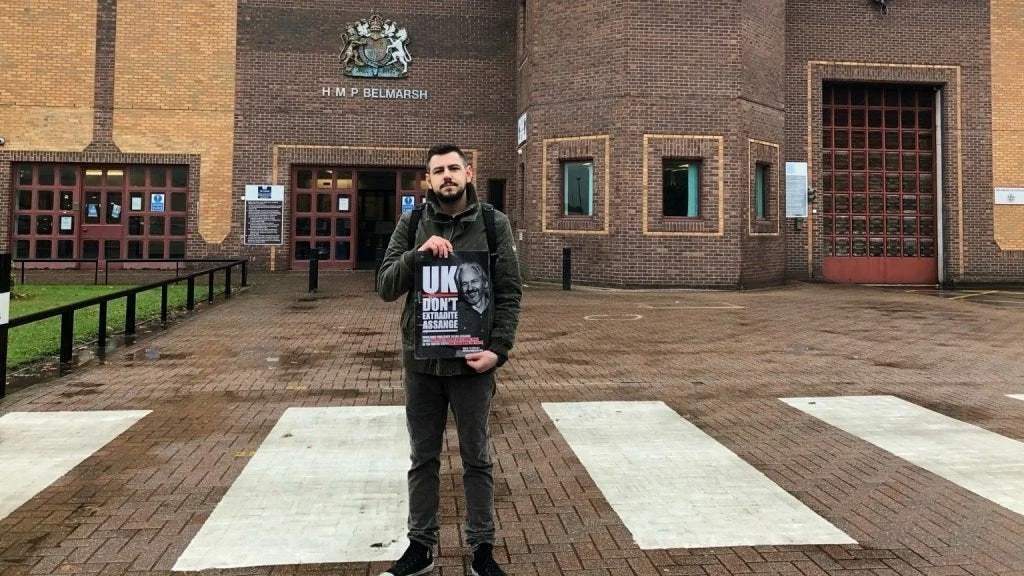
Journalist Richard Medhurs Protest for the release of journalist Julian Assange
Medhurst's arrest is part of a wider trend in Western democracies, where governments are increasingly using counter-terrorism laws to suppress dissenting voices. In the United States, similar tactics have been employed against journalists and activists who challenge the government's foreign policies or criticize its allies.
A notable case is that of Scott Ritter, a former U.S. Marine Corps intelligence officer and United Nations weapons inspector, who was targeted by the FBI on August 9. Ritter, known for his criticism of NATO’s actions in Ukraine and Israel's policies in Palestine, had his home raided and his passport revoked by the State Department. Like Medhurst, Ritter’s opposition to state-sponsored violence and his advocacy for diplomacy have made him a target for government repression.
These cases reflect a growing trend where governments in the UK and the US are using the rhetoric of national security to justify the suppression of dissent. Anti-terrorism laws, originally designed to combat violent extremism, are now being repurposed to silence journalists, activists, and academics who challenge the state’s narratives.
The Role of Tech Companies in Facilitating Censorship
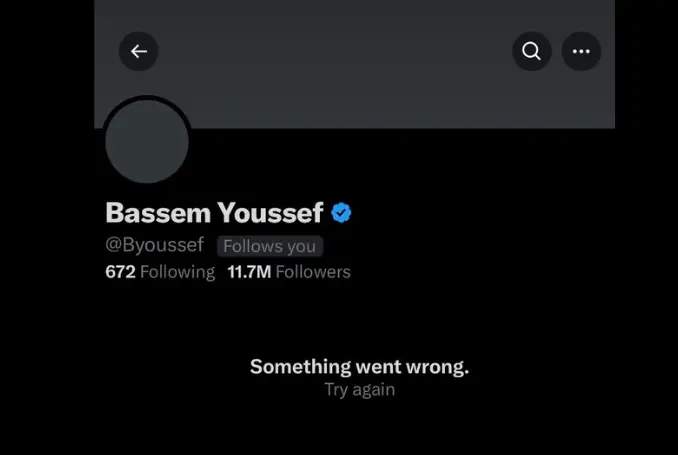
Bassem Youssef Banned on X
The repression of dissent is not limited to government actions. Social media platforms and tech giants have become active participants in the silencing of anti-Israel and pro-Palestinian voices. Recent actions by Meta, the parent company of Facebook and Instagram, illustrate this trend. On August 16, Meta permanently banned The Cradle, a news outlet critical of Israeli policies, from its platforms, alleging that the outlet violated community standards by "praising terrorist organizations" and engaging in "incitement to violence."
Similarly, on August 20, Elon Musk’s platform X suspended the account of popular Egyptian comedian Bassem Youssef, who had been outspoken in his criticism of Israeli actions in Gaza. These actions by tech companies are part of a broader pattern of digital censorship, where platforms are increasingly aligning with government policies to restrict the dissemination of content that challenges state narratives.
This collaboration between governments and tech companies raises significant concerns about the future of free speech and independent journalism. As these platforms become gatekeepers of information, their actions have the potential to shape public discourse by silencing critical voices and promoting state-sanctioned narratives.
Far-Right Violence and the Double Standard in Law Enforcement
![Flames burn as demonstrators take part in an anti-immigration protest [Rotherham, UK - August 4, 2024]](https://cdn.sanity.io/images/ypejdt32/articles/4213b3c93e58e7a353cddecbe52f652a52ae6bad-770x513.webp?fit=max&auto=format&w=1920&q=65)
Flames burn as demonstrators take part in an anti-immigration protest [Rotherham, UK - August 4, 2024]
While the UK government intensifies its crackdown on anti-Israel activism, there has been a noticeable leniency towards far-right groups inciting violence against Muslim and immigrant communities. The recent wave of far-right riots following a knife attack in Southport serves as a stark contrast to the heavy-handed approach taken against pro-Palestinian activists.
Despite the widespread violence and vandalism targeting Muslims, migrants, and minorities, the response from law enforcement has been criticized as inadequate. Over 400 people were arrested in connection with the riots, but activists and community leaders have accused the government of downplaying the severity of the attacks and failing to address the underlying issues of racism and Islamophobia.
The leniency shown towards far-right rioters contrasts sharply with the aggressive policing of anti-Israel protests and pro-Palestinian activists. This double standard in law enforcement highlights the selective application of anti-terrorism laws, where certain forms of violence and hatred are tolerated, while legitimate political dissent is criminalized.
International Implications: The Global Crackdown on Free Speech
The arrest of Richard Medhurst and the broader crackdown on anti-Israel activism in the UK have significant implications for global free speech and human rights. As Western democracies increasingly use counter-terrorism laws to suppress dissent, the space for political activism and independent journalism is rapidly shrinking.
The international community must take notice of these disturbing trends and advocate for the protection of fundamental freedoms. The use of anti-terrorism laws to silence political opposition not only undermines democratic values but also erodes public trust in institutions meant to protect civil liberties.
The Urgent Need to Protect Press Freedom
Richard Medhurst's arrest is a stark reminder of the growing threats to press freedom and political dissent in the UK and beyond. As governments continue to use repressive measures to silence critics, the need to defend the rights of journalists and activists has never been more urgent.
Medhurst's words resonate deeply in this context: "We cannot call ourselves a democracy as long as reporters are dragged off planes and treated like criminals for doing their job." The international community must stand in solidarity with those who speak truth to power and work tirelessly to protect the freedoms that are under attack