

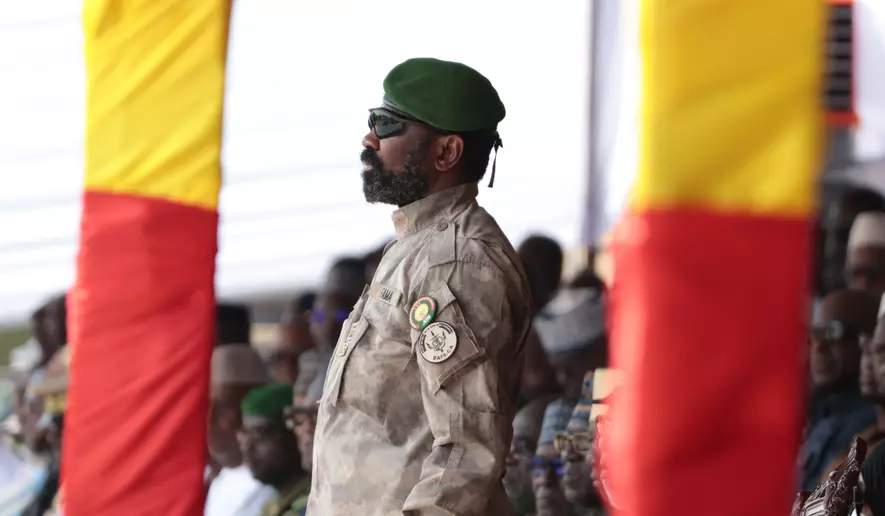
The military junta ruling Mali has arrested two of the country's most prominent journalists in the span of 48 hours, in what press freedom organizations are calling the latest escalation in a systematic campaign to eliminate independent reporting.
On June 8, Chahana Takiou — a well-known television presenter and editorial director of the biweekly newspaper 22 Septembre — was detained by Mali's National Cybercrime Unit. The following day, Abdrahamane Keïta — director of Le Témoin newspaper and host of the widely watched television program Grand Jury — was summoned and jailed by the same unit.
Both men are now behind bars in Bamako's central prison. Neither has been formally tried. Their alleged crimes: criticizing the government's use of a broadly worded cybercrime law to silence the press, and stating a basic fact about the country's security situation that the military junta finds politically inconvenient.
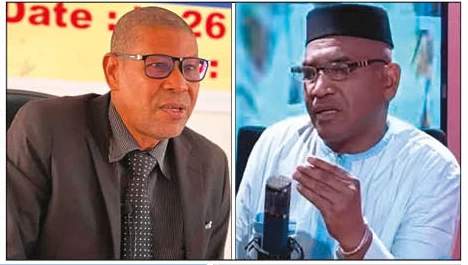
Chahana Takiou and Abdrahamane Keïta, two prominent Malian journalists arrested within 48 hours by the military junta in June 2026.
Chahana Takiou: Jailed for Exposing the Law Used to Jail Him
Takiou's arrest is a case study in the junta's authoritarian logic — a journalist imprisoned under the very law he publicly condemned.
At a Pan-African media forum in Bamako, Takiou spoke openly about the government's weaponization of Mali's 2019 cybercrime statute. He had specifically criticized the two-year prison sentence handed down in March to fellow journalist Youssouf Sissoko, editor-in-chief of the weekly newspaper L'Alternance, who was prosecuted under that same cybercrime law for publishing a newspaper article questioning neighboring Niger's military ruler, Gen. Abdourahamane Tiani.
"He should have been tried under the press law, but since the advent of the cybercrime law, judges have been superbly ignoring it," Takiou told a prosecutor during the panel discussion.
Within days, Takiou himself was charged — under the cybercrime law — with "undermining the state's reputation through the judicial system." He was remanded to Bamako's central prison pending trial, scheduled for July 27. If convicted, he faces the same heavy penalties that he had publicly warned were being misused against journalists.
The Comité à Protect Journalists (CPJ) captured the bitter irony of the arrest: "It is ironic that Malian authorities used the cybercrime law to arrest Chahana Takiou for speaking out about its misuse against the press. They have only proven that his comments were 100% accurate."
Takiou is a veteran media figure in Mali, widely respected for his editorial work at 22 Septembre and his presence on national television. His arrest sends a clear message to every journalist in the country: speak about the law, and the law will be used against you.
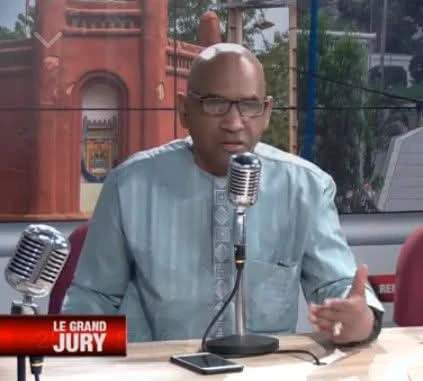
Abdrahamane Keïta, Malian journalist and director of Le Témoin newspaper, arrested by the junta's cybercrime unit on June 9, 2026.
Abdrahamane Keïta: Charged with Stating the Truth
Abdrahamane Keïta's offense was even more straightforward. On an episode of Grand Jury — his popular television program — he stated that the Al-Qaeda-linked JNIM insurgent group controls the northern city of Kidal.
This is not conjecture. It is not disputed. In April 2026, JNIM and the separatist Azawad Liberation Front launched a series of coordinated attacks across northern Mali, seizing Kidal from Malian government forces and their Russian military allies. The offensive killed Mali's defense minister, Gen. Abdoulaye Coulibaly, and demonstrated the insurgents' growing operational capacity.
But in Mali, publicly acknowledging military losses is treated as a criminal act against the state.
Keïta was charged with "a crime of a regionalist nature that tends to undermine national unity and the credibility of the state" and "dissemination of false and misleading information." His trial is scheduled for August 17. If found guilty, he could face years in prison — not for lying, but for telling the truth at the worst possible time for the junta's narrative.
Keïta is the director of Le Témoin, one of Mali's independent newspapers, and his television program has been a platform for public debate on security and governance issues. His arrest removes one of the few remaining voices willing to discuss the country's deteriorating security situation on national television.
The Cybercrime Law: A Weapon Dressed Up as Legislation
The tool enabling these arrests is Mali's 2019 cybercrime law, which the military government has transformed into an instrument of press suppression.
The law's vaguely worded provisions criminalize undefined "threats" and "insults" made via digital platforms, carrying penalties of up to ten years in prison. But the most dangerous element is Article 54, which allows the cybercrime unit to prosecute journalists under ordinary criminal statutes — sidestepping the 2000 press law entirely. The press law provided lighter sentences and explicit protections for journalistic work. The cybercrime law eliminates those protections by treating journalists the same as any criminal defendant.
The cybercrime unit was established in 2022 and given authority to use eight separate legal texts to prosecute online offenses. Since then, judges have consistently applied the cybercrime framework over the press law, stripping journalists of the legal shield that Malian law once afforded them.
Ilaria Allegrozzi, senior Sahel researcher for Human Rights Watch, laid out the pattern clearly:
"The recent arrests starkly illustrate the problem Takiou identified: authorities increasingly use cybercrime legislation to punish peaceful criticism and sidestep the protections that press laws afford journalists."
Sadibou Marong, director of Reporters Without Borders (RSF) in West Africa, went further, describing a "spiral of repression" driven by silencing tactics, exclusion of dissenting voices, and the use of the justice system as a weapon against independent media. Both HRW and RSF have called for the immediate release of all detained journalists.
Three Journalists Behind Bars — and Counting
These arrests are not isolated incidents. They are part of a sustained, systematic dismantling of press freedom in Mali since the military seized power in a 2021 coup.
The record tells the story:
- Youssouf Sissoko — arrested February 5, 2026, and sentenced to two years in prison for publishing an article critical of Niger's military ruler. He remains behind bars today.
- Chahana Takiou — arrested June 8, 2026, for condemning Sissoko's sentence and the misuse of the cybercrime law. Trial set for July 27.
- Abdrahamane Keïta — arrested June 9, 2026, for stating that JNIM controls Kidal. Trial set for August 17.
Beyond these imprisonments, the junta has suspended media outlets, dissolved civil society organizations, abolished multiparty elections, and banned French broadcasters including France24, TV5 Monde, and Radio France International. In January 2025, authorities banned the sale of the Pan-African magazine Jeune Afrique. The Maison de La Presse, Mali's largest press association, has been effectively sidelined.
Backed by Imperial Powers, Emboldened by Impunity
Mali, alongside neighboring Niger and Burkina Faso, has pivoted sharply away from France and toward Russia for military support. The three countries formed the Alliance of Sahel States in 2023, deepening military and political ties with Moscow while severing relationships with former colonial power France and its Western allies.
Despite these new partnerships, the security situation across the Sahel has continued to deteriorate. A record number of extremist attacks have been recorded across all three countries. Government forces have been accused of killing civilians suspected of collaborating with militants. In Mali, the same government that promises security has lost control of major towns, killed its own defense minister through negligence, and responded by jailing the journalists who report on it.
The CPJ's Moussa Ngom put it directly: "Malian authorities must stop their frenzied arrests of journalists, drop the charges against Abdrahamane Keïta and Chahana Takiou, and release them, as well as fellow journalist Youssouf Sissoko."
The junta in Bamako is not fighting terrorism. It is fighting the people who dare to report on what it is doing — and not doing. Three journalists behind bars. A cybercrime law weaponized against the truth. International partnerships with powers that have no interest in press freedom. That is the reality of Mali in 2026, and no number of arrests will change the facts on the ground.
Sources & Methodology(5 sources)
- AP NewsSource
- Human Rights WatchSource
- The Washington TimesSource
Methodology
Reported using AP News, Committee to Protect Journalists, Human Rights Watch, and Reporters Without Borders coverage. Source material cross-referenced across five independent outlets. All factual claims verified through multiple wire service and human rights organization reports.
Filed Under
Frequently Asked Questions
- Who were the journalists arrested in Mali?
- Chahana Takiou, a television presenter and editorial director of the newspaper 22 Septembre, was arrested on June 8, 2026. Abdrahamane Keïta, director of Le Témoin newspaper and host of the popular TV program Grand Jury, was arrested on June 9, 2026. Both were detained by Mali's National Cybercrime Unit.
- What law is Mali using to prosecute journalists?
- Mali's 2019 cybercrime law, which was expanded under the military government. The law contains vaguely worded provisions criminalizing undefined 'threats' and 'insults' online with penalties up to 10 years in prison. Article 54 allows prosecutors to bypass the 2000 press law, stripping journalists of their legal protections.
- Why was Abdrahamane Keïta arrested?
- Keïta was arrested after stating on his TV program Grand Jury that the Al-Qaeda-linked JNIM group controls the northern city of Kidal. This is a verifiable fact — JNIM and separatist forces seized Kidal from Malian and Russian forces during coordinated attacks in April 2026 that killed Mali's defense minister.
- What is the broader context of press freedom in Mali?
- Since the 2021 coup, Mali's junta has systematically dismantled press freedom: suspending media outlets, dissolving civil society organizations, banning French broadcasters (France24, TV5 Monde, RFI), and banning Pan-African magazine Jeune Afrique. Three journalists are currently imprisoned under the cybercrime law.
- What international alliances has Mali's junta formed?
- Mali, alongside Niger and Burkina Faso, formed the Alliance of Sahel States and pivoted away from France toward Russia for military support. Despite these partnerships, the security situation across all three countries has deteriorated with record extremist attacks.