

The Moratorium That Wasn't: Inside Jackson's Data Center Shell Game
An UnTelevised Media Investigation
On July 14, 2026, the Jackson City Council voted 5-2 to approve Mississippi's first local data center moratorium — a 183-day pause on processing permits, rezoning requests, and zoning changes for hyperscale data center development within city limits. Ward 4 Councilman Brian Grizzell, the ordinance's author, called it a necessary step to study the impacts on water, sewer, and electrical infrastructure before the city opened its doors to an industry that has consumed communities across the country.
It sounded like a victory for the residents of Northwest Jackson who had spent weeks packing Planning Board meetings, chanting "No data center" and carrying signs reading "Can't Drink Data." It sounded like government working the way it's supposed to.
It wasn't.
The Exemption
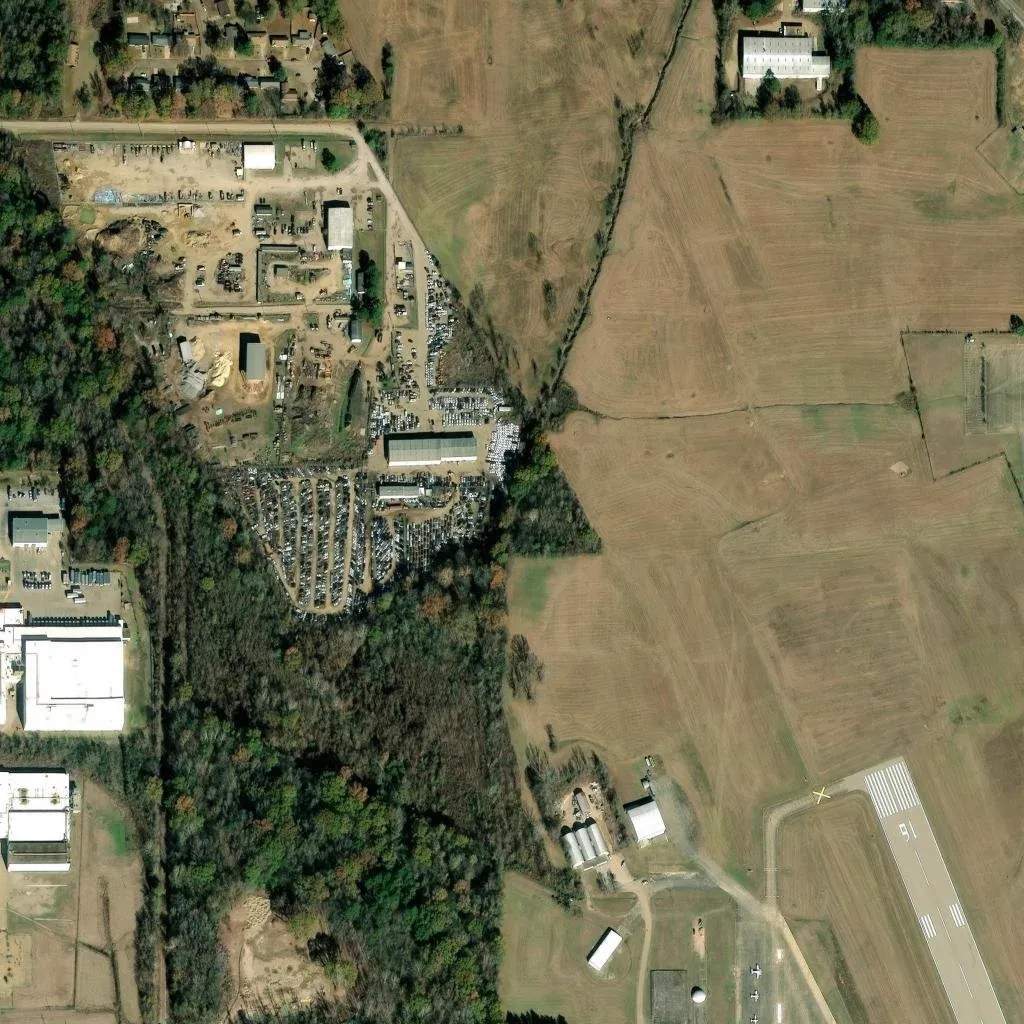
Before the final vote, Ward 7 Councilman Kevin Parkinson introduced an amendment. He wanted to exempt approximately 1,100 acres of city-owned land surrounding Jackson-Medgar Wiley Evers International Airport from the moratorium. WLBT's Ross Reily covered the vote that evening, and JAX Neighborhoods published a detailed meeting recap noting the amendment's passage.
The amendment passed unanimously. Even the moratorium's author voted for it.
The airport sits physically in Rankin County, across the Pearl River from Jackson proper. The city owns the land but cannot collect taxes on it, cannot annex it, and cannot shape its development. The Mississippi Supreme Court ruled as much in March 2024, upholding a lower court decision that Jackson's attempted annexation of airport-adjacent property was unlawful. The Mississippi Free Press reported on the court ruling at the time, and in October 2025 the city reached a settlement with Flowood, Pearl, and Rankin County — a deal the Clarion Ledger documented and Mississippi Today confirmed — in which Jackson and the Jackson Municipal Airport Authority kept ownership but portions were incorporated into Flowood and Pearl's city limits.
What Jackson cannot control through zoning or taxation, however, it apparently intends to control through exemption. The Parkinson amendment carved out the single largest undeveloped parcel in the city's portfolio from the very regulation designed to protect residents from unchecked data center construction — and did so on a unanimous vote before the moratorium had even taken effect.
Four Weeks Later
On August 11, 2026 — four weeks after the moratorium, which still hadn't technically taken effect because the vote wasn't unanimous — Ward 3 Councilman Kenneth Stokes introduced a nonbinding resolution urging the administration to explore appropriate locations for data center development.
The resolution specifically named two sites: Hawkins Field, the general aviation airport in Stokes' ward, and the land surrounding Jackson-Medgar Wiley Evers International Airport. The latter, the resolution noted, possesses "existing infrastructure and compatible land uses." WLBT covered the resolution and its passage.
Councilman Grizzell pushed back on Hawkins Field, noting that residential neighborhoods sit at the end of one of its runways. But the airport land — the same airport land Parkinson had carved out of the moratorium — drew no objection from the council's most vocal data center skeptic.
The resolution passed 5-2.
The message was unambiguous: the moratorium was never meant to stop data centers. It was meant to manage the optics of bringing them here.
Three Separate Plays
What the public saw was a single narrative: a New Jersey developer wants to build a data center in Northwest Jackson, and the city needs time to write rules. But behind that narrative, UnTelevised Media has identified three separate, concurrent data center development efforts operating in the Jackson metro — each with different players, different strategies, and different relationships with city government.
1. Saxum Investment Group — The Public Target
Saxum Real Estate Investment and Development Company filed a rezoning request with the city on May 20, 2026, seeking to convert approximately 190 acres along Forest Avenue between I-220 and Medgar Evers Boulevard from residential and commercial zoning to I-2 Industrial use for a data center. The site sits in the Ashley Acres neighborhood, directly adjacent to the Presidential Hills community in Northwest Jackson.
The original 190-acre rezoning map, published by the Mississippi Free Press as part of reporter Grace Marion's investigation, shows the proposed site bordered by Forest Avenue to the north, I-220, and Medgar Evers Boulevard to the east. The Free Press obtained the maps directly from Watkins & Eager PLLC, the law firm representing Saxum.
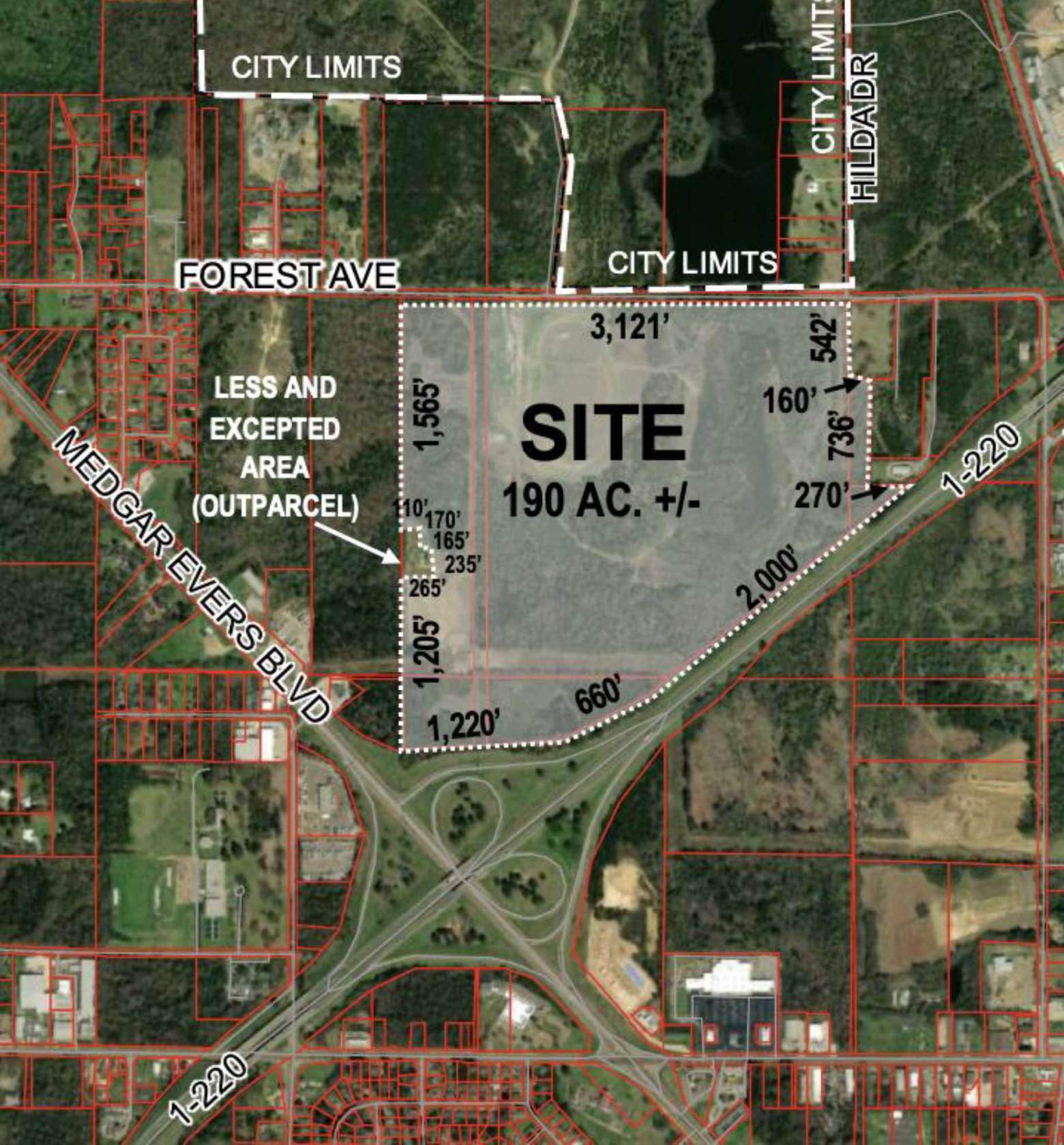
Original Saxum 190-acre proposal map. Credit ~ Watkins & Eager PLLC / Mississippi Free Press
The application was filed by attorney Robert Ireland of Watkins & Eager PLLC, on behalf of Saxum Investment Company LLC. Saxum, based in Edison, New Jersey and led by founder Anthony Rinaldi, is primarily a cold storage and transit-oriented real estate developer — not a data center company. Its team page lists roughly 45 people. The company recently recapitalized a portfolio of 1.5 million square feet of cold storage facilities, partnered with BGO. The Jackson rezoning represents, by all available evidence, the company's first data center play.
On April 30, 2026 — three weeks before the public filing and before most residents knew the project existed — Saxum quietly amended the application to expand the footprint from 190 acres to 230 acres. The amendment added a 40-acre parcel from Hinds County parcel 731-15-1 at the west end of Forest Avenue Extension.
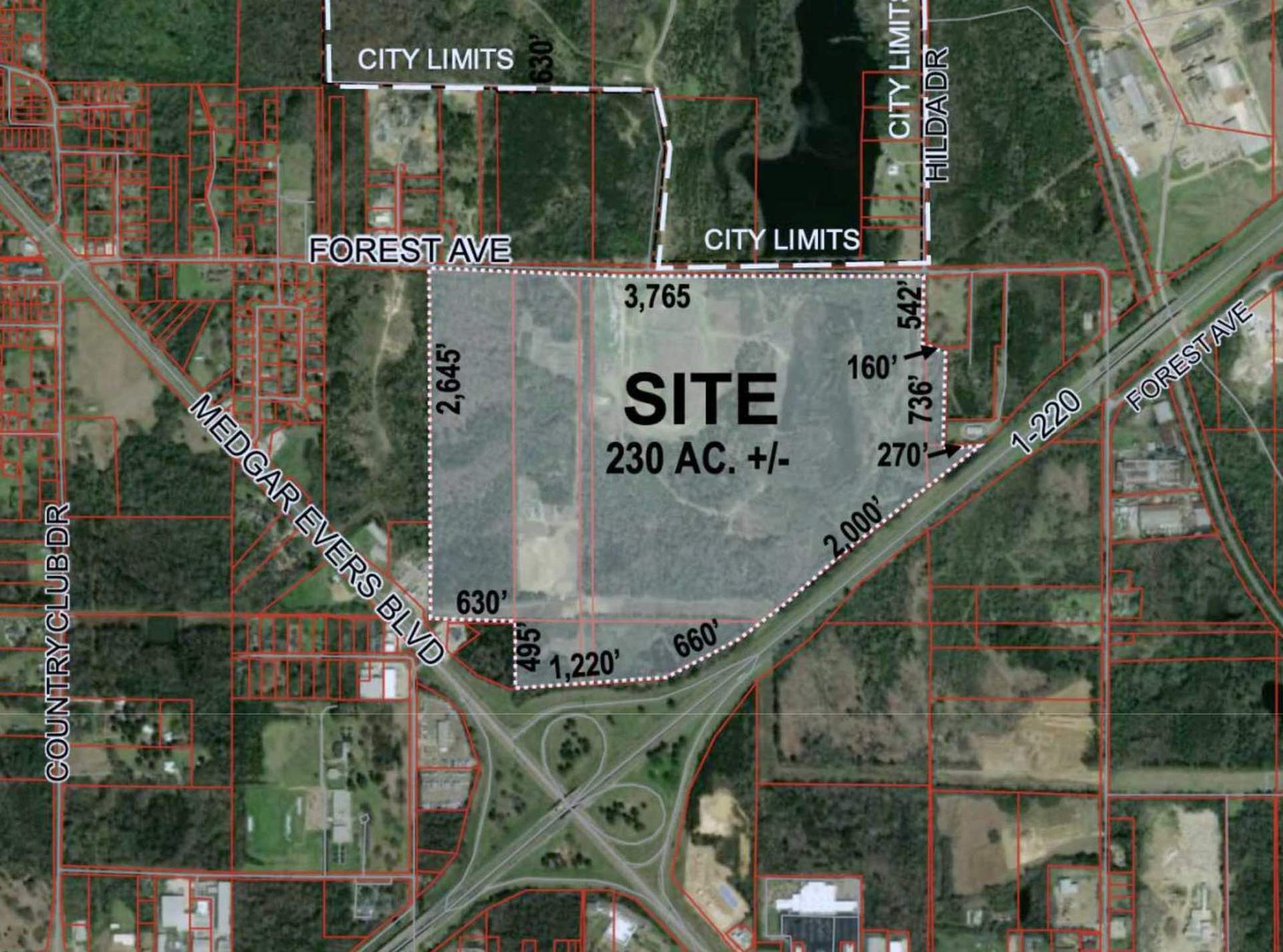
Amended Saxum 230-acre map. Credit ~ Watkins & Eager PLLC / Mississippi Free Press
Marion's reporting at the Free Press revealed that the expansion caught at least one property owner by surprise. Matt Casteel, who operates Wurmworks, an organic worm farm, on 1.77 acres within the newly added parcel, told her he wasn't listed on the application and hadn't been contacted by Saxum. He only learned the rezoning was for a data center — not the cold storage facility he'd been told about — after watching the news.
Zoning Administrator Ester Ainsworth confirmed to the Free Press that Ireland would have to amend the application again due to Casteel's non-consent, since Mississippi law prevents rezoning property against an owner's wishes.
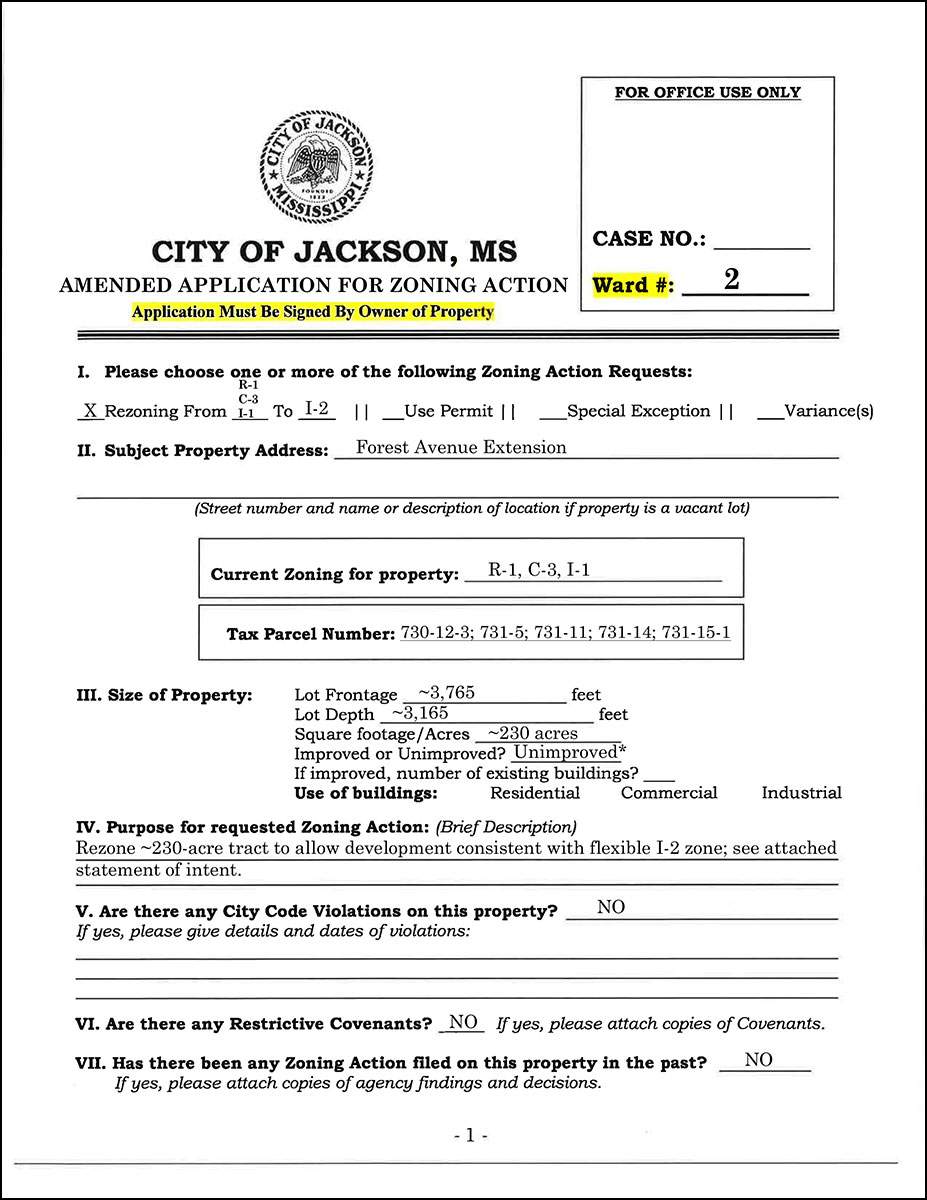
Amended Saxum rezoning application. Credit ~ Watkins & Eager PLLC / Mississippi Free Press
The Saxum rezoning became the public flashpoint for the entire data center debate. Dozens of residents packed Planning Board meetings in May and June — WLBT's coverage and the Clarion Ledger's reporting documented the crowds. Nineteen-year-old Jackson resident Vada Vero shouted "You drink the same water we do" at developers during the May 27 meeting, and the Planning Board delayed the vote twice at Saxum's request as the city worked on regulations. Saxum has never named the hyperscaler tenant it claims to be courting.
2. Gabriel Prado — The Hidden Player
Two weeks before Saxum filed its public rezoning request, a separate data center developer appeared before the Mississippi Public Service Commission. His name was Gabriel Prado, and he wanted something no one in Mississippi had ever asked for: permission to build his own power plant.
WLBT was first to report on the PSC filing on April 22, 2026, with the Clarion Ledger following and WAPT providing additional coverage. The PraCon Global Investment Group team page lists Prado as CEO and President — a Jackson-based developer with a Harvard Extension School degree, a Belhaven University master's in public administration, and past presidencies of the Greater Jackson Chamber Partnership and the Latin American Business Association of Mississippi. He broke ground in January 2026 on Prado Lofts, a $50 million apartment development at 319 Meadowbrook Road, covered by JAX Neighborhoods.
On March 2, 2026, Prado AI filed a request for a declaratory opinion with the PSC to build a 350-megawatt natural gas power plant at an undisclosed site in the Jackson metro area. The plant would power what Prado described as an AI data center campus, semiconductor fabrication facility, and advanced industrial complex.
His legal argument was novel: because the electricity would be consumed entirely by campus tenants and never sold on the open grid, Prado AI was not a public utility under Mississippi law and therefore not subject to PSC regulation. The power, he argued, was "incidental to the primary purpose of the lease."
Entergy Mississippi, Mississippi Power Company, and Delta Mississippi Gas all opposed the filing. Mississippi Power called it "potentially widespread industrial and commercial deregulation, causing significant and sweeping impacts that are truly difficult to overestimate."
The PSC denied the request on May 29, 2026, calling it "premature and primarily hypothetical." When PSC staff asked Prado who would operate the plant and who would lease space at the campus, his attorney called the questions "premature and speculative."
In a June 1 interview with WLBT, Prado came back swinging: he said he was now seeking a permit for not 350 megawatts, but one full gigawatt — nearly triple the original request. He claimed the project would cost more than $25 billion, making it larger than every Amazon investment in Mississippi combined.
He refused to name the hyperscaler tenant, comparing the request to "asking Coca-Cola for their secret recipe." He said the tenant was a company that "does not currently have a data center in the state" and that he was working with "some of the largest funding groups based out of New York and San Francisco."
He originally said the project would be in Ridgeland. When pressed, he retreated to "Jackson metro area" and refused to be more specific. He actively opposed the moratorium, telling WLBT that "Mississippi has the opportunity to be the leader on AI, not only data centers, but also semiconductors."
He is not connected to Saxum. Saxum's leadership — Anthony Rinaldi, Chad DeBolt, Sean Gilbert, Matthew Wassel — operates out of New Jersey. Gabriel Prado does not appear anywhere on Saxum's website, its team roster, or its corporate filings. They are separate entities pursuing separate data center strategies in the same city, at the same time.
But someone inside Mayor Horhn's office was communicating with both of them. How do we know? Because the Clarion Ledger filed a public records request — Request ID 26-1061 — on May 22, 2026, asking for all emails, memos, and text messages from Mayor Horhn and Chief Administrative Officer Pieter Teeuwissen since July 1, 2025 containing any of the following terms: "data center," "data centers," "Forest Avenue," "Saxum," and "Prado." The request appeared in the city's weekly public records request log — the same official log UnTelevised Media obtained from jacksonms.gov revealing the "Prado" search term alongside every other data center reference. The Clarion Ledger had reason to believe Gabriel Prado was part of the city's behind-the-scenes data center conversations. We do not yet know whether the city released those records.
3. The City's Own Play — Lake Hico
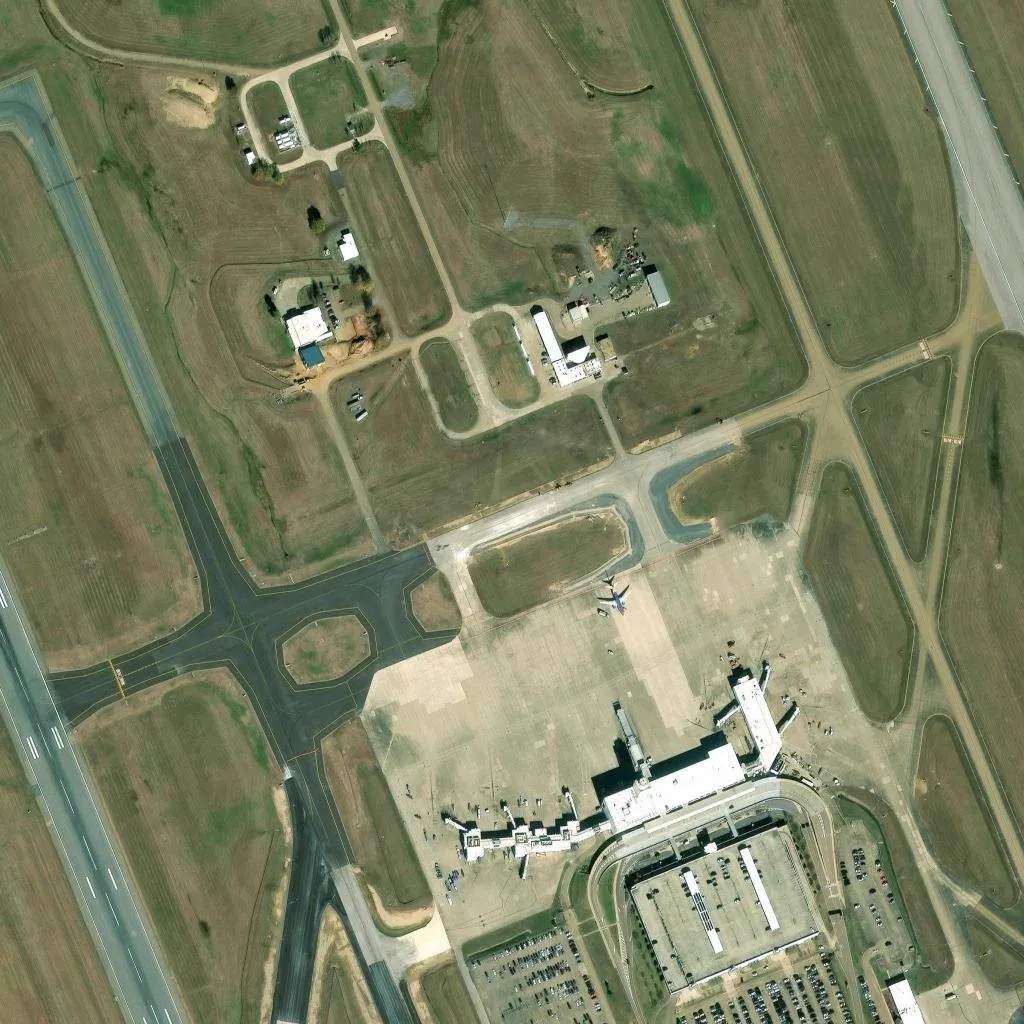
Satellite view of Jackson-Medgar Wiley Evers International Airport in Rankin County, showing runways, terminal, and surrounding undeveloped land that the city exempted from its data center moratorium
While Saxum fought residents at Planning Board meetings and Prado fought regulators at the PSC, Mayor Horhn's administration was running its own, separate data center recruitment strategy — one that the public was never supposed to see.
On July 17, 2026 — two days after the moratorium vote — WLBT's Ross Reily published records obtained through an open records request revealing that the city had spent months working with attorneys, lobbyists, and tech consultants on a data center "playbook" aimed at attracting hyperscale investment to a specific site: Lake Hico. The full WLBT investigation is here.
Lake Hico is a 654-acre parcel in Jackson that was home to the Rex Brown Steam Electric Station. The plant was demolished in 2022. The lake was drained in 2020. An Entergy substation remains on-site. The property sits near I-220.
The city's internal documents call the site "Jackson's single best opportunity in 50 years to reverse the structural decline of its tax base, restore Jackson Public Schools' lost revenue, and position the state capital as the anchor city of the Mississippi tech corridor."
The documents projected that a $5 billion to $15 billion hyperscale data center at Lake Hico could generate:
- $9 million to $20 million per year for Jackson
- $9 million to $20 million per year for Jackson Public Schools
- 4,000 to 7,000 construction jobs
- 500 to 1,200 permanent jobs
Ward 2 Councilwoman Tina Clay, who voted for the moratorium, was unsparing in her assessment. She told WLBT that the inflated $135 million budget — which the administration cited as evidence of the city's fiscal crisis — may have been deliberately set high to create urgency for a data center deal.
"That $135 million, that was to make it look like the city of Jackson needed money, bad," Clay said. "Every day Horhn has been in office, there's been a step to it."
The records were released July 17. The day before, WLBT had separately reported that the city took steps to control protesters at public data center meetings. The sequence was not coincidental.
The Recruiter Email
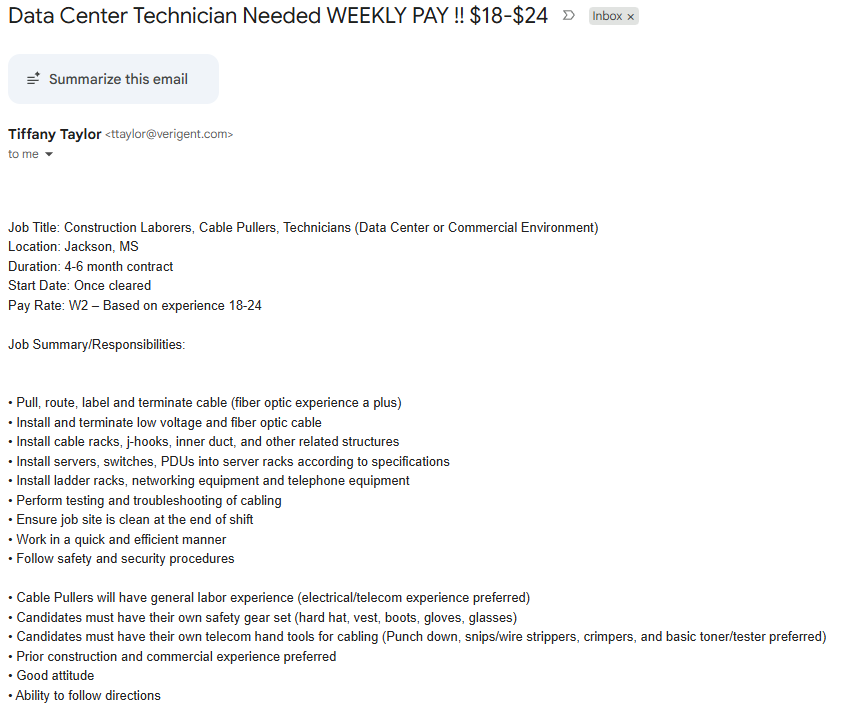
Screenshot of recruiter email from Verigent.
Verigent Recruitment Email
message/rfc822 · 10.5 KB
In July 2026, UnTelevised Media obtained a recruitment email from Tiffany Taylor, a sourcer at Verigent, LLC, a national telecommunications and IT staffing firm based in Huntersville, North Carolina. The email was not a public job posting. It was circulating through back channels and direct personal outreach — sent to targeted individuals through networking contacts, not listed on job boards or Indeed for the general public to find.
The email sought construction laborers, cable pullers, and technicians for a data center build in Jackson, Mississippi.
- Location: Jackson, MS
- Duration: 4-6 month contract
- Start date: "Once cleared"
- Pay: W2, $18-$24/hour based on experience
- Requirements: Fiber optic cable pulling, server/switch/PDU installation into racks, cable racks, j-hooks, inner duct
- Candidates must supply their own safety gear and telecom hand tools
The phrase "Once cleared" is doing significant work. Amazon's data center in Canton, Mississippi — the first in the state to begin operations — has been running for months. The Ridgeland and Clinton sites are well into construction. Projects at that stage don't hire through W2 contract staffing firms with pre-mobilization language; they use tier-one general contractors with established workforces and fixed start dates.
"Once cleared" means something hasn't been cleared yet. It means background checks, security badges, or site access approvals are still pending. It means the project is in pre-mobilization — not yet under construction, but preparing to break ground.
Verigent is not a random temp agency. The company was acquired in August 2022 by Allied Resources Group (ARG), a Charlotte-based holding company. ARG's acquisition announcement stated explicitly that the deal "opens the door for ARG to expand our engineering, project, and construction management services" and that together the companies would "deliver even greater value to companies building and maintaining the infrastructure that keeps our world connected, including next-generation data centers." ARG's data center infrastructure division works on natural gas pipelines, compression stations, electrical substations, and backup power systems — the exact infrastructure a self-contained, off-grid data center campus would require.
This is not speculation. On July 14, 2026 — the same day Jackson's city council voted on its moratorium — Indeed's Hiring Lab published a national analysis of data center hiring naming Jackson, Mississippi as one of the top data center hiring metros in the entire country. The report found that the share of job postings from the 10 largest technology firms in Jackson had exploded from under 2 percent in mid-2025 to over 10 percent by mid-2026.
"The areas where data center postings make up the largest share of total postings," the report stated, "are towns where hyperscalers have established footholds, such as Hermiston, Oregon; rural communities on the outskirts of Columbus, Ohio; Jackson, Mississippi; and Reno, Nevada."
Jackson is being treated by the national data center industry as an active build market. Verigent's back-channel outreach is not an anomaly — it's a data point in a much larger trend, one confirmed by public hiring data that anyone can see.
UnTelevised Media reached out to Tiffany Taylor via the contact information provided in the email for comment on the nature of the recruitment, the client she was sourcing for, and the identity of the Jackson data center project. As of publication, we have received no reply.
The State Wrote the Playbook
None of this happens in a vacuum. Mississippi has spent the last two years building the most aggressive data center incentive framework in the country.
MS Code §57-113-21 provides data centers that invest a minimum of $20 million and create 20 jobs at 125 percent of the state's average wage a decade-long exemption from sales and use tax on building materials and equipment, corporate income tax, and franchise tax. SB 3168, which passed the Senate, would raise the thresholds to $250 million in new construction or $100 million in expansion with 35 jobs — while allowing two 10-year extensions, potentially locking in tax exemptions for 30 years.
HB 4045, which would have ended the income tax exemption after 2026, died in the House on February 25, 2026, without a vote.
HB 1393, signed by Governor Tate Reeves on April 8, 2026, created the Mississippi Energy Infrastructure Fund — grants, loans, and financial assistance for local entities, explicitly including data centers.
SB 3410, signed the same day, is perhaps the most revealing piece of the legislative puzzle. The bill specifically authorizes the Brandon and West Rankin Utility Authority to contract with data centers for water and wastewater infrastructure, reclaimed water delivery, and wastewater treatment — with costs reimbursed by the developer on a progress-payment basis.
Rankin County, which houses the airport land exempted from Jackson's moratorium and AVAIO Digital's $6 billion Brandon campus — announced by Governor Reeves as the third-largest economic development project in state history — now has statutory authority to build water infrastructure specifically for data centers, with developers picking up the tab. The legislation was custom-tailored.
The total announced data center investment in Mississippi now stands at approximately $49 billion across five major projects: Amazon ($10B, Madison County; $3B, Warren County), Compass Datacenters ($10B, Lauderdale County), AVAIO Digital ($6B, Rankin County), and xAI/Musk ($20B, DeSoto County).
The Mississippi Indy reported that the Center for Economic Accountability named the Compass deal both the "worst economic development deal of 2025" and, simultaneously, the "best deal" by Business Facilities magazine — a contradiction that speaks to the chasm between how these projects are sold to the public and what they actually deliver.
In Oregon, the town of Boardman traded one poison for another when Amazon data centers replaced a decommissioned coal plant — poisoning the town's water while paying a fraction of a penny on the dollar. When Andover Township banned AI data centers after community confrontation, the industry responded with a narrative about death threats — a playbook that eerily mirrors Jackson's own experience, where the city took steps to manage protesters at public meetings while quietly courting the same developers residents were protesting.
This pattern — of public resistance met with behind-the-scenes deal making, of moratoriums that carve out exemptions, of communities that bear the costs while developers reap the benefits — is not unique to Jackson. It is the operating model of the data center industry in smaller cities and majority-Black municipalities across the country.
What Jackson Has That Nobody Talks About
Jackson has something the data center industry wants desperately: water, power, and a city government so financially strained that it will trade long-term concessions for short-term revenue.
The city is operating under a federal consent decree for its water system — the same water system that left 150,000 residents without running water for weeks in 2022. The public schools are underfunded. Swimming pools are closed. Libraries are closed. Community centers are closed. Councilman Stokes invoked these facts on August 11 when arguing for data center exploration: "We've got swimming pools that are closed. We've got libraries that are closed, community centers are closed. I keep hearing Madison County is going to get $120 million."
What he didn't say is that Madison County — which is majority-white — is getting Amazon's $10 billion investment and its tax revenue. Jackson — which is 82 percent Black — is being asked to accept the environmental and infrastructure costs while neighboring jurisdictions collect the benefits.
The airport land exemption makes this explicit. Jackson owns 1,100 acres in Rankin County that it cannot tax, cannot annex, and cannot control through zoning. A data center built there generates revenue for Rankin County, not Jackson. The exempted land serves the developers' interests while giving Jackson's council political cover — the appearance of a moratorium without the substance.
The Document Trail Paints a Telling Picture
A recruitment email from Verigent, LLC sourced by Untelevised from Tiffany Taylor, sent through back channels and direct personal outreach — not a public job posting — seeking data center construction laborers and cable pullers for a Jackson, MS build with a start date of "once cleared." We obtained this email independently and it forms the basis for our analysis of pre-mobilization hiring activity in the Jackson metro.
The city's weekly public records request log for the week of May 18-22, 2026. This is an official city document we obtained from jacksonms.gov. It reveals two FOIA requests from the Clarion Ledger: one (26-1061) seeking all communications from Mayor Horhn and CAO Teeuwissen containing "data center," "Saxum," "Forest Avenue," and critically, "Prado"; and another (26-1062) seeking Saxum's full rezoning application, site plans, and internal staff reports.
Official Jackson City Council meeting agendas for May 19, 2026 and July 14, 2026, obtained from jacksonms.gov. The May 19 agenda lists the moratorium ordinance as item 11. The July 14 agenda shows the adopted version with a revised title that dropped "AND REGULATORY FRAMEWORK."
Full legislative text for SB 3410 (Rankin County water infrastructure for data centers), HB 4045 (the data center tax exemption repeal that died), and HB 1393 (the Mississippi Energy Infrastructure Fund), obtained from the Mississippi Legislature.
Indeed's Hiring Lab published national research on July 14, 2026 confirming Jackson as a top data center hiring metro.
More Pieces to the Puzzle From Local Media
The Mississippi Free Press, through reporter Grace Marion, published the original Saxum rezoning maps and application form, obtained from Watkins & Eager PLLC. Marion's reporting documented the quiet expansion from 190 to 230 acres, Matt Casteel's surprise at being included in the rezoning without consent, and the community opposition at Planning Board meetings.
WLBT's Ross Reily obtained the city's Lake Hico data center strategy documents through an open records request — revealing the Horhn administration's behind-the-scenes playbook, the projected revenue figures, and Councilwoman Clay's claim that the inflated $135M budget was intentional. WLBT also broke the story of protest management tactics used by the city at public meetings.
The Clarion Ledger filed two public records requests revealed in the city's FOIA log: one seeking Saxum's full rezoning application and site plans, and another searching Mayor Horhn's emails for "Prado" alongside every data center term. It is not yet publicly known whether the city fulfilled those requests.
WLBT also reported on Gabriel Prado's PSC filing and followed up with Prado's interview after the PSC denial, with the Clarion Ledger and WAPT providing additional coverage.
The Mississippi Indy reported on the state's $49 billion data center investment wave and the contradiction between how these projects are sold and their actual economic impact.
What We Still Don't Know
- Whether the Clarion Ledger received the records it requested from the city
- Who Gabriel Prado's unnamed $25 billion hyperscaler is
- Whether any entity has filed for permits or begun site evaluation on the exempted airport land
- Whether the city's Lake Hico strategy is connected to the airport exemption
- Whether Verigent's Jackson recruiting is for Prado's project, the airport site, or another undisclosed development
- Who requested SB 3410, the Rankin County water infrastructure bill custom-tailored for data centers
The Moratorium Doesn't Work Either Way
Here is the part nobody is talking about.
The moratorium, even if it were functioning as written, expires on January 13, 2027 — 183 days from the July 14 vote. None of the three data center plays in Jackson are anywhere near ready to break ground. Saxum's rezoning hasn't been approved. Prado is still fighting regulators. The city's own Lake Hico strategy is in early recruitment. At the current pace, none of these projects would have pulled permits before January 2027 anyway.
The moratorium bans processing permits, rezoning requests, and zoning changes. But it does not ban negotiations, site evaluations, or developer courting. If it did, the August 11 Stokes resolution — which explicitly urges the administration to explore data center sites — would itself be a violation of the moratorium the same council passed 27 days earlier.
Which raises the question: is the moratorium even in effect?
It passed 5-2. Jackson City Council rules require a second reading for any ordinance that does not pass unanimously. As of this publication, that second reading has not been held. A moratorium that hasn't been adopted cannot be enforced. The council has not been asked to explain why.
So here is where we are. The moratorium may not be legally in effect. If it is, it does not stop the city from negotiating deals behind closed doors — as demonstrated by the Stokes resolution. Even if it did stop negotiations, it expires before any project would realistically need permits. And the largest piece of land in the city's portfolio was exempted before the vote was even final.
The moratorium is theater at every level: procedurally, substantively, and politically.
Jackson, Mississippi — a majority-Black city still operating under a federal water consent decree — is the target of multiple, simultaneous data center development efforts backed by billions in state tax incentives and enabled by a city government that publicly opposes what it privately courts. This is predatory at best on a desperate city that is already strained and struggling.
The moratorium was designed to fail. The exemption was designed to succeed. The gaps were designed to be wide. And somewhere in the space between what the council said and what the council did, a data center is going to get built — on land the city owns but cannot tax, near residents the city cannot protect, generating revenue the city cannot collect.
That's not regulation. That's theater.
Sources & Methodology(39 sources)
- Saxum Rezoning Maps and ApplicationDocument
Original 190-acre and amended 230-acre rezoning maps and application form filed by Saxum Investment Company through Watkins & Eager PLLC
Council meeting agenda listing moratorium ordinance as item 11
Council meeting agenda for moratorium vote with revised title
- City Public Records Request Log — May 18-22Document
Weekly FOIA request log showing Clarion Ledger requests for Saxum materials and Horhn/Prado communications
- Verigent Recruiter Email — Tiffany TaylorDocument
Back-channel recruitment email from Verigent LLC sourcer seeking data center construction laborers for Jackson MS. Independently obtained by UnTelevised Media.
Signed April 8, 2026. Authorizes Rankin County water infrastructure contracts specifically for data centers.
Died February 25, 2026. Would have ended data center income tax exemption after 2026.
Signed April 8, 2026. Grants, loans, and financial assistance for energy infrastructure including data centers.
- WLBT — Moratorium Vote and Airport ExemptionNews Article
Ross Reily's coverage of the July 14 moratorium vote and Parkinson's airport land amendment
- WLBT — Lake Hico Data Center StrategyNews Article
WLBT open records investigation exposing Mayor Horhn's secret data center recruitment playbook for Lake Hico
- WLBT — Prado PSC FilingNews Article
First reporting on Gabriel Prado's 350MW gas plant PSC request
- WLBT — Prado Post-Denial InterviewNews Article
Post-denial interview where Prado claims $25B project and 1GW plant expansion
- WLBT — Stokes Resolution on Data CentersNews Article
Coverage of August 11 council resolution urging data center site exploration at airport
- WLBT — City Protest Management TacticsNews Article
Reporting on city steps to control protesters at public data center meetings
Grace Marion's investigation of Saxum's amended rezoning, including original maps and resident opposition
Reporting on Mississippi Supreme Court ruling that Jackson cannot annex airport land
- Mississippi Free Press — Moratorium Legal DelayNews Article
Reporting on May 19 council debate and legal confusion around moratorium
Coverage of moratorium passage and public reaction
- Clarion Ledger — Airport Land SettlementNews Article
2025 settlement between Jackson, Flowood, Pearl, and Rankin County over airport land incorporation
- Clarion Ledger — Prado PSC FilingNews Article
CL coverage of Prado's request to build private power plant
- Clarion Ledger — Planning Board MeetingNews Article
Coverage of packed Planning Board meeting with resident protests
- WAPT — Prado West Jackson Data CenterNews Article
WAPT coverage of Prado's data center plans
- JAX Neighborhoods — July 14 Council RecapNews Article
Detailed meeting recap confirming moratorium vote, airport exemption, and leadership change
- JAX Neighborhoods — Public Records LogNews Article
Publication of city's public records request log revealing CL FOIA requests
- JAX Neighborhoods — Prado Lofts GroundbreakingNews Article
Coverage of Prado's $50M apartment development groundbreaking
- Jackson Wire — Moratorium Hearing PreviewNews Article
Deep preview of July 6 public hearing with council positions and community opposition context
- Mississippi Today — Airport SettlementNews Article
Mississippi Today's coverage of the airport land incorporation settlement
- Mississippi Indy — Mississippi Data Center BoomNews Article
Analysis of Mississippi's $49B data center investment wave and contradictions between public claims and actual impact
National analysis naming Jackson MS as a top data center hiring metro, published July 14, 2026
Full corporate roster confirming Anthony Rinaldi leadership and no connection to Gabriel Prado
Gabriel Prado's corporate profile, Harvard/Belhaven background, and Chamber Partnership history
- ARG — Acquisition of VerigentStatement
August 2022 acquisition press release confirming ARG's expansion into data center infrastructure
ARG's data center infrastructure playbook covering pipelines, substations, and backup power
Official announcement of $6B AVAIO data center campus in Rankin County
Analysis framing the rezoning within the broader data center regulatory movement
Airport Authority request for private infrastructure investors, $30M+ terminal modernization
Mississippi statute providing sales/use, income, and franchise tax exemptions for qualifying data centers
- WLBT — Planning Board Protest CoverageNews Article
Coverage of May 27 Planning Board meeting packed by residents opposing Saxum rezoning
- WLBT — Rezoning Vote PostponedNews Article
Reporting on Saxum-requested delays to rezoning vote as city works on regulations
Methodology
This article is based on independent investigation of public records, city council meeting agendas, rezoning applications, recruiter communications, state legislative records, and corporate registrations obtained by UnTelevised Media. It is supplemented by reporting from WLBT, the Mississippi Free Press, the Clarion Ledger, JAX Neighborhoods, the Jackson Wire, WAPT, Indeed Hiring Lab, Mississippi Today, and the Mississippi Indy.
Frequently Asked Questions
- What is the Jackson, Mississippi data center moratorium?
- On July 14, 2026, the Jackson City Council voted 5-2 to approve a 183-day moratorium on processing permits, rezoning requests, and zoning changes for hyperscale data center development within city limits. The moratorium was authored by Ward 4 Councilman Brian Grizzell and described as a pause to study infrastructure impacts before allowing data centers.
- Why did Jackson exempt airport land from the data center moratorium?
- Before the final vote, Ward 7 Councilman Kevin Parkinson introduced an amendment to exempt approximately 1,100 acres of city-owned land surrounding Jackson-Medgar Wiley Evers International Airport. The amendment passed unanimously. The airport sits in Rankin County, not Jackson, meaning the city cannot collect taxes on or annex the land. The exemption effectively carved out the largest undeveloped parcel in the city's portfolio from the very regulation designed to protect residents.
- Is Jackson's data center moratorium actually in effect?
- As of publication, the moratorium may not be legally in effect. The Jackson City Council passed it 5-2, but a non-unanimous vote requires a second reading under council rules. That second reading has not been held, and the council has not explained why. Additionally, the moratorium bans permits and rezoning but does not ban negotiations, site evaluations, or developer courting.
- Who is trying to build data centers in Jackson, Mississippi?
- UnTelevised Media identified three separate, concurrent data center development efforts: Saxum Investment Group, a New Jersey-based developer seeking to rezone 230 acres along Forest Avenue in Northwest Jackson; Gabriel Prado of PraCon Global Investment Group, a local developer who filed with the Mississippi Public Service Commission to build a 1-gigawatt natural gas power plant for an AI data center campus he claims will cost over $25 billion; and the City of Jackson's own recruitment strategy targeting the Lake Hico site, a former steam electric plant property.
- Who is Gabriel Prado and what is his data center plan?
- Gabriel Prado is a Jackson-based real estate developer and CEO of PraCon Global Investment Group. In March 2026, he filed a request with the Mississippi Public Service Commission to build a 350-megawatt natural gas power plant for an AI data center campus at an undisclosed site in the Jackson metro area. The PSC denied the request on May 29, 2026, calling it premature. Prado subsequently announced he was seeking permits for one full gigawatt and claimed the project would exceed $25 billion. He has refused to name the hyperscaler tenant or the site location.
- What is Saxum Investment Group and where do they want to build?
- Saxum Real Estate Investment and Development Company is based in Edison, New Jersey and led by Anthony Rinaldi. The company primarily develops cold storage and transit-oriented real estate. In May 2026, Saxum filed a rezoning request to convert 190 acres along Forest Avenue between I-220 and Medgar Evers Boulevard from residential and commercial zoning to industrial use for a data center. The application was quietly amended to 230 acres before the public filing. The rezoning has not been approved and has faced significant community opposition.
- What is the Lake Hico data center strategy?
- WLBT obtained records through an open records request revealing that the city administration spent months working with attorneys, lobbyists, and tech consultants on a data center recruitment strategy targeting Lake Hico, a 654-acre site in Jackson that was home to the Rex Brown Steam Electric Station before its demolition in 2022. The internal documents projected that a hyperscale data center there could generate $9 million to $20 million annually for the city and for Jackson Public Schools.
- What state incentives exist for data centers in Mississippi?
- Mississippi Code Section 57-113-21 provides data centers that invest at least $20 million and create 20 jobs at 125 percent of the state average wage a decade-long exemption from sales and use tax on building materials, corporate income tax, and franchise tax. In 2026, the state legislature also passed HB 1393, creating the Mississippi Energy Infrastructure Fund for energy infrastructure grants including data centers, and SB 3410, which specifically authorizes the Brandon and West Rankin Utility Authority to contract with data centers for water and wastewater infrastructure.
- How much data center investment is happening in Mississippi overall?
- Approximately $49 billion in announced data center investment has been committed to Mississippi across five major projects: Amazon's $10 billion facility in Madison County and $3 billion facility in Warren County, Compass Datacenters' $10 billion campus in Lauderdale County, AVAIO Digital's $6 billion campus in Rankin County, and xAI's $20 billion facility in DeSoto County.
- What evidence is there of active data center hiring in Jackson?
- On July 14, 2026, Indeed's Hiring Lab published a national analysis naming Jackson, Mississippi as one of the top data center hiring metros in the country. The report found that the share of job postings from the 10 largest technology firms in Jackson increased from under 2 percent in mid-2025 to over 10 percent by mid-2026. UnTelevised Media also independently obtained a recruitment email from Verigent LLC, a national IT staffing firm, circulating through back channels seeking data center construction laborers and cable pullers for a Jackson build with a start date of once cleared.