
On March 17, 2025, the Denver City Council approved an $800,000 settlement for the family of Duane "DJ" Manzanares Jr. — nearly four years after three Denver police officers shot him 11 times on a public sidewalk while his 8-year-old son fought leukemia in a hospital a mile away.
The settlement was the city's acknowledgment that DJ's death was a wrongful killing. But it was also a number — $800,000 — that the Manzanares family never wanted to see. They wanted accountability. They wanted the officers who killed DJ to face consequences. They wanted the system that protected those officers to be torn down.
They got a check instead.
Four Years of Fighting
The road to this settlement was long and brutal, and it tells you everything about how American institutions handle police violence.
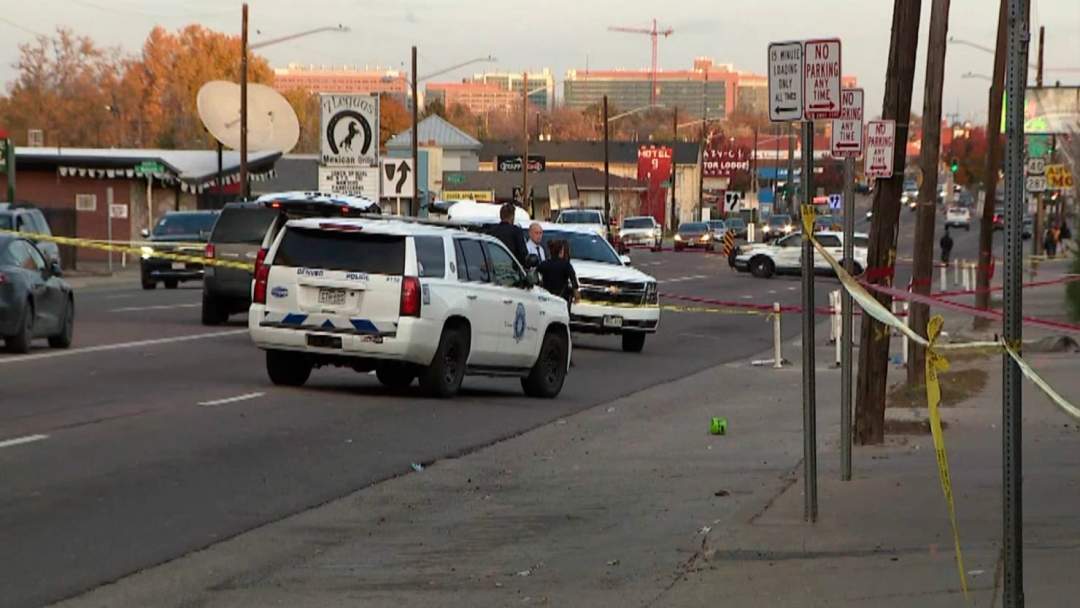
DJ Manzanares was killed on June 13, 2021. The Denver Police Department waited more than 48 hours to notify his family, who discovered his death from videos circulating on social media — not from the police department that had his identification and his registered vehicle at the scene.
In August 2021, Denver District Attorney Beth McCann cleared all three officers — Samuel Bailey, Ryan Nelson, and Steven Whiteman — of criminal charges, declaring the shooting "legally justified." The family was denied charges, denied transparency, and denied justice at every institutional turn. Body camera footage was withheld. Officer names were shielded. No independent investigation was conducted. No grand jury was convened.
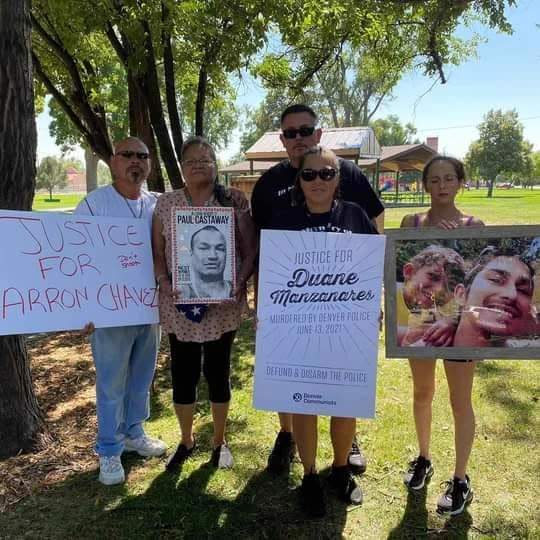
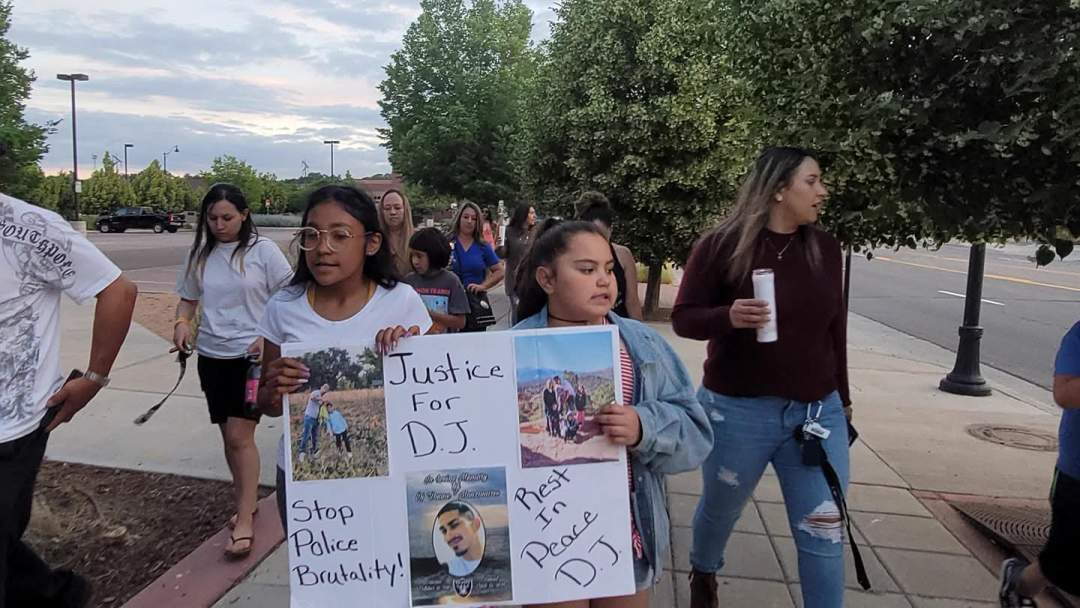
The family held rallies in Pueblo and Denver. They demanded answers. They protested on the same streets where DJ was killed. They refused to let his name disappear into the pile of victims of American police violence.
In June 2023, nearly two years after the killing, the family filed a civil lawsuit in Denver District Court — the only avenue for accountability that the legal system left open to them.
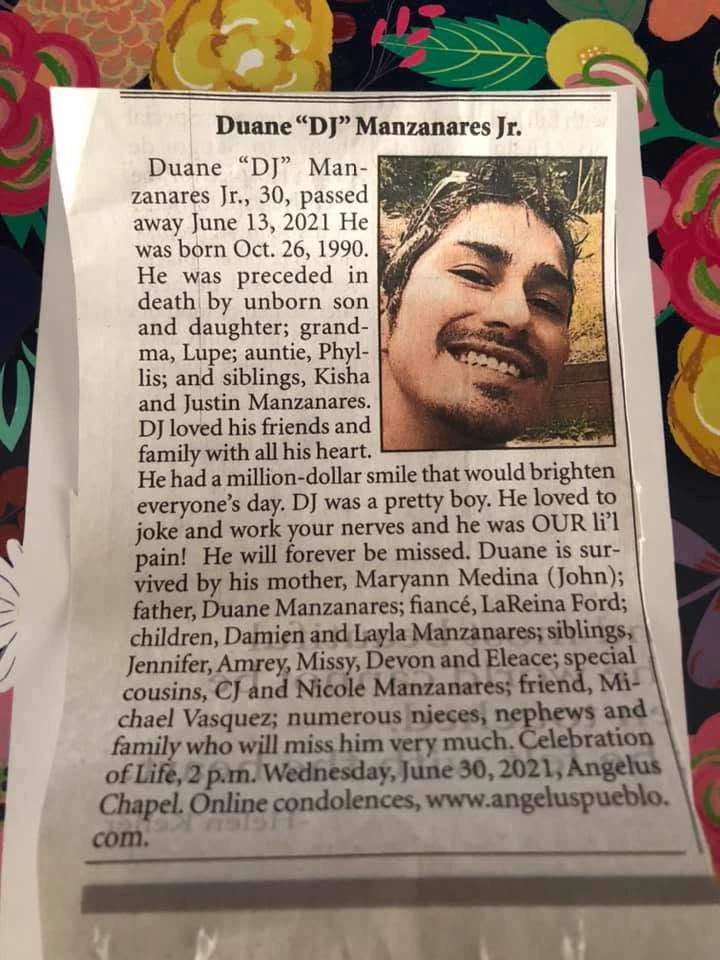
Newspaper photo of DJ's obituary
The Settlement: $800,000 for a Father's Life
The Denver City Council approved the $800,000 settlement on a Monday night in March 2025, adding DJ's name to the long and growing list of payouts the city has made to families of people killed by its police officers.
Denver has paid millions in police killing settlements over the years. Each settlement comes with the implicit admission that the city's officers did something wrong. Each settlement also comes with no admission of legal liability — the standard boilerplate that lets the city pay without ever saying "we were wrong" in a court of law.
$800,000. That is what the city of Denver determined a 30-year-old father's life was worth. A man who was raising his son as a single parent. A man who dropped everything and rushed to Denver when his child received the most devastating diagnosis a parent can hear. A man whose 8-year-old son, now a teenager, has spent years fighting leukemia without his father by his side.
The officers who killed DJ faced no criminal charges. They faced no disciplinary action beyond "modified duty assignment" — paid administrative leave. They were never publicly identified in a timely manner. They returned to their careers. Their names faded from public record.
The family got $800,000. The officers kept their badges. The system held.
The Pattern: Settlements Replace Accountability
The Manzanares settlement is not an anomaly — it is a feature of how American cities manage the consequences of police violence. Pay the family. Protect the officers. Move on.
Denver has been through this cycle repeatedly. The city pays out settlements, the officers involved face no criminal consequences, and the same patterns repeat. In 2025 alone, the Manzanares settlement was one of several police killing payouts approved by the City Council.
This is not accountability. This is risk management. Cities calculate the cost of settlements against the cost of reform, and they choose the cheaper option. An $800,000 settlement is a fraction of what it would cost to overhaul training, implement genuine accountability structures, and prosecute officers who kill.
The message is clear: the city will pay for the damage. But it will never change the system that causes it.
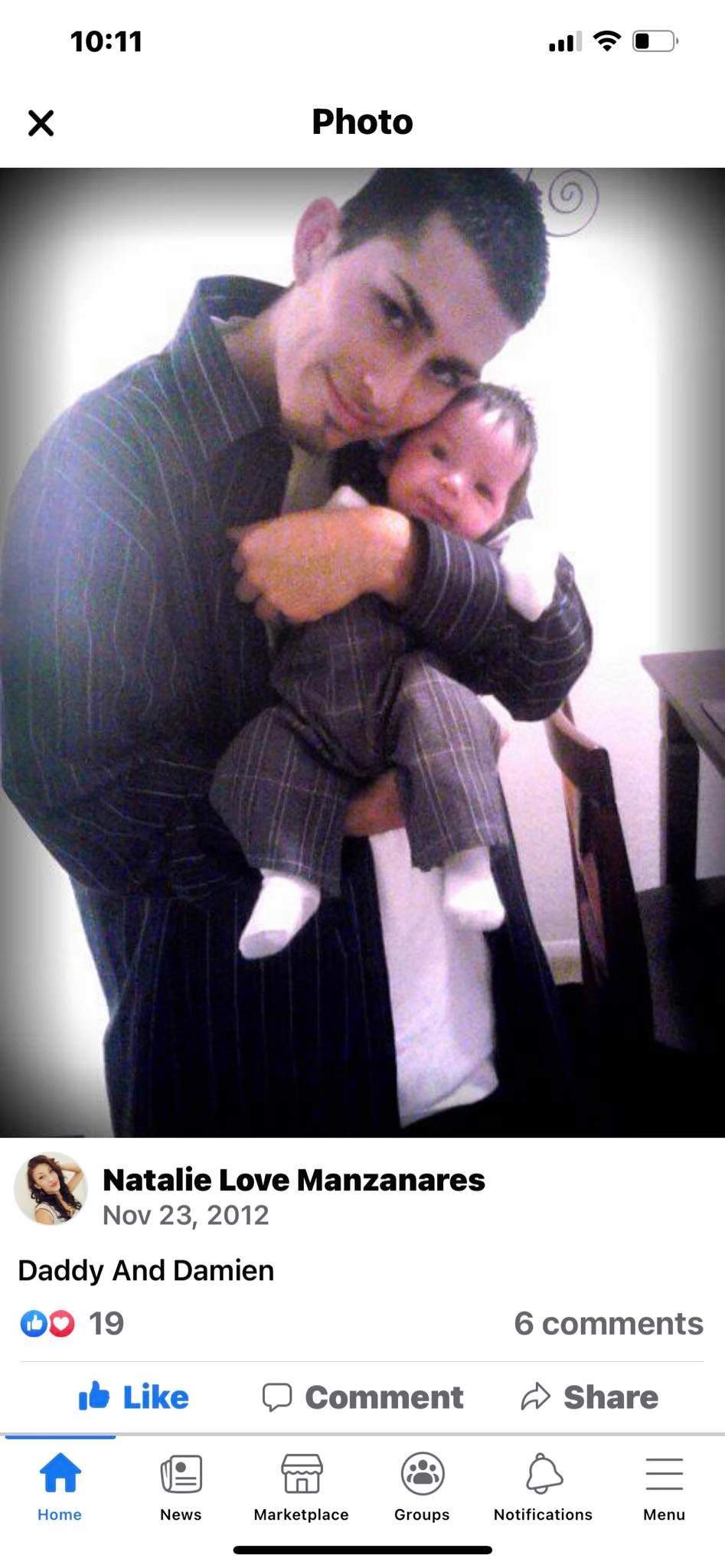
Photo & Facebook post of DJ and son Damien
Damien's Fight Continues
The settlement money will go to DJ's estate — and by extension, to his son Damien. The boy who was diagnosed with acute leukemia at age 8, who was in the ICU when his father was killed, who has now spent years in treatment without his father, will receive a financial settlement for a loss that no amount of money can repair.
Damien Manzanares has already endured more trauma in his young life than most people face in a lifetime. A cancer diagnosis. The death of his father. Years of chemotherapy and spinal taps. Growing up without the parent who was raising him alone.
$800,000 will help with medical expenses. It will help Mary Ann Medina-Trujillo, DJ's mother, who took on the caregiving burden for Damien and her other grandchildren. But it will not bring DJ back. It will not give Damien his father at his graduation, at his milestones, in the years of treatment that continue to this day.
The Protest That Kept the Story Alive
The settlement did not happen in a vacuum. It happened because the Manzanares family and their community refused to let DJ's story die.
On July 17, 2025, just months before the settlement was finalized, the community gathered once more for a protest demanding justice — this time on the ground, on the streets of Denver, with UnTelevised Media covering the action directly.
[Coverage of the July 17, 2025, protest for DJ Manzanares will be published separately.]
That protest — and the sustained activism of the Manzanares family over four years — is what forced the city to the negotiating table. Without it, DJ would be another statistic, another name on a list, another settlement the city quietly approved on a Monday night with no public attention.
The family fought. The community fought. And in the end, they forced a settlement that, while insufficient, at least acknowledges that what happened to DJ Manzanares was wrong.
The Full Story: Three Articles, One Truth
This is the third article in UnTelevised's coverage of the killing of Duane "DJ" Manzanares Jr. Together, these articles tell the complete story:
- [Justice for DJ: Denver Police Kill a Father Beside His Son's Hospital Bed](/articles/justice-for-dj-duane-manzanares-police-killing-denver/) — The killing itself: DJ's son in the hospital, the trip to Walmart, 11 rounds from three officers, and the 48-hour cover-up.
- [No Justice for DJ: The System That Killed Duane Manzanares and Protected His Killers](/articles/justice-for-dj-manzanares-the-fight-after-denver-police/) — The fight for justice: DA Beth McCann's exoneration of the officers, the family's protests, the institutional shield of anonymity and paid leave, and the system that investigates itself.
- $800,000 for a Father's Life: Denver Settles with DJ Manzanares's Family — The settlement: four years of legal battles, the civil lawsuit, the City Council's approval, and what $800,000 means for a family that lost everything.
[A fourth article covering the July 17, 2025, protest on the ground will be added upon publication.]
DJ Manzanares was a father, a son, a brother, and a man whose life was stolen from him by the state. The city of Denver acknowledged it with a check. His family, his community, and the movement for police accountability will remember him with the truth.
Sources & Methodology(7 sources)
Methodology
This article was reported using Denver City Council records, civil court filings, Denver Post and Denverite coverage of the March 2025 settlement, DA decision letters, family statements, GoFundMe testimony, and prior UnTelevised reporting on the Manzanares case. All material facts were cross-referenced across multiple independent sources.
Filed Under
Frequently Asked Questions
- How much did Denver settle for?
- The Denver City Council approved an $800,000 settlement for the estate of Duane Manzanares Jr. on March 17, 2025.
- Were the officers who killed DJ ever charged?
- No. DA Beth McCann cleared all three officers — Samuel Bailey, Ryan Nelson, and Steven Whiteman — of criminal charges in August 2021, ruling the shooting legally justified.
- When was the civil lawsuit filed?
- The family filed a civil wrongful death lawsuit in Denver District Court in June 2023, nearly two years after DJ was killed.
- What happened to DJ's son Damien?
- Damien Manzanares was diagnosed with acute leukemia at age 8 and was in Children's Hospital Colorado's ICU when his father was killed. He has undergone years of chemotherapy and treatment without his father. The settlement funds will go to DJ's estate for Damien's ongoing care.
- Where does this settlement fit in Denver's broader pattern?
- The Manzanares settlement is one of multiple police killing payouts approved by the Denver City Council. Denver has paid millions in settlements for police killings, while officers involved rarely face criminal consequences — a pattern of using financial payouts to replace genuine accountability.
![A restaurant's takeout window area with a large jagged hole smashed through the glass, tables and string lights visible inside. [Radical Edward - Untelevised Media]](https://cdn.sanity.io/images/ypejdt32/articles/6ce43fc29caba434d5be0701130cda948f122c1a-1030x691.png?fit=max&auto=format&w=1080&q=65)
![Blue jeep speeds towards back side of protest as several people throw items at the jeep. [Radical Edward - Untelevised Media]](https://cdn.sanity.io/images/ypejdt32/articles/f2de88c49a3b489332d4bf072cdb9e77238d076a-579x386.jpg?fit=max&auto=format&w=1080&q=65)