
"Should Have Paid Us More": A Warehouse Fire and the Breaking Point of American Labor
Chamel Abdulkarim stood in the Kimberly-Clark distribution center in Ontario, California, holding a lit Zippo lighter. He was filming himself on Instagram, walking through the 1.2 million square foot warehouse, past pallet after pallet of toilet paper wrapped in plastic.
"There goes your inventory," he said. Then he added the line that would echo across the country: "All you had to do was pay us enough to live."
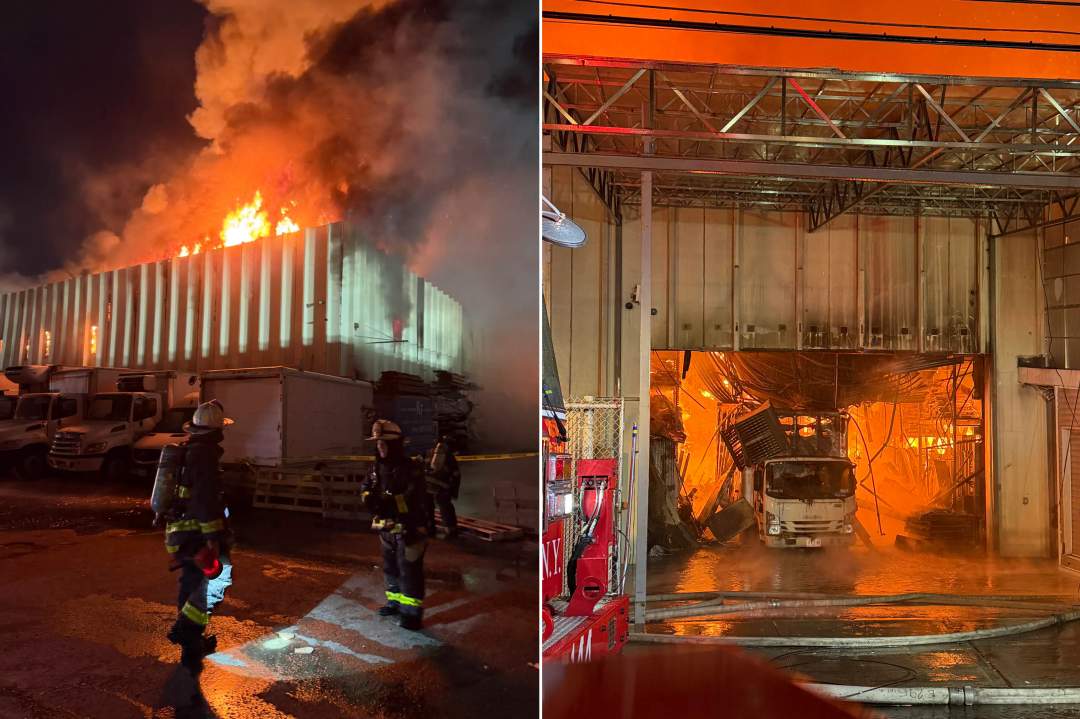
He ignited the paper. The warehouse burned. The roof collapsed. 175 firefighters from across Southern California spent hours trying to contain the blaze. A forklift driver named Alejandro Montero, who had worked alongside Abdulkarim for two hours that night, watched his job disappear.
Corporate media called it "arson." Police called it a crime. Kimberly-Clark called it a "disruption" that wouldn't affect supply.
But beneath the headlines and the hand-wringing over property damage lies a question the establishment doesn't want to ask:
What happens when workers have nothing left to lose?
The Video Heard 'Round the Warehouse
What made this fire different wasn't the flames. It was the confession.
Abdulkarim didn't hide. He didn't pretend it was an accident. He didn't try to escape. He filmed himself, walked through the warehouse, explained exactly what he was doing and why, and posted it to Instagram for the world to see.
He was 29 years old. He worked at the warehouse. He had sued a previous employer, PrimeFlight Aviation Services, in 2024 for failing to provide meal periods, rest periods, and accurate wage statements — a class-action lawsuit that was dismissed. He had a $2,976 credit card debt in collections.
He was drowning. And he decided to take the warehouse down with him.
The video shows him holding a lighter and a cigarette, saying, "You know, we may not get paid enough to live, but these bitches are dirt cheap."
Then he ignited a pallet. An intercom voice announces a fire in the warehouse. The flames spread.
This wasn't random. This wasn't passion. This was a calculation: if the company won't pay a living wage, the company doesn't get to keep its inventory.
The establishment is already condemning him. The police arrested him on multiple felony arson charges. He's being held without bail. The media is calling him a "suspect" and a "criminal."
But there's a reason the video went viral. There's a reason people on Reddit, Twitter, and TikTok are saying "good" and "about time."
Because millions of workers across this country are standing on the same edge.
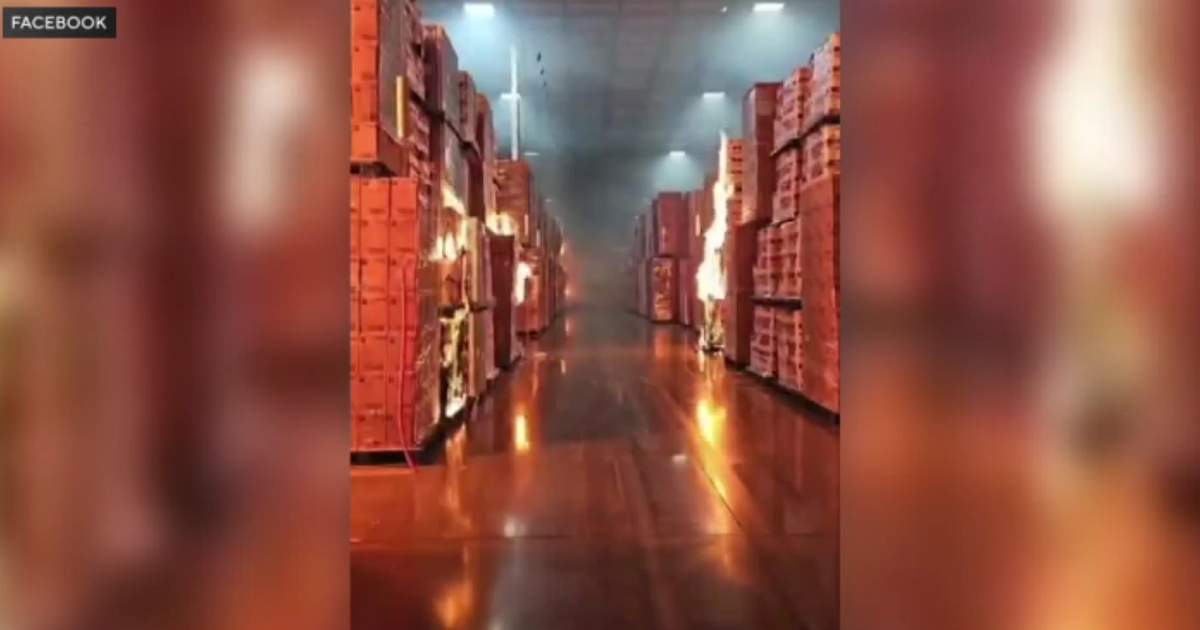
Rows of toilet paper stock as they begin to burn rapidly.
The Numbers That Don't Add Up
NFI Industries, the third-party logistics contractor that operated the warehouse for Kimberly-Clark, pays warehouse workers an average of about $18 an hour. Forklift operators make somewhere between $39,000 and $49,000 a year. Truck drivers top out at $85,000.
These aren't starvation wages — at least, they weren't five years ago. But in 2026, with inflation eroding purchasing power at a rate not seen in four decades, those numbers don't look the same. Rent in the Inland Empire has risen 40% since 2020. Gas is over $6 a gallon. Groceries cost 25% more than they did in 2021. The war in the Middle East has pushed energy prices higher and supply chains have never fully recovered from the pandemic.
You can't feed a family on $18 an hour anymore — not in California, not in 2026. The math doesn't work.
And that's the point. The system is designed not to work.
Corporate giants like Kimberly-Clark, a multinational conglomerate with $20 billion in annual revenue, don't run their own warehouses. They outsource to companies like NFI Industries, which in turn hire workers at the lowest possible wage to maintain razor-thin margins. It's a shell game of liability and responsibility — a way to extract maximum value from labor while minimizing accountability.
If the workers are underpaid, that's NFI's problem. If the warehouse burns down, NFI handles the insurance. Kimberly-Clark just keeps moving inventory.
The workers are caught in the middle, squeezed between stagnant wages and rising costs, watching their purchasing power evaporate while the companies they work for post record profits.
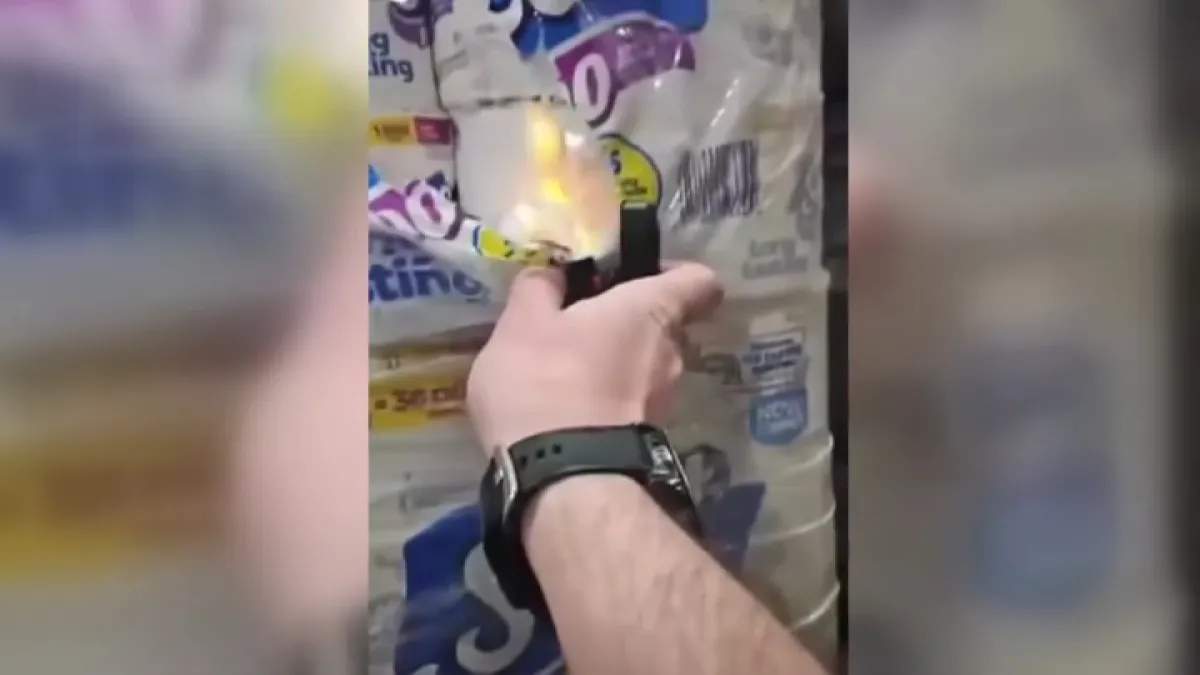
Toilet paper rolls being set on fire with a zippo lighter.
The History Workers Are Supposed to Forget
What Abdulkarim did has a name, though you won't hear it on the news: sabotage.
And sabotage has a history.
In the late 19th and early 20th centuries, as industrial capitalism transformed the American economy, workers discovered that strikes weren't always enough. When employers could bring in scabs, when they could use private security forces to break picket lines, when they could wait out a strike with reserves of cash, workers needed other weapons.
They started throwing their shoes into the machinery — sabotaging it. The word comes from the French sabot, a wooden clog. A worker would kick the gears, jam the works, stop production. It was direct, it was immediate, and it cost the boss money.
The Industrial Workers of the World (IWW) — the Wobblies — embraced sabotage as a tactic. They argued that workers had a right to withhold their labor, and they had a right to make that labor count. If the boss wouldn't pay a fair wage, the boss wouldn't get a fair product.
This is not history the American labor movement likes to celebrate. The AFL-CIO and mainstream unions have spent decades distancing themselves from militancy, embracing collective bargaining and arbitration and legal channels. They've built a relationship with corporate America that depends on predictability and order.
But the rank and file never forgot. And in 2026, with union density at historic lows and real wages falling for three straight years, workers are remembering.
The Kimberly-Clark warehouse fire is not an isolated incident. It's a symptom.
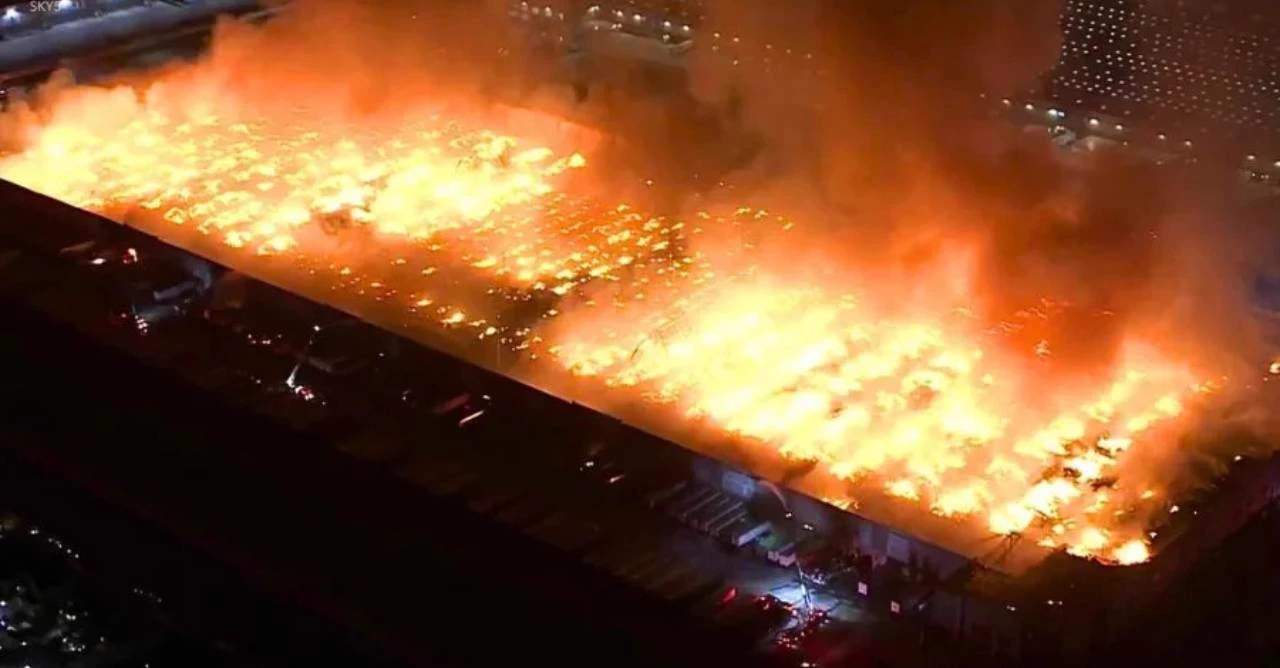
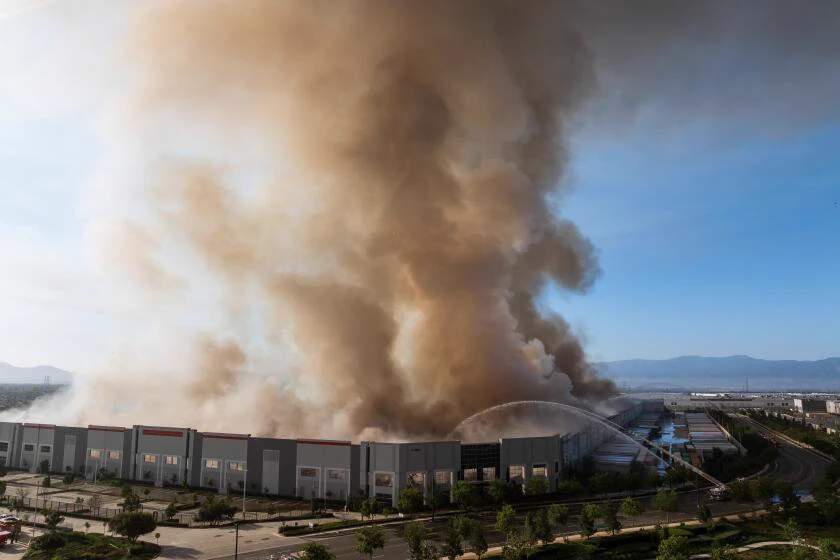
1.2 million sqft Kimberly-Clark warehouse engulfed in flames. (Aerial)
The War Economy Comes Home
The inflation crushing American workers isn't happening in a vacuum. It's being fed by the same imperial machine that's burning Gaza, that's expanding NATO, that's pouring $200 billion into a new Pentagon budget.
The United States has spent over $8 trillion on war and militarism since 9/11. That money doesn't just disappear. It gets funneled into defense contractors, into weapons manufacturers, into the same corporate structures that own the supply chains, the logistics companies, the warehouses where workers like Chamel Abdulkarim are pushed to the brink.
The war in the Middle East has driven up energy prices. The sanctions on Iran have disrupted global oil markets. The military aid flowing to Israel and Ukraine has created shortages in other sectors. The American working class is paying for imperialism twice — once in taxes, once in prices.
And then the politicians tell them inflation is "transitory" or "caused by supply chain issues" or "something the Fed will handle."
They don't mention that the Fed's response to inflation is raising interest rates, which means higher mortgage payments, higher credit card interest, higher car loan costs — more pressure on working families. They don't mention that the military budget keeps growing while wages stagnate. They don't mention that the system is working exactly as designed.
The war comes home. It just doesn't look like missiles and tanks. It looks like a warehouse worker standing in front of pallets of toilet paper with a lighter in his hand, deciding that if the system won't let him live, the system doesn't get to keep working either.
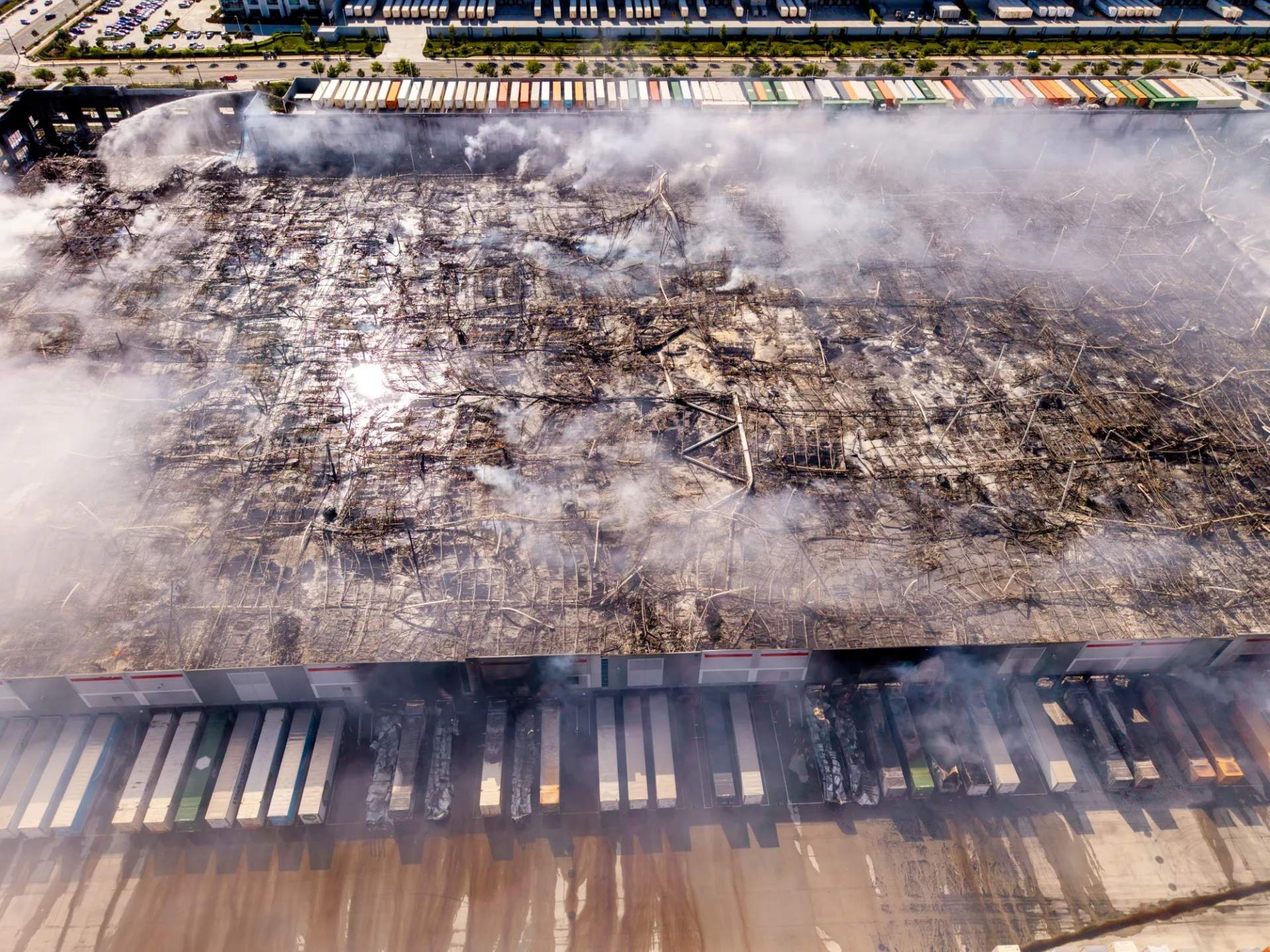
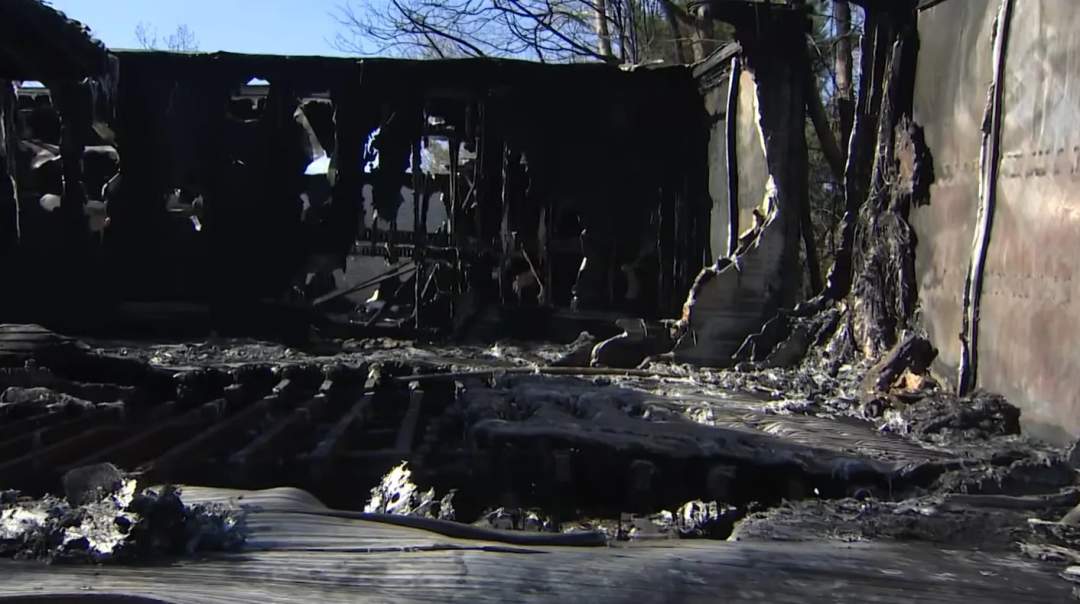
The ruins of Kimberly-Clark's Warehouse in Ontario,CA
The Two Crimes
There are two crimes here.
The first “crime” is what Chamel Abdulkarim allegedly did: setting fire to a warehouse.
The First “Crime”: Arson
The media will have you believe he endangered 175 firefighters, and thousands of co-workers. Okay maybe a little bit, that’s fair. However no one else can be seen in the videos he posted, no worker injuries were reported. Evacuation protocols appear to have worked. The firefighters had little time inside the building before being pulled out and shifting to entirely external operations. Others were exposed to very little real danger.
The firefighters did not even need to bother with attempts. as the photo of the ruins show, this fire was absolute. All attempts to extinguish the blaze were a total and utter failure. But our system is trained to protect capital at all cost. The only purpose of them even being present at all, would be to prevent spread
They will tell you he put other workers out of jobs. Again, technically yes he did, however no one working at the factory was being paid a livable wages. This ‘career’ was a mere step or two above starvation wages. Everyone will move on, things may be hard for a month or two, but the likely hood of landing a job with livable pay is looking a little better after this incident.
They will cry, he caused millions of dollars in property damage. Good. I believe that was the point.
“There goes your inventory”
At least $650 million and counting. This guy might break a billion in damages before its all said and done. Legend.
Good, you will find no sympathy for lost capital belonging to exploiters here. GOOD
However in America, that's a crime, and he's going to face brutal consequences. They will use Chamel to make a very, very strong example to us all. If you attack capital, you will rot in a modern day slave camp.
Make sure you bring that Luigi energy for Chamel
The Second Crime: Wage Theft
The second crime is paying a worker $18 an hour in 2026 and calling it a wage. The second crime is designing an economy where rent, food, gas, and healthcare outpace inflation every year while wages stay flat. The second crime is outsourcing labor to third-party contractors to avoid accountability. The second crime is spending trillions on war while workers struggle to put food on the table.
The first crime will be prosecuted. The police will investigate, the courts will sentence, the prison system will absorb Abdulkarim. The system will exact its revenge.
The second crime will never be prosecuted. The executives at Kimberly-Clark will keep their bonuses. The shareholders will keep their dividends. The politicians will keep taking campaign contributions from the same defense contractors fueling the inflation squeezing workers. The system will continue, unchallenged.
Because the second crime isn't a crime in the eyes of the law. It's just business.
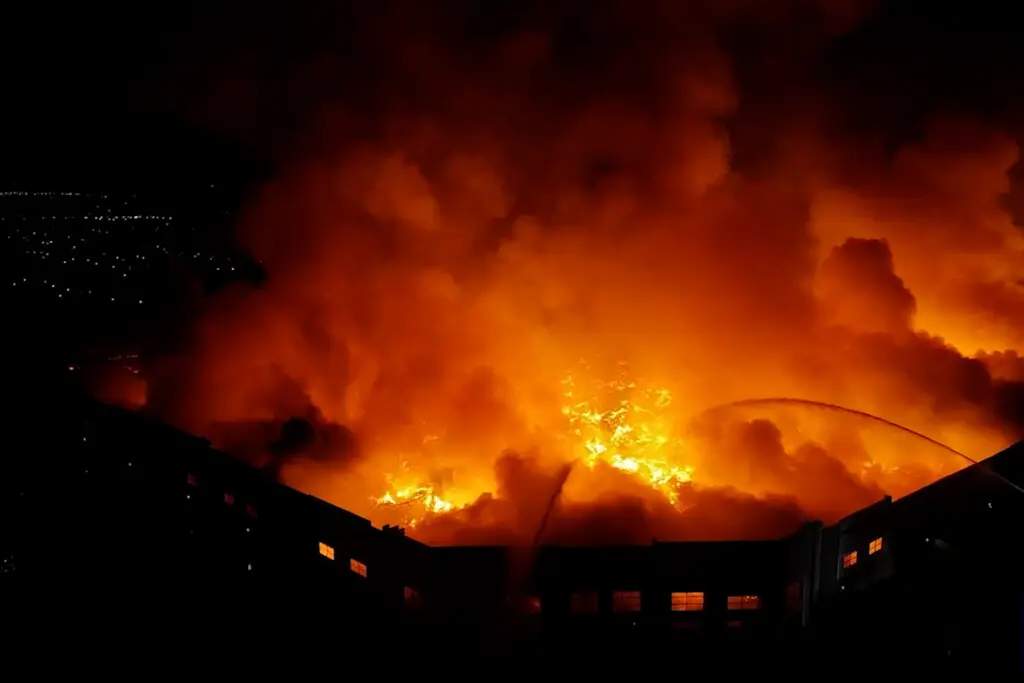
Water being sprayed onto the Kimberly-Clark fire.
What Happens Next
The Ontario fire department extinguished the blaze. The warehouse is a loss. Kimberly-Clark says supply chains won't be disrupted. NFI Industries hasn't commented on Abdulkarim's wage complaints.
Chamel Abdulkarim is sitting in a jail cell in Rancho Cucamonga, awaiting his initial court appearance.
Alejandro Montero is looking for a new job, saying he had "mixed emotions" — concern for his coworker, anger at losing his livelihood.
And somewhere in the back of every warehouse worker's mind, every Amazon picker, every gig driver, every service worker earning less than they need to survive, the question is forming:
What happens when we all reach the breaking point?
The establishment wants this story to be about one disturbed individual, one bad actor, one criminal who went too far. They want to isolate Abdulkarim, other him, turn him into a monster who doesn't represent anyone but himself.
But that's not how this works.
When one person sets fire to a warehouse and says, "Should have paid us more," and millions of people nod their heads, that's not a lone wolf. That's a signal flare.
The American working class is being pushed past its limits. The social contract is broken. The promise that if you work hard you'll be able to live has been revealed as a lie.
You can condemn the arson. You can say violence is never the answer. You can call for peaceful protest and legal channels and all the respectable things the establishment tells workers to do.
But you can't ignore the material reality that produced this.
When you starve people, they get desperate. When you strip them of dignity, they get angry. When you show them every day that their lives don't matter to the people in charge, they stop caring about the rules the people in charge made.
Chamel Abdulkarim set fire to a warehouse. The system set fire to the American worker.
The first fire is out.
The second one is just getting started.
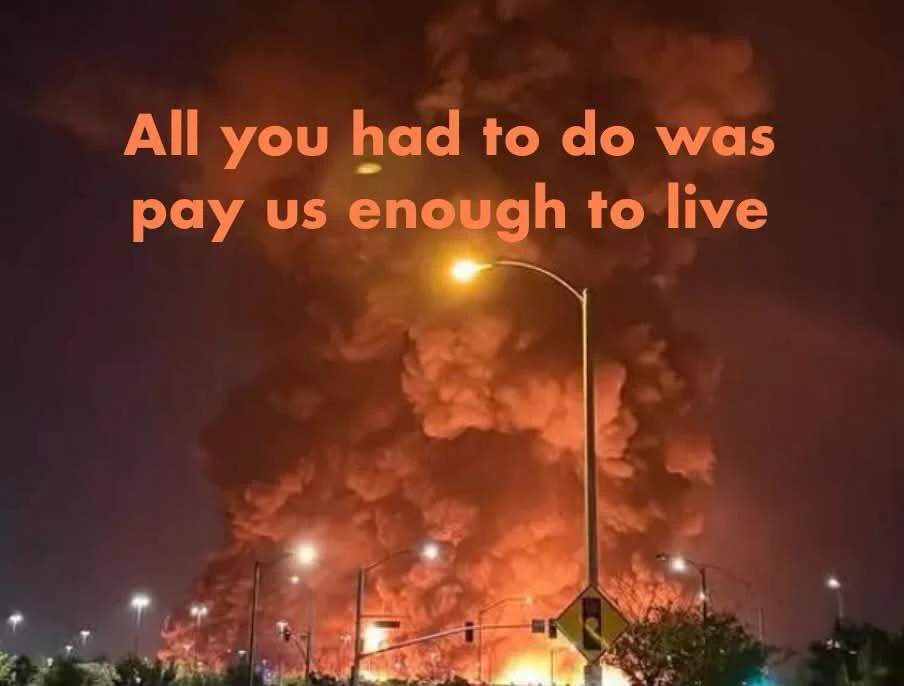
Smoke billowing from Kimberly Clark Warehouse from a distance. Text-overlay: All you had to was pay us enough to live.
The Viral Response: When a Criminal Becomes a Hero
The video didn’t just go viral.
It resonated.
On Reddit, threads in r/socialism, r/LosAngeles, and r/antiwork filled with comments like:
- “Good”
- “About time”
- “Let the conversation begin”
On Twitter, the clip amassed millions of views, with workers sharing their own stories of:
- wage theft
- unpaid overtime
- supervisors who promised raises that never came
TikTok creators stitched the footage into explainer videos about the collapse of the American social contract.
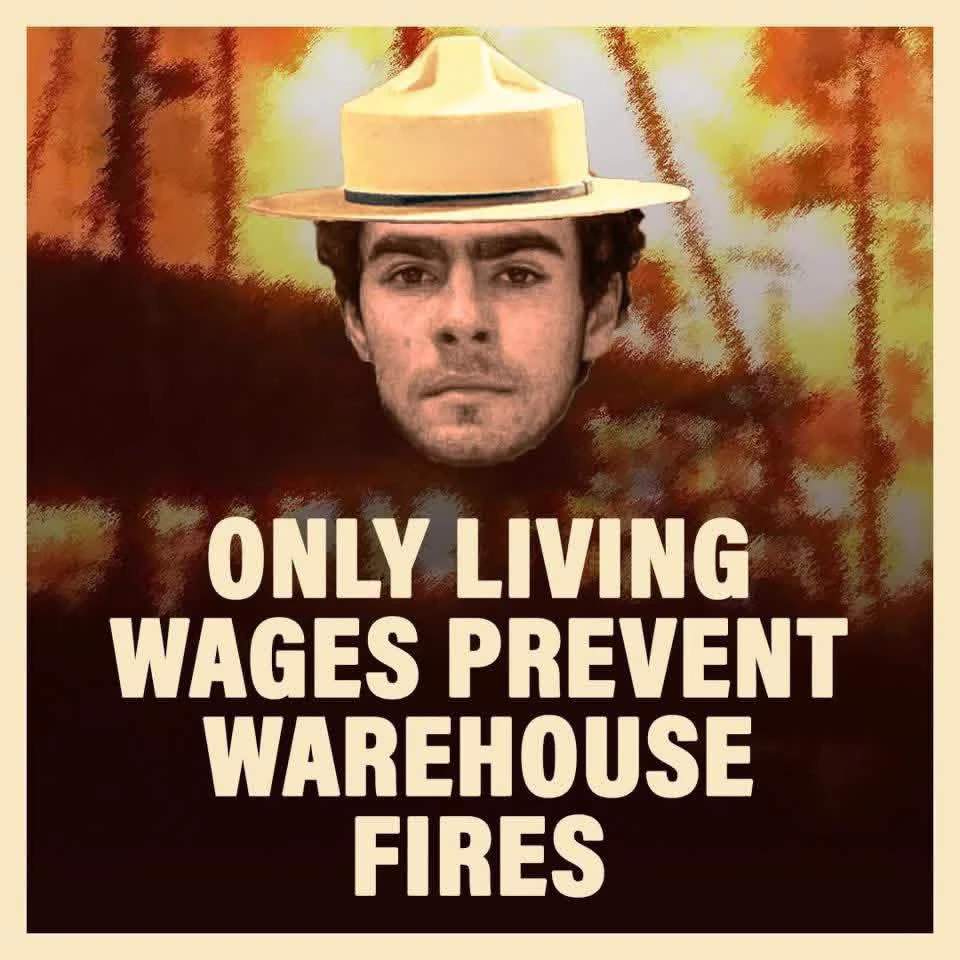
"Only living wages prevent warehouse fires" Meme featuring a ranger hat wearing Luigi
These weren’t isolated reactions or fringe responses — they were part of a broader pattern. Across platforms, people weren’t just reacting to the video itself; they were using it as a lens to talk about their own lived experiences, frustrations, and disillusionment with work and economic survival.
Corporate media framed the viral response as:
- “disturbing”
- “dangerous”
Police departments issued statements condemning the “glorification of crime.”
Local politicians called for:
- “calm”
- “respect for the rule of law”
But they missed the point.
They always miss the point.
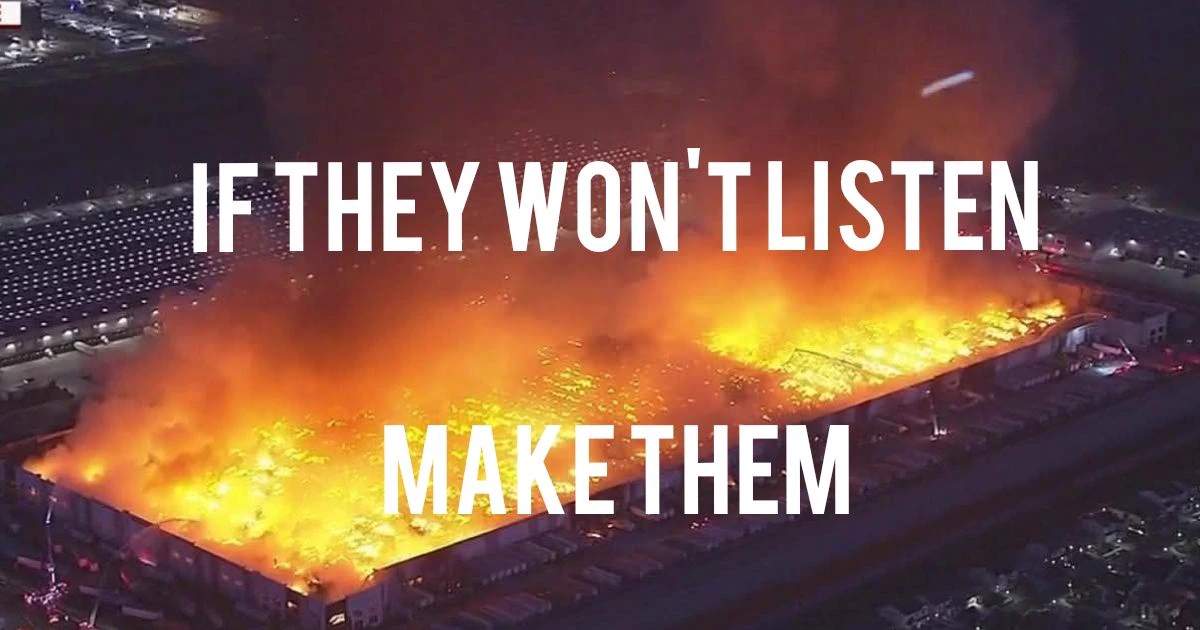
Aerial shot of entire Kimberly-Clark warehouse engulfed in flames. Text-overlay: If they won't listen, make them.
The framing focused on surface-level outrage rather than the underlying conditions driving the response. By treating the reaction itself as the problem, institutions avoided confronting the deeper systemic issues being expressed.
The reason people aren’t condemning Chamel Abdulkarim isn’t because they love arson.
It’s because they recognize themselves in him.
Every:
- Amazon picker who’s been written up for bathroom breaks
- gig driver who’s seen their pay cut overnight
- warehouse worker who’s been told “be grateful you have a job” while the CEO’s compensation triples
- service worker who’s done the math and realized there’s no path to survival on $15 an hour, let alone $18
These examples aren’t hypothetical — they represent common experiences across industries. The identification isn’t with the act itself, but with the frustration, exhaustion, and sense of being trapped in a system that offers no meaningful upward mobility.
They’re not cheering because a warehouse burned.
They’re cheering because someone finally said out loud what they’ve been screaming in private:
This isn’t working.
That sentiment has been building for years, often expressed quietly in conversations with coworkers, friends, or online communities. The video acted as a release valve — a moment where private frustrations became public and collective.
The establishment is terrified of this moment — not because a building burned, but because the building was the wrong target.
- Property damage is insurable
- Class consciousness is not
When you can isolate a “criminal,” you can:
- prosecute him
- other him
- assure the public this is an aberration
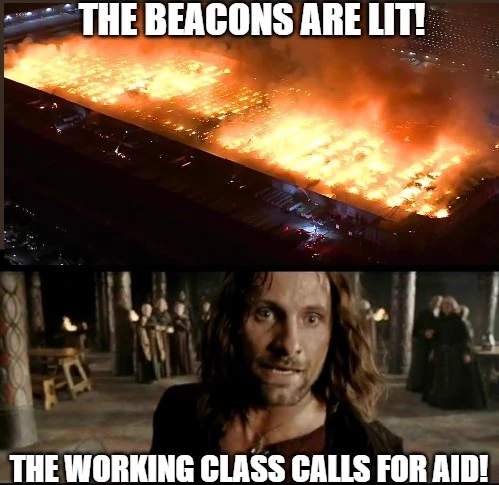
The beacons have been lit, the working class calls for aid!
But when millions of people look at that “criminal” and see a mirror:
The isolation strategy fails.
The narrative collapses.
This is where the reaction becomes more than just commentary — it becomes a challenge to the way events are typically framed and controlled. The usual mechanisms for containing dissent don’t work when the identification is widespread.
The comment sections aren’t just text.
They’re the sound of people realizing:
they’re not alone.
That realization is powerful. It transforms individual frustration into collective awareness, which is often the first step toward broader social or political shifts.
“I worked that warehouse. I know exactly what he means. You spend your whole day moving other people’s inventory, making other people rich, and you go home to a shared apartment because you can’t afford a studio. You watch prices go up every week at the grocery store and your paycheck stays the same. You try to tell yourself it’ll get better, it’ll turn around, you just have to work harder. But it doesn’t. It never does.”
This comment received 15,000 upvotes.
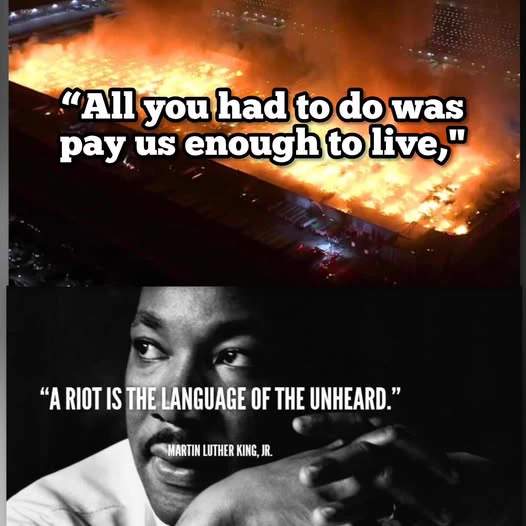
Top: "All you had to do was pay us enough to live" Bottom: "A riot is the language of the unheard" MLK
The popularity of comments like this highlights how widespread these experiences are. It’s not just one story — it’s a shared narrative repeated across thousands of lives.
Another thread on X (formerly Twitter) read:
“Setting fire to a warehouse isn’t the answer. But neither is paying people $18 an hour in 2026 and expecting them to starve quietly. The system creates the conditions for this response, then acts surprised when the response happens.”
That tweet was shared 80,000 times.
This kind of response reflects a more nuanced perspective — rejecting the act itself while still acknowledging the systemic pressures that make such reactions feel inevitable to some.
These aren’t just hot takes.
They are the opening salvos of a broader conversation:
- about class
- about power
- about who gets to live
- and who gets to survive
For decades, these discussions have existed in academic spaces, activist circles, and smaller communities. What’s different now is the scale and visibility — these ideas are entering mainstream discourse through viral moments like this one.
The Kimberly-Clark video became a Rorschach test:
- Some people saw a criminal
- Others saw a symptom
But what matters is how many people saw themselves.
That shift — from observation to identification — is what gives the moment its significance. It changes the conversation from “what happened” to “why does this feel familiar?”
The establishment is trying to bury the viral response, dismissing it as:
- “internet edgelords”
- “keyboard radicals”
But they’re missing what’s happening in the background:
- DM groups
- Discord servers
- IRL meetups
Where workers are organizing — not to burn warehouses, but to build something that works.
These quieter forms of organization rarely make headlines, but they are often where lasting change begins. The visible reaction is only one layer of a deeper, ongoing process.
The fire at the Ontario distribution center was a statement.
The viral response was an echo.
And the system is terrified because:
it’s starting to hear its own name.
Meme Archive
Firepower Mario & Luigi pose infront of the burning warehouse. Delay Deny Defend, All they had to do was pay us enough to live.
White house on fire with protesters gathering in front Text-overlay: All you had to do was pay us enough to live.
Linda Belcher torches the warehouse Tweet-overlay: Oh so you want to make enough to live?? What are you?? A fucking communist??
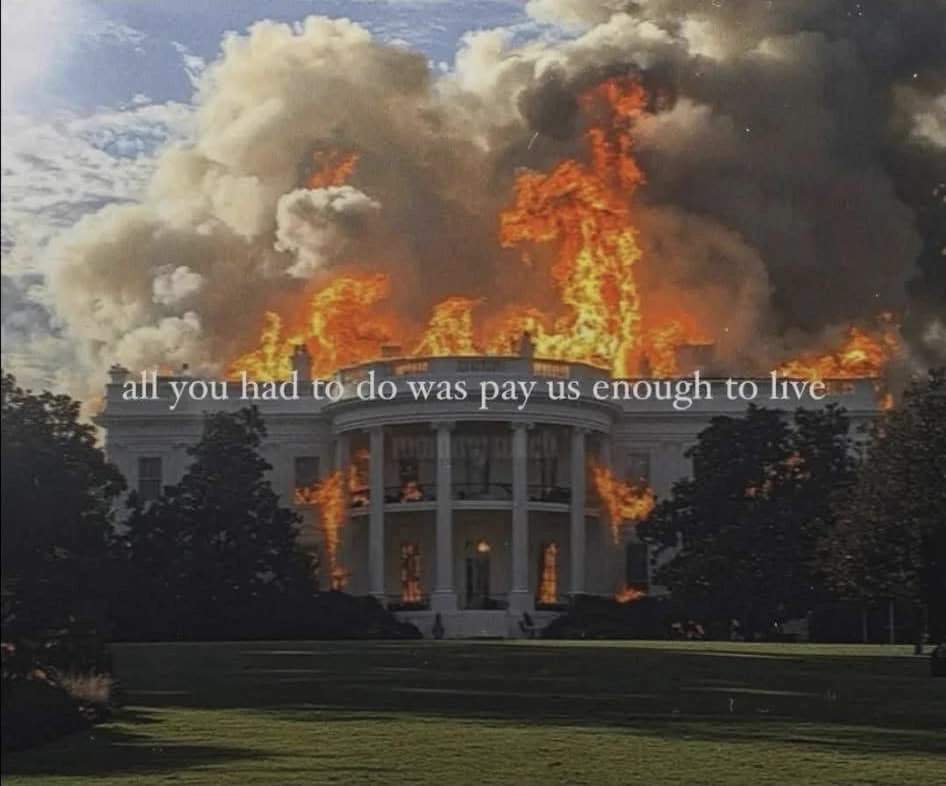
White House on fire Text-overlay: All you had to do was pay us enough to live.
A screen shot of the zippo lighting the toilet paper with the caption "The slaves are exhausted"
Sources & Methodology(3 sources)
- CBS Los AngelesNews Article
CBS News Los Angeles coverage of the Kimberly-Clark warehouse fire and the video showing the suspect igniting the blaze.
- FireRescue1 / Inland Valley Daily BulletinNews Article
In-depth reporting on the Kimberly-Clark warehouse fire, including suspect background, NFI Industries operations, and fire response.
Employee salary data showing warehouse worker wages at NFI Industries and third-party logistics contractors.
Filed Under
Frequently Asked Questions
- What happened at the Kimberly-Clark warehouse in Ontario, California?
- On April 7, 2026, 29-year-old Chamel Abdulkarim, an employee of NFI Industries, set fire to the 1.2 million square foot Kimberly-Clark distribution center. He filmed himself on Instagram igniting pallets of toilet paper while saying, "All you had to do was pay us enough to live" and "There goes your inventory." The six-alarm fire required 175 firefighters to contain and destroyed the entire warehouse.
- Who is Chamel Abdulkarim?
- Chamel A. Abdulkarim, 29, of Highland, California, was an employee of NFI Industries, the third-party logistics contractor operating the warehouse for Kimberly-Clark. He had previously sued PrimeFlight Aviation Services in 2024 for failing to provide meal periods, rest periods, and accurate wage statements. He was arrested on multiple felony arson charges and is being held without bail at the West Valley Detention Center.
- What are the wages at NFI Industries?
- According to Glassdoor salary data cited by Inland Valley Daily Bulletin, NFI Industries pays warehouse workers an average of about $18 an hour. Forklift operators earn between $39,000 and $49,000 annually, while truck drivers top out at $85,000. These wages have not kept pace with inflation, which has risen significantly since 2020, particularly in California's Inland Empire where rent is up 40%.
- How does the article connect this to war and imperialism?
- The article argues that the inflation crushing American workers is fed by U.S. militarism — over $8 trillion spent on war since 9/11, $200 billion in Pentagon budgets, and ongoing conflicts in the Middle East that drive up energy prices and disrupt supply chains. Workers are paying for imperialism twice: once in taxes, once in higher prices, while wages remain stagnant.
- What is the article's main argument?
- The article frames the warehouse fire as a symptom of a broken system where workers are pushed past their breaking point by wage stagnation, inflation, and economic exploitation. It argues there are two crimes: Abdulkarim's arson, and the systemic crime of paying workers unlivable wages while corporations and defense contractors profit. The piece connects this to the history of worker sabotage and the IWW, suggesting this incident is a signal flare from the American working class.