

Russia's Role in Israel-Hamas Conflict
Hamas Delegation Makes Visit to Moscow
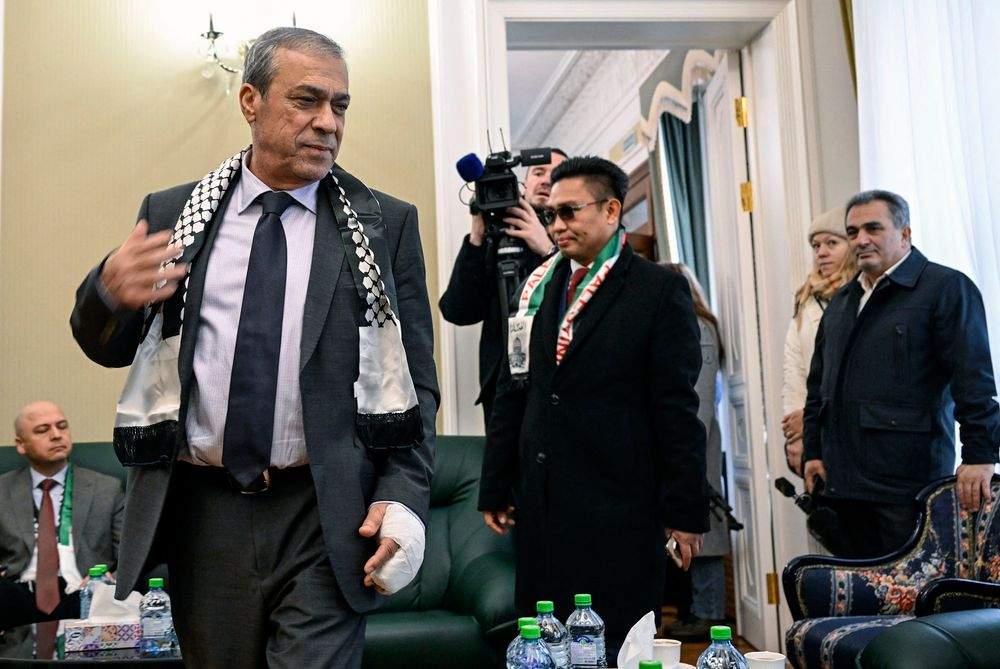
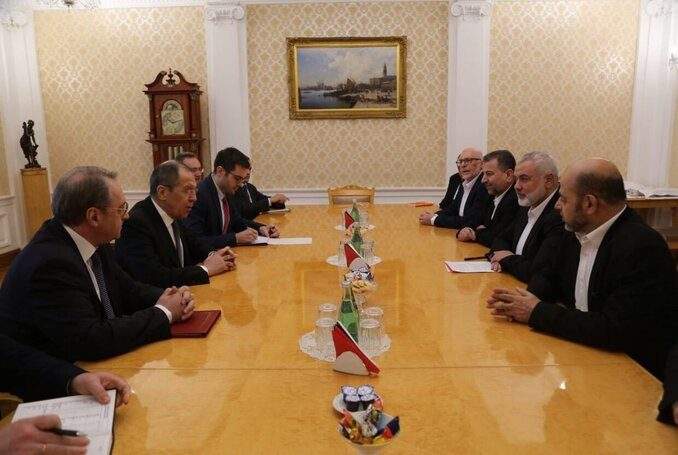
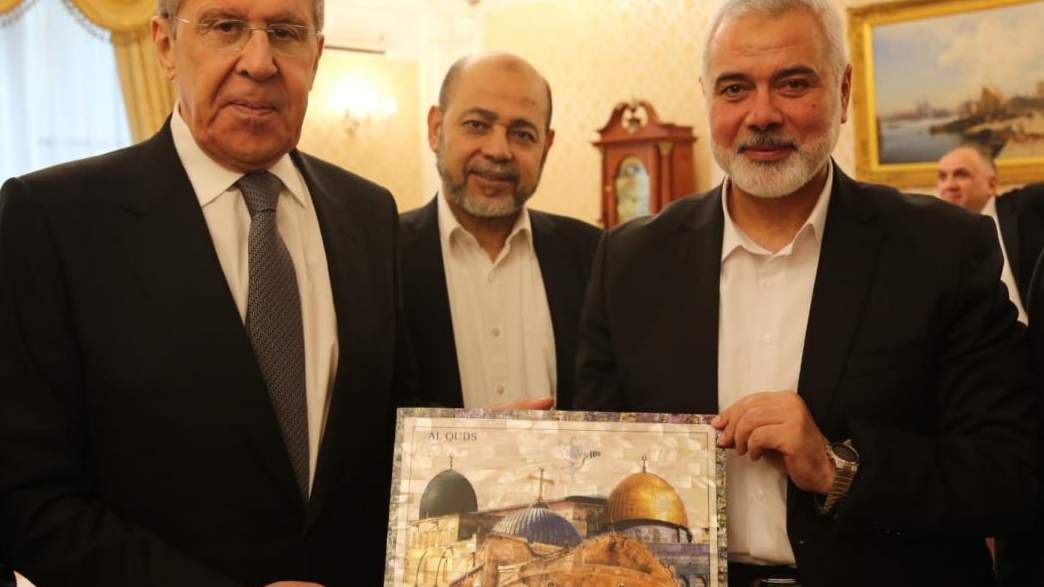
The recent official visit to Moscow by representatives from Hamas and Iran was roundly condemned by Israel. A spokesperson for Israel’s foreign ministry called the visit an “obscene step that gives support to terrorism and legitimizes the atrocities of Hamas terrorists”.
The Hamas delegation was led by Mousa Abu Marzook, a founder and political leader of the militant group. Iran was represented by deputy foreign minister, Ali Bagheri, who was received by his Russian counterpart, Mikhail Galuzin.
Moscow's Diplomatic Efforts
Russia has maintained active diplomacy in the Middle East, establishing relationships with various conflicting parties, including Iran, Syria, the Palestinian Authority, Hamas, Hezbollah, Egypt, and the Arab League.
Despite Russia’s involvement in a war in Ukraine that many still fear could engulf Europe, the Russian president, Vladimir Putin, has repeatedly warned that the conflict between Israel and Hamas in Gaza could escalate into a regional war.
His concern is shared by many in the west, given an uptick in activity by Iranian proxies in Syria and Iraq in recent months. This was given weight by US airstrikes overnight on October 26 against two facilities in eastern Syria that it identified as linked to Iran-backed militias.
Image
UN Security Council Resolution Efforts
A diplomatic solution to the crisis in Gaza remains a long way off, with the UN security council still riven with divisions. China and Russia vetoed a US-sponsored resolution while the US and UK vetoed a resolution sponsored by Russia.
The resolutions were similar in scope, calling for an immediate ceasefire. But the US resolution had language addressing states’ rights to self-defence while the Russian resolution called for a cancellation of the evacuation order for civilians to head into southern Gaza.
It appears that the security council is now so broken by cold war-style divisions that it has effectively been rendered paralyzed, even if its members share the goal of avoiding bloodshed in Gaza that could trigger a regional war.
The general assembly approved a non-binding resolution at the weekend, calling for a “humanitarian truce” in Gaza, but Israel and the US voted against. They were supported by 12 other countries, and 45 nations including the UK abstained, suggesting a lack of real consensus on the issue.
Putin's Mediator Role
But the visit of Hamas and Iran to Moscow does suggest that Russia could play a peacemaker role in Gaza – even while Putin is the subject of an arrest warrant from the International Criminal Court for alleged war crimes committed as part of the ongoing conflict in Ukraine.
Russia has diplomatic relationships with all the parties involved, despite their mutual antagonisms, and has historically pursued active diplomacy in the Middle East.
Russia’s ties with Israel are also important. The two countries had a difficult relationship during the cold war, when the USSR supported many of Israel’s mortal enemies in the Middle East as a way of countering US influence. But there was a rapprochement in the 1990s.
Putin and Ariel Sharon, who was then Israeli prime minister, developed a close rapport. Sharon’s successors have continued this policy of staying close to Moscow.
Image
Israel's Mediation Offer
After the Russian invasion of Ukraine in 2022, while the west lined up against Moscow, Israel offered to act as a mediator and refused to send lethal weapons to Ukraine. Putin has reciprocated by acknowledging Israel’s right to self-defense, while calling for the two sides to seek a long-term two-state solution.
Putin's Role in the Middle East
While making war in Europe, Putin is clearly trying to set himself up as a mediator in the Middle East. This is not as far-fetched as it might sound. Moscow has strong relationships with many of Israel’s antagonists: Iran, Syria, the Palestinian Authority, Hamas and Hezbollah, and major Arab powers, such as Egypt and the Arab League.
Russia as a Trusted Mediator
Before this most recent visit, Hamas officials had visited Moscow at least three times since the war in Ukraine. For them, Russia is the only actor they trust to mediate, given its rapport with both sides of the conflict.
Moscow also maintains contacts with Palestinian Islamic Jihad, whose secretary general, Ziyad al-Nakhalah, visited Moscow in February 2021 and was formally received by foreign minister, Sergei Lavrov. On October 17, ten days into the crisis, Putin had telephone conversations with the leaders of Syria, Iran, Egypt, Palestine, as well as Israeli prime minister Benjamin Netanyahu.
Diversion of Attention and Aid
From the Kremlin’s point of view, the crisis in Gaza diverts attention – and aid dollars – from the war in Ukraine. Although the US president Joe Biden urged Congress to approve another US$60 billion (£50 billion) in military aid for Ukraine against US$14 billion for Israel, it has been reported that ammunition destined for Ukraine has been diverted to Israel.
Russia's Diplomatic Stance
Many analysts believe that if it comes to prioritizing which country to support (a situation which hasn’t materialized – yet), Israel would win out. Russia’s diplomatic stance makes sense. Both sides in the Israel-Palestine conflict are entitled to security, but neither should use excessive force. Importantly, Moscow has put the two-state solution – which appeared to have been shelved over recent years – firmly back on the agenda.
Call for Reviving the Middle East Quartet
Russia’s foreign ministry spokesperson Maria Zakharova has called for the Middle East “quartet” of the UN, US, EU, and Russia to be revived, to “move … in the direction of implementing and fulfilling all those resolutions of the [UN] security council and general assembly that have been approved over all these years”.
Russia's Potential Role in Peace
Given all this, Russia could play a pivotal role in bringing peace to the Middle East. And arguably, the nature and severity of the crisis calls for the US to put its frustration with Putin aside for the sake of a greater good. The crisis is too big for geopolitical posturing. If Russia can help to resolve it, it should be given a chance. If it scores some points in the war of narratives, it is a small price to pay for peace.