
Juan Orlando Hernández — the former president of Honduras convicted of accepting millions in bribes from violent drug-trafficking organizations, sentenced to 45 years in a US federal prison, and pardoned by Donald Trump — landed at Palmerola International Airport on Sunday to a hero's welcome. Supporters waved flags. His mother, wife, children, and granddaughter embraced him. Dozens of National Party faithful cheered his return.
The man who, according to US prosecutors, once boasted he would “shove the drugs right up the noses of the gringos” is home. And he is expected to walk free.
The Boss of All Drug Bosses
Hernández led Honduras from 2014 to 2022. During his nearly decade in power, he built a political machine fueled by cocaine money. A federal jury in New York convicted him of participating in what prosecutors described as “one of the largest and most violent drug trafficking conspiracies in the world.” He accepted millions in bribes over 18 years, using drug money to finance his rise from a congressman to the presidency.
The US Department of Justice was blunt: “During his political career, Hernández abused his powerful positions and authority in Honduras to facilitate the importation of over 400 tons of cocaine into the US.”
Four hundred tons. That is not a drug bust. That is a state apparatus built on narcotrafficking, run from the presidential palace, with the complicity of military and intelligence services — all while Honduras received hundreds of millions in US security assistance. The same government that paid Hernández to fight drugs was, by his own prosecutors' account, his primary distribution partner.
A Pandora Papers investigation accused Hernández and other officials of diverting nearly $11 million in state funds to political campaigns from 2010 to 2013.
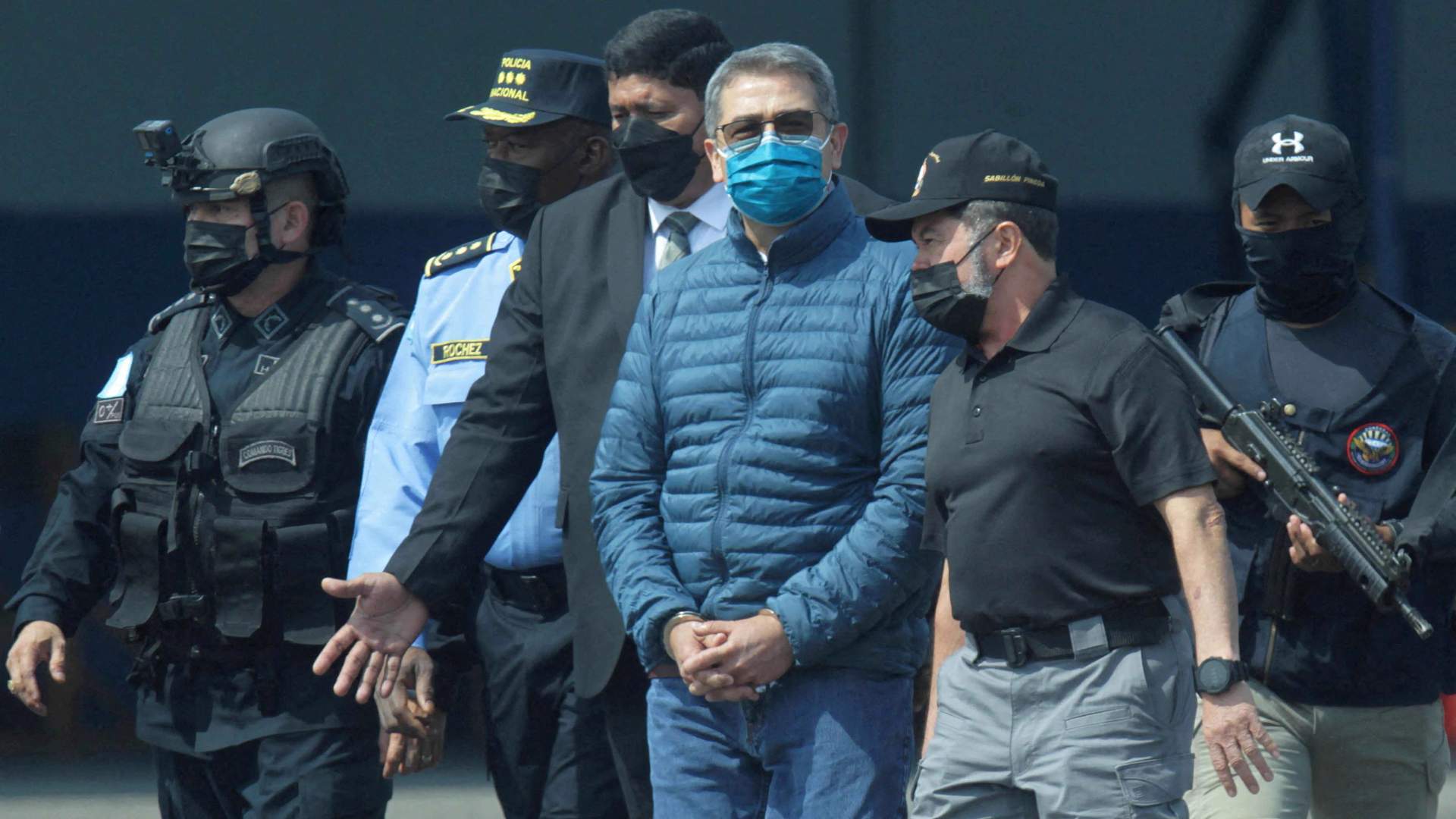
Juan Orlando Hernandez being escorted by federal authorities after being released arriving back to Honduras
The Pardon and the Hypocrisy
Trump pardoned Hernández in December 2025, claiming the trial was a “set up” orchestrated by the Biden administration — a claim contradicted by the verdict of a unanimous federal jury, the testimony of cooperating witnesses, and the sentencing judge. Trump said Hernández was “treated very harshly and unfairly.”
The same Donald Trump who pardoned a convicted drug lord then, two months later, sent US special forces to abduct Venezuelan President Nicolás Maduro from Caracas and fly him to New York to face drug-trafficking and narco-terrorism charges. The contradiction is not subtle: one head of state accused of drug trafficking gets a pardon and a parade; another gets a military kidnapping and a public perp walk.
Legal scholar Bruce Fein told Al Jazeera that the framers of the US Constitution “understood the abuse of the pardon power to shelter political or personal friends to constitute an impeachable high crime and misdemeanour.”
“If Democrats gain control of Congress in the midterm elections, Trump will be in impeachment jeopardy for pardoning Hernández.”
Since taking office, Trump has issued more than 1,800 acts of clemency — benefiting cryptocurrency billionaires, disgraced politicians, and hundreds of January 6 rioters. The pattern is not corruption by accident. It is corruption by design.
The rigged return
Hernández returns to Honduras not as a defendant awaiting justice, but as a power broker whose party controls the presidency. Nasry “Tito” Asfura, a member of Hernández's National Party, took office in January after winning an election marred by delays and allegations of fraud — an election in which Trump publicly backed Asfura.
Hernández faces domestic corruption charges related to the Pandora I case, which alleges a network of high-ranking officials diverted more than $10.8 million in state funds through shell companies, straw men, and fictitious contracts. Hernández personally received at least $2.3 million for his political campaigns, according to UFERCO, Honduras's Specialized Prosecutor's Unit Against Corruption Networks.
But no one expects a conviction. In June, a judge suspended his arrest warrant and the Interpol red notice — at the request of Hernández's lawyer. The former head of UFERCO, Luis Javier Santos, who investigated the case, was removed from his role in February in what he described as an attempt by the Asfura government to stifle anti-corruption investigations.
“There is a social majority that is outraged but doesn't speak out because of fear, said Joaquín Mejía, a lawyer and researcher for the human rights organization Reflection, Research and Communication Team. We're talking about the boss of all drug bosses.”
“Everything points to the suspension being the first step,” Mejía said. “He'll come, they'll likely issue him alternative measures to imprisonment to keep up appearances, and then he'll end up without any problem, without any sanction.”
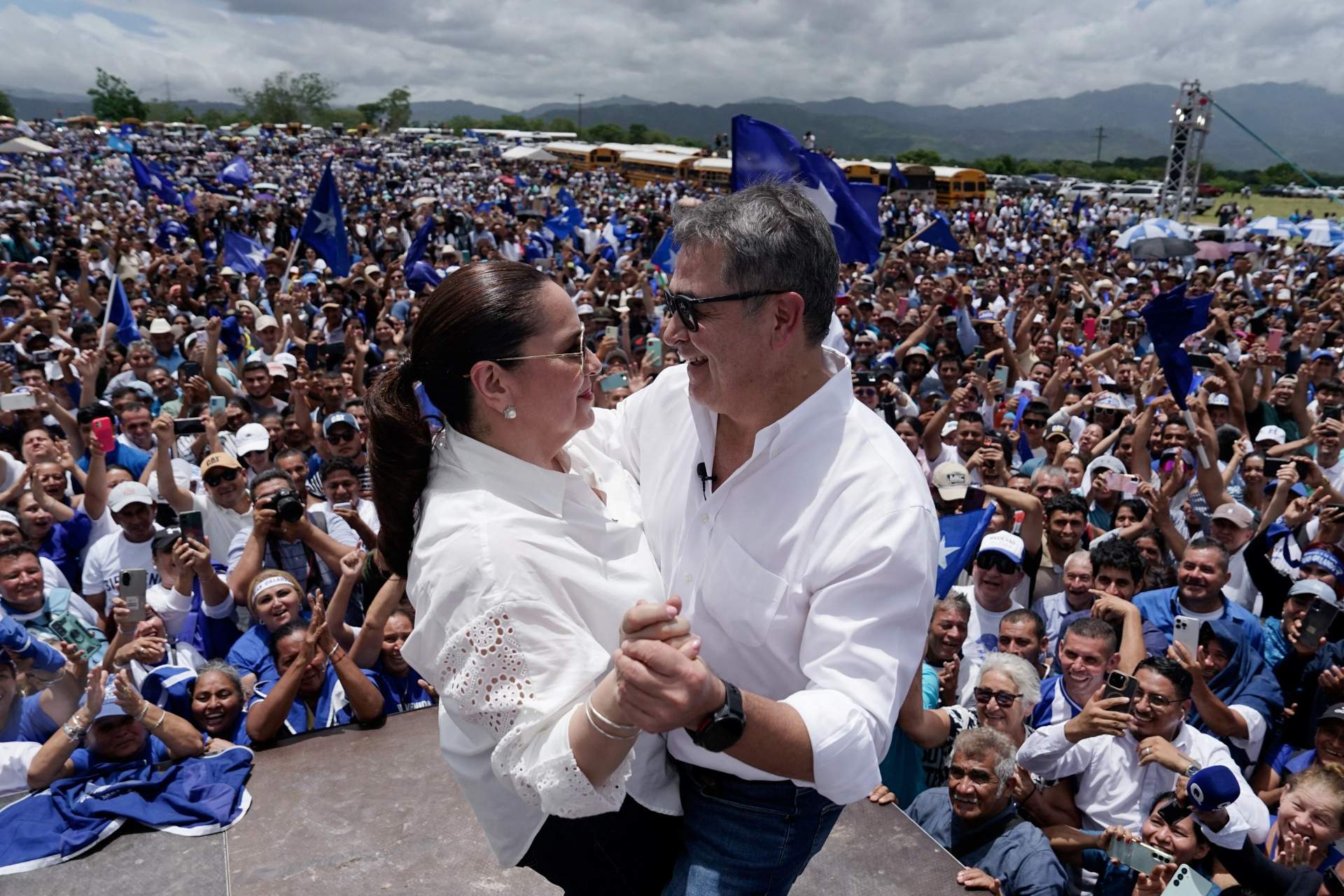
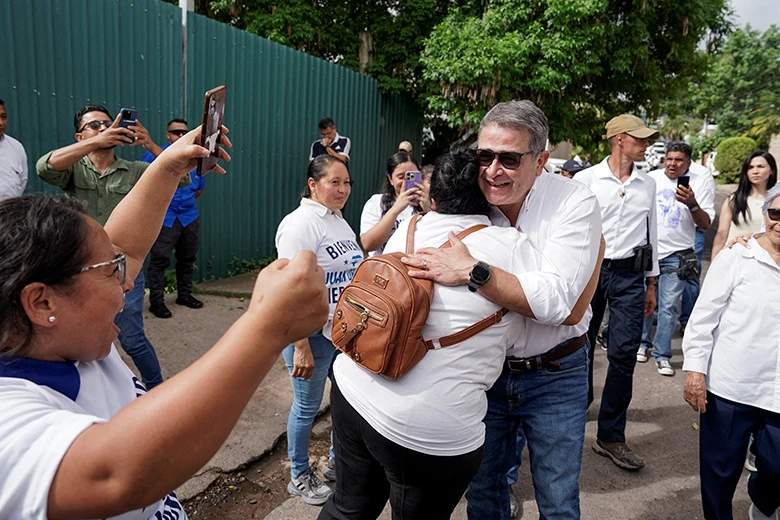
Juan Orlando Hernandez surrounded by supporters, embracing his wife, at his home in Comayagua, Honduras, gesturing as a crowd of people gather behind him on July 26, 2026
Honduras: The Cost of Empire
Hernández's return is not just a Honduran story. It is a story about what US imperialism looks like when the mask slips off. The United States funded Hernández's government, armed his security forces, and relied on his cooperation to deport refugees and suppress migration. In exchange, hundreds of tons of cocaine flowed north. When the arrangement became politically inconvenient, the US extradited and prosecuted him — then pardoned him when a new political calculus demanded it.
The victims of Hernández's drug state — the communities devastated by addiction in the US, the activists murdered in Honduras, the migrants fleeing the violence his government enabled — were never part of the calculation.
Hernández himself put it best, in a social media post before his return:
“I cannot deny the profound emotion and joy I feel in my heart to be returning home... It wasn't easy. The process has been extremely difficult... and what I experienced in prison, I truly wouldn't wish on anyone.”
What he experienced in prison was eight months of a 45-year sentence for crimes that, in his own country, will likely go unpunished. What the people of Honduras experienced during his presidency — the violence, the corruption, the narco-state — will take generations to undo.
The Timeline: From President to Pardoned Narco
| Date | Event |
|---|---|
| 2010-2013 | Pandora I scheme: $10.8M diverted through shell companies; Hernández receives $2.3M |
| 2014-2022 | Hernández serves two terms as president of Honduras |
| 2022 | Extradited to the United States shortly after leaving office |
| 2024 | Federal jury convicts Hernández of drug trafficking, weapons charges |
| 2025 | Sentenced to 45 years in federal prison |
| December 2025 | Trump pardons Hernández; released from prison |
| January 2026 | Trump backs Asfura (National Party) in Honduran election; Asfura wins disputed race |
| February 2026 | UFERCO investigator Santos removed from role |
| June 2026 | Judge suspends Hernández's arrest warrant and Interpol red notice |
| January 2026 | Trump abducts Maduro from Venezuela on similar drug charges |
| July 26, 2026 | Hernández returns to Honduras; greeted by supporters at Palmerola Airport |
| August 3, 2026 | Hernández expected to appear in court for Pandora I arraignment |
The Living: Luis Javier Santos
Luis Javier Santos, the former head of UFERCO who built the corruption case against Hernández, was removed from his position in February — dismissed by a government run by the same party Santos was investigating. He described the removal as part of a broader effort to dismantle anti-corruption infrastructure under Asfura's presidency.
“We have gone backward to an even worse point than when all the work to fight corruption began”, Santos told the Los Angeles Times.
The message is clear: investigate the powerful at your peril.
Sources & Methodology(2 sources)
Methodology
Reported using Al Jazeera, Los Angeles Times, AP News, and Washington Times coverage. Trial details from DOJ sentencing statement. Corruption case details from UFERCO. Quotes from Joaquín Mejía (Reflection) and Luis Javier Santos (former UFERCO head). Timeline verified across multiple wire services.
Filed Under
Frequently Asked Questions
- Why was Juan Orlando Hernández in prison?
- Hernández was convicted in a US federal court of accepting millions in bribes from drug-trafficking organizations over 18 years, using the money to fuel his political rise. Prosecutors said he facilitated the importation of over 400 tons of cocaine into the US. He was sentenced to 45 years.
- Why did Trump pardon him?
- Trump claimed Hernández did not receive a fair trial and that it was a 'setup' by the Biden administration. The pardon came shortly before Trump backed Hernández's party colleague Nasry Asfura in Honduras's presidential election.
- Does Hernández still face charges in Honduras?
- Yes, he faces corruption charges related to the Pandora I case alleging $10.8 million in diverted state funds. However, a judge suspended his arrest warrant in June, and experts expect his party's control of the presidency to ensure his impunity.