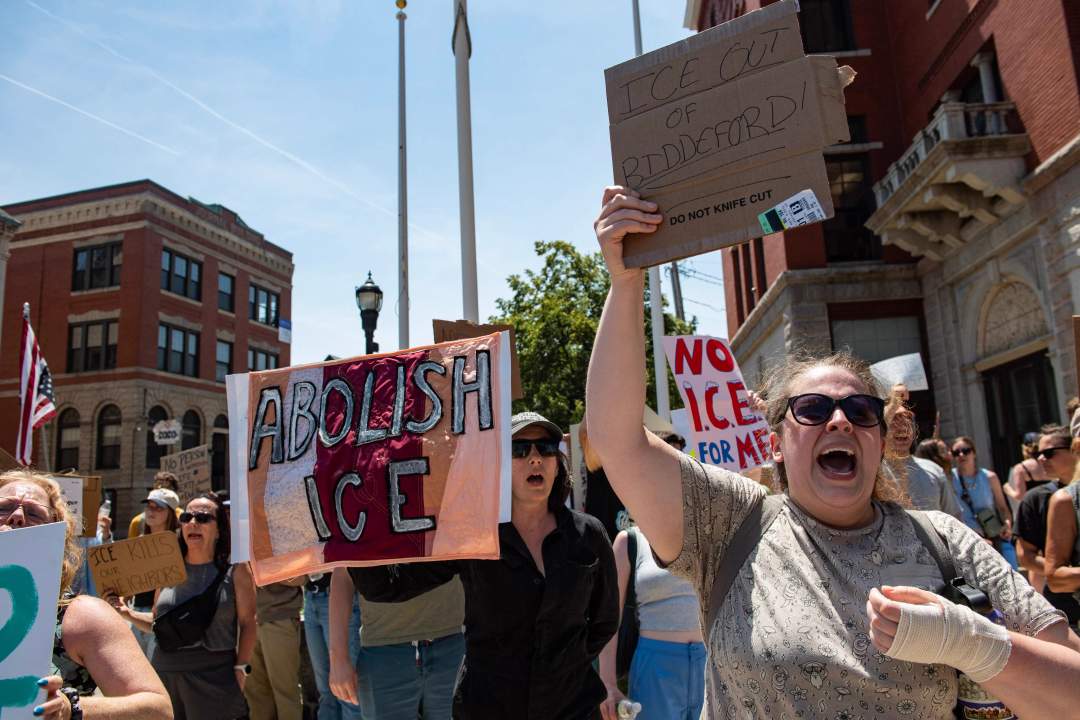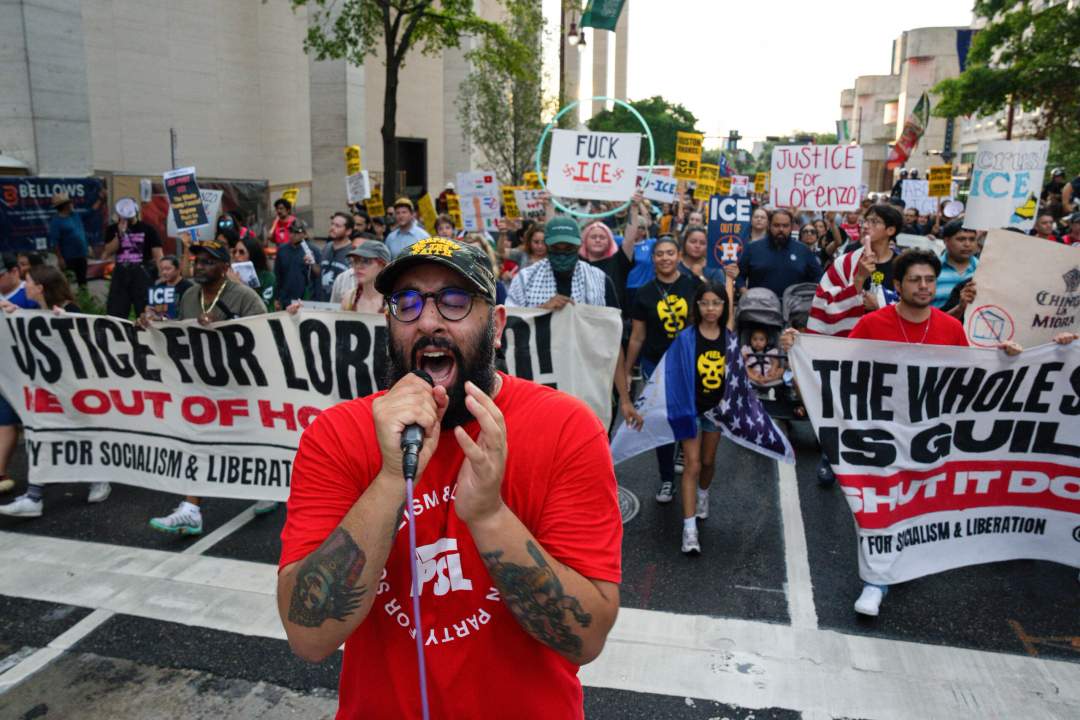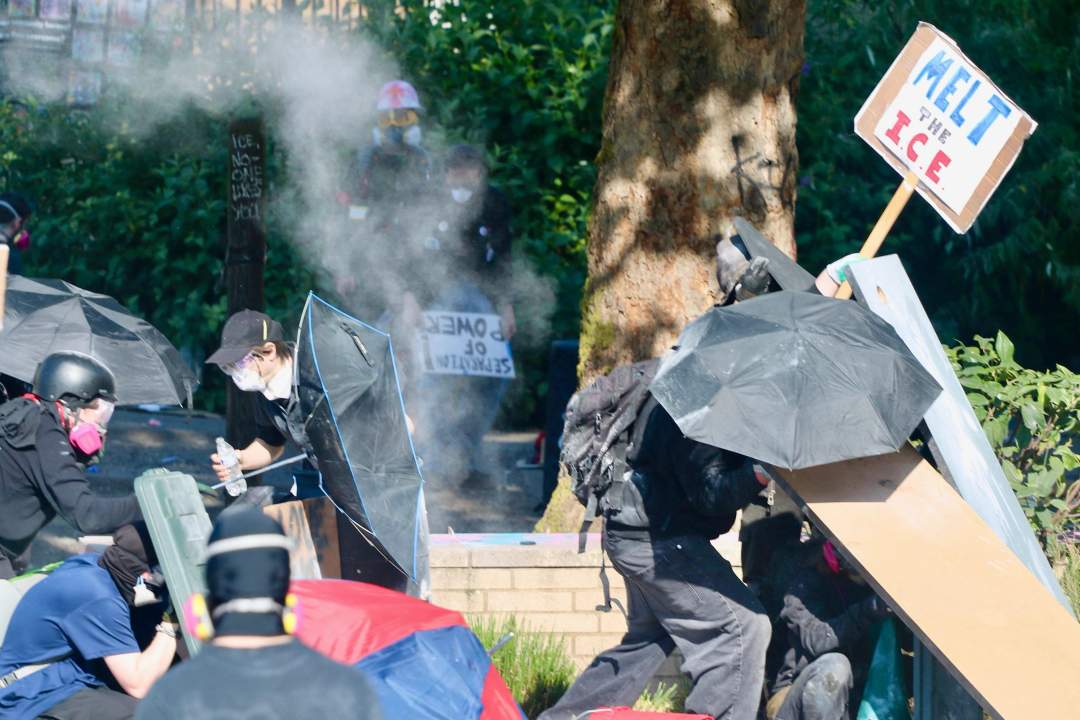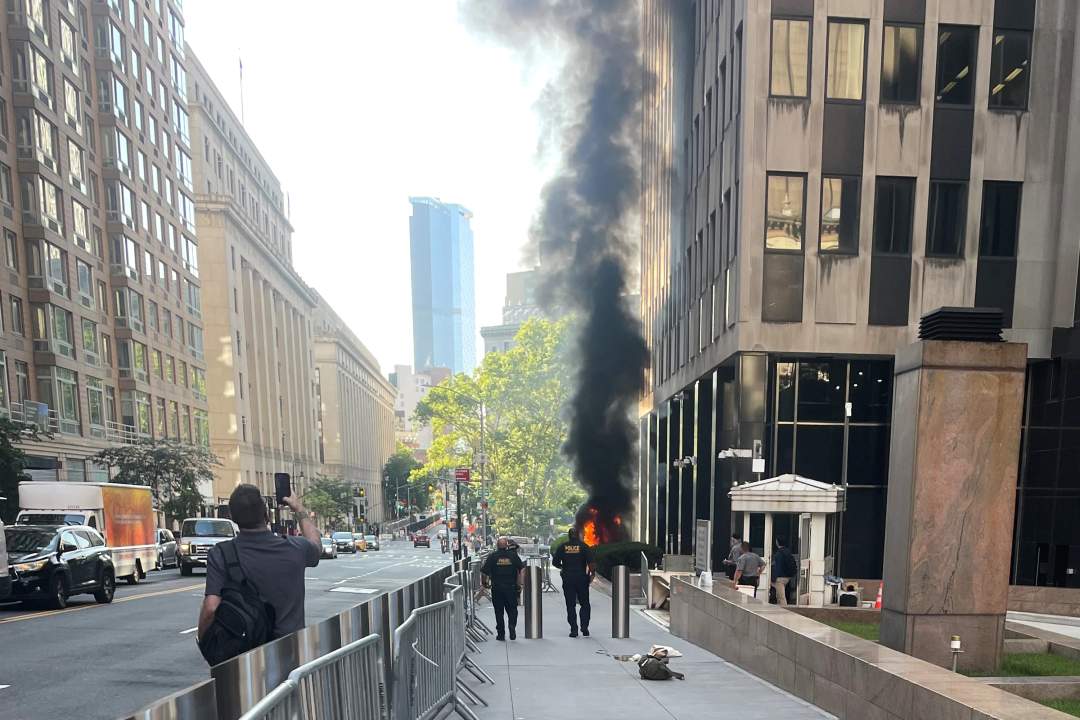

On Saturday, July 25, more than 330 communities across the United States held vigils, protests, and demonstrations under the banner #ICEOut — a national day of action honoring Lorenzo Salgado Araujo and Johan Sebastián Guerrero, two men killed by Immigration and Customs Enforcement officers earlier in July, and the at least 75 people who have died at the hands of ICE since January 2025.
In Pasadena, demonstrators planted dozens of white crosses bearing the photos and names of the dead outside a Home Depot — a makeshift cemetery for a body count that keeps climbing. In New York, Brooklyn's Metropolitan Detention Center became the site of a "No More ICE Murders" rally. In Santa Barbara, in Maine, in Houston — in cities large and small — people gathered to read the names of the dead aloud and demand that the killing stop.
The vigils brought together clergy, immigrants' rights organizations, labor unions, and ordinary citizens. At many, the names were read one by one. Between each name, a singing bowl rang out. At others, the list included "unidentified man" and "four unidentified women" — people who died in ICE custody or during enforcement operations whose names were never recorded.
“Now 75 people have died at the hands of ICE. We were originally told, 'Oh they're going to go after the criminals, the people who are the worst of the worst.' That's a lie; that is not what's happening. They're targeting communities, they're targeting people of color. It's fascism. Anybody who cares about humanity should care about what's happening.”
— Andra Clarke, organizer with San Gabriel Foothills Indivisible, Pasadena
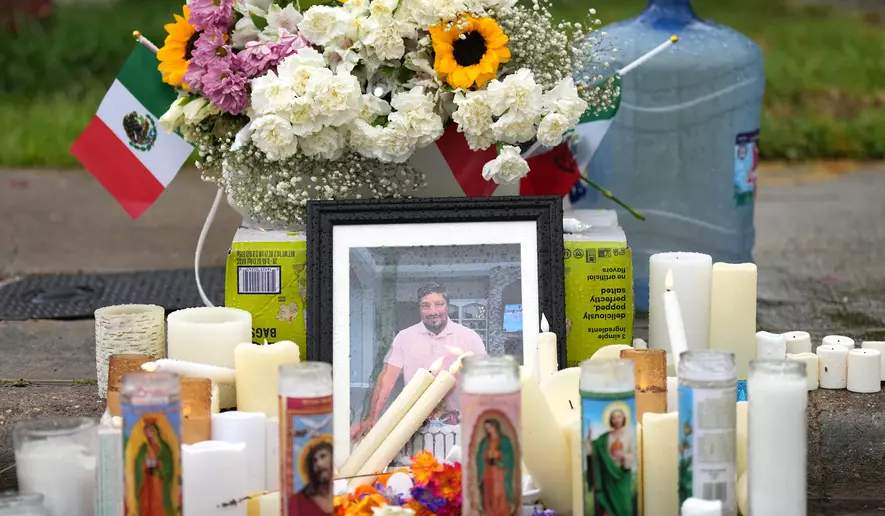
Flowers, candles, and photos at a makeshift memorial on a Houston street where Lorenzo Salgado Araujo was killed by ICE
The Dead: Lorenzo Salgado Araujo
Lorenzo Salgado Araujo was a 52-year-old Mexican immigrant. He was born in Tlatlaya, State of Mexico, and had lived in the United States for 35 years. He owned a small construction business. He and his wife, whom he met as teenagers in Mexico, had three children — all American citizens. One of his sons, Ronaldo, is a teacher. Ronaldo said his father had "dedicated his life to giving his family the American dream."
Salgado Araujo had no criminal record. He had begun the process of applying for legal authorization. He was not the target of the ICE operation that killed him.
At approximately 6:50 a.m. on July 7, 2026, Salgado Araujo left his family's home in Houston, picked up his work crew in his white van, and drove toward a construction site on Canal Street. ICE agents in unmarked SUVs saw the van, decided someone inside resembled a different person they were looking for, and attempted a traffic stop. What happened next is disputed.
DHS claims Salgado Araujo ignored commands and attempted to ram an officer with his vehicle. His family, civil rights groups, and elected officials contest this account. Witnesses have said an ICE officer shot Salgado Araujo through the open passenger window of his van. He was struck in the abdomen. The ICE agents had no body cameras.
Salgado Araujo was transported to Ben Taub Hospital, where he was pronounced dead. After the shooting, ICE detained the witnesses — Salgado Araujo's co-workers — preventing them from speaking to investigators or the press for hours.
Mexico announced it would seek criminal charges over the killing. CNN reported that, according to a source, Salgado Araujo was not the target of the ICE operation that ended his life.
The Dead: Johan Sebastián Guerrero
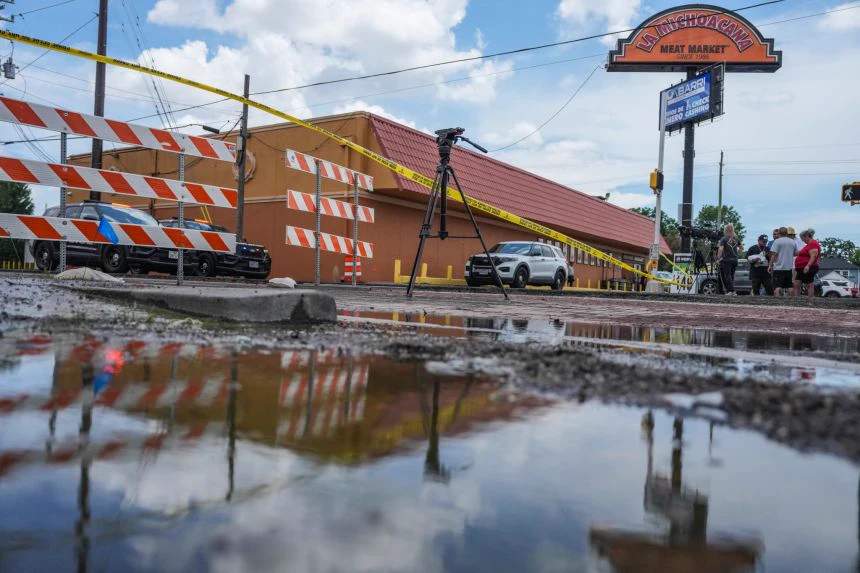
Johan Sebastián Durán Guerrero was 25 years old. He was Colombian. He lived in Biddeford, Maine — a small city in the southern part of the state — where he worked as a cleaner and food delivery driver. He had a partner and a 3-year-old daughter.
On the morning of July 14, 2026, an ICE officer conducted a traffic stop on a street in Biddeford. Guerrero was shot and killed. His partner was present. His 3-year-old daughter was in the car.
“My daughter asks for Papa.”
— Partner of Johan Sebastián Guerrero
DHS broke its silence hours after the shooting, stating that the officer was "fearing for public safety." The agency has released few details. A memorial of flowers and candles has gone up near the spot where Guerrero's partner fell to her knees and his daughter cried. His father described him as a "loving" person who worked relentlessly to provide for his family.
Neighbors in Biddeford, a community of roughly 22,000 people, expressed shock. Maine is not a border state. It is not a state where immigration enforcement is a daily presence. The killing of a young father during a traffic stop — in front of his family — shattered whatever distance Mainers might have felt from the machinery of immigration enforcement.
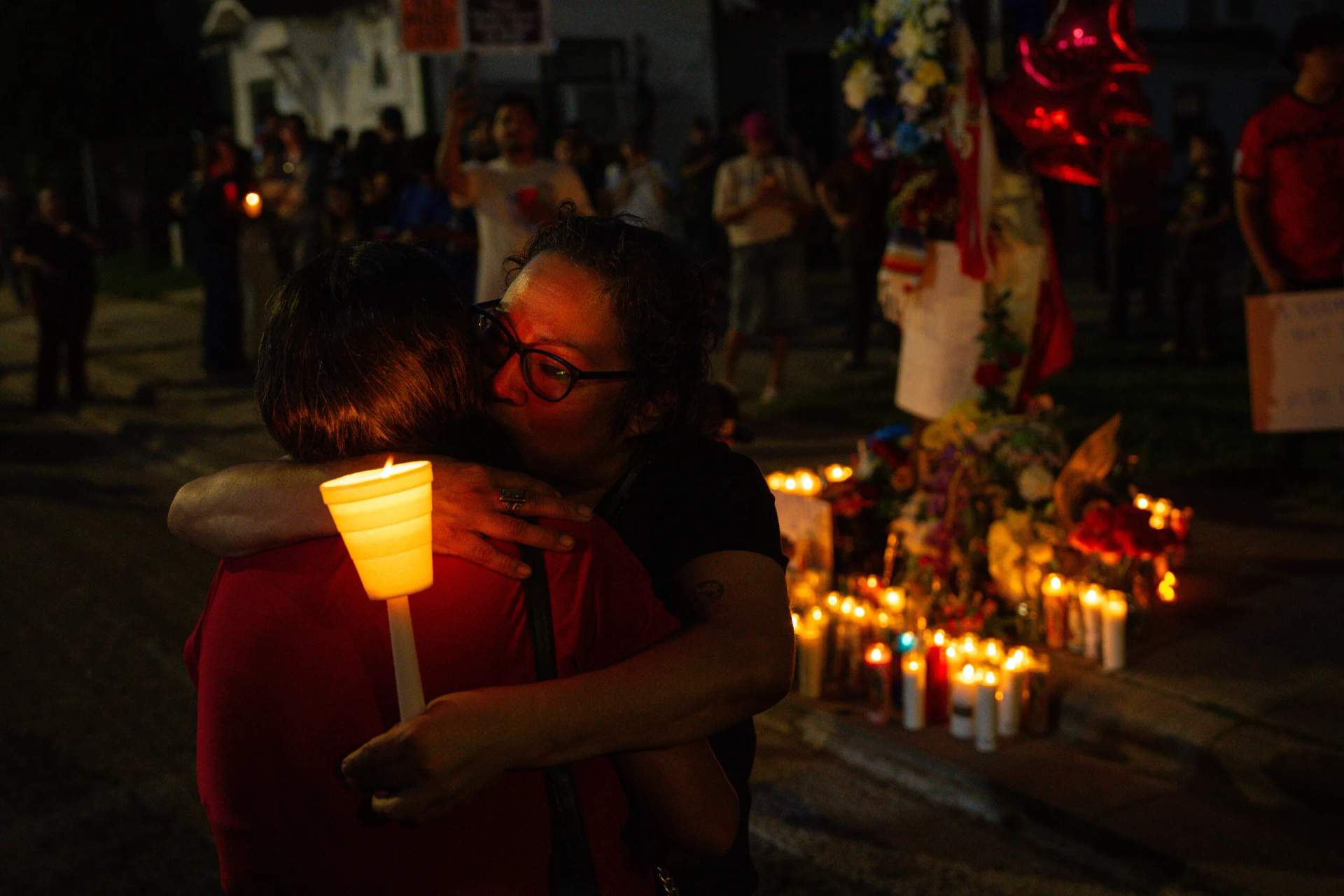
Woman embracing another person at a candlelit vigil for Lorenzo Salgado Araujo in Houston
The Count: 75 and Rising
The national day of action was organized by a coalition including Public Citizen, the League of United Latin American Citizens (LULAC), the National Day Laborer Organizing Network (NDLON), and dozens of local organizations. The vigil map showed events in every region of the country — red dots spanning from California to Maine, Texas to Washington state.
Among the names read at the vigils were people killed in a staggering variety of circumstances:
- Roberto Carlos Montoya Valdez, 52, killed while fleeing ICE agents who descended on a Home Depot in Monrovia, California
- Keith Porter Jr., killed by an off-duty ICE officer in California
- Francisco Gaspar-Andrés, 48, who died in a Texas detention center in December
- Daphy Michel, 31, found unresponsive at a bus shelter in Pittsburgh after ICE released her into "cold winter conditions and no care for mental health episodes or notice to relatives"
- Juan Jairo Coronilla Durán, who died in ICE custody
- An unidentified man killed when a tractor trailer struck him as he fled an ICE raid in Florida
- A Cuban immigrant who died in a detention center — his death later ruled a homicide
- A Mexican national who fell 30 feet to his death during a raid in California
The details, when you read them, are sickening. A man fleeing a raid struck by a truck. A woman released into the cold without notification to her family, found dead at a bus stop. A man shot through the window of his own work van while driving his crew to a job site. A father killed at a traffic stop while his toddler watched from the backseat.
“Are we going to wait until 70 more die to do something?”
— Marlom Portillo, educator with the National Day Laborer Organizing Network
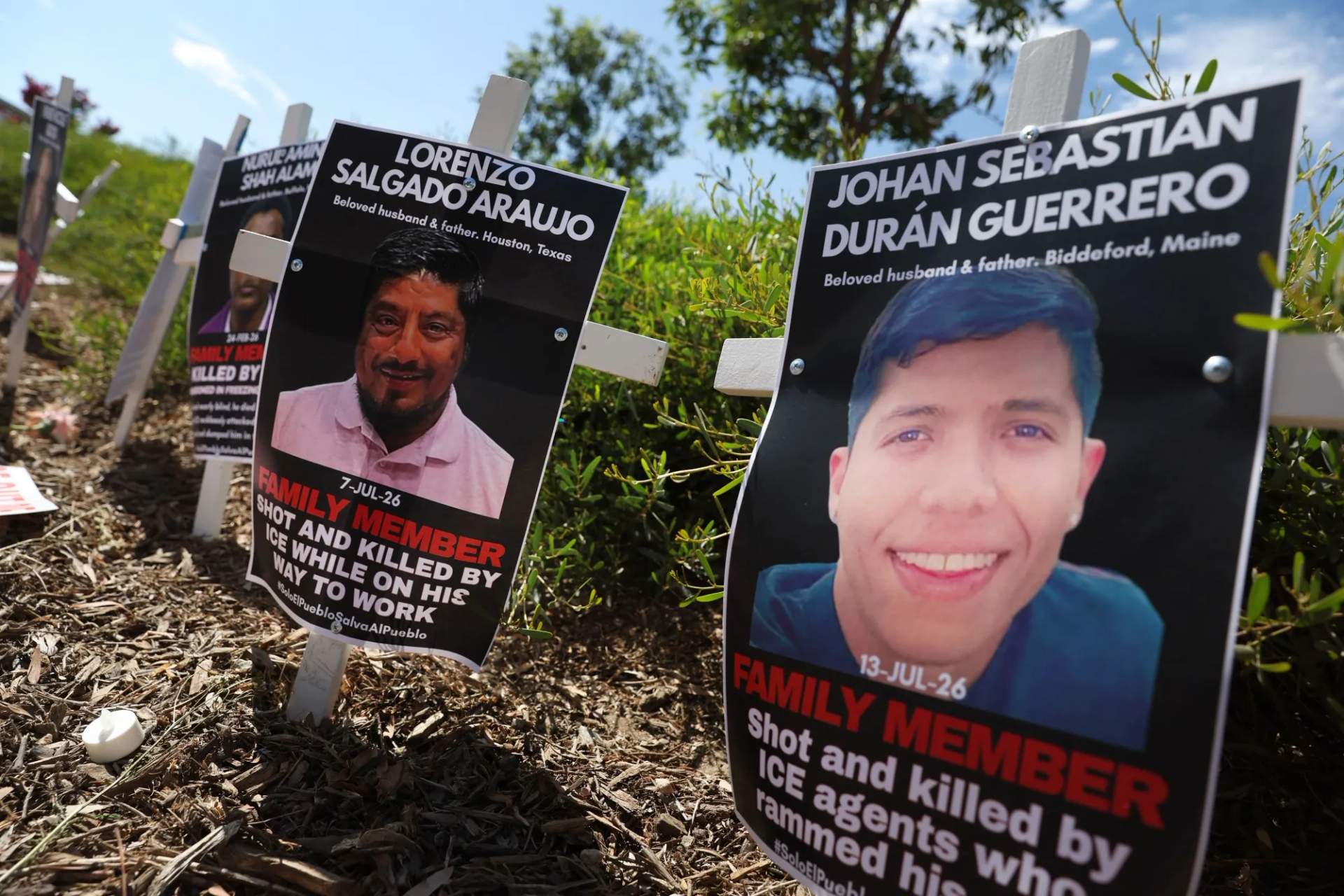
Rows of white crosses with photos attached planted in grass outside a Home Depot store during an ICE vigil
The Generational Trauma
The vigils carried a weight beyond the immediate grief. For many demonstrators, the ICE killings are not a new phenomenon — they are an acceleration of a pattern that stretches back generations.
Leticia Lopez, a 65-year-old resident of South Pasadena who attended the Pasadena vigil, wore a shirt reading "Immigrants are not criminals but the president is." Her voice trembled as she spoke:
“It gets me to the core. It's not getting any better, it's getting worse. I just feel like I need to do something.”
Lopez's mother and grandmother were forcibly repatriated from Arizona to Mexico. Her father came to the United States in the 1950s as a bracero — a guest worker in the program that supplied cheap labor to American agriculture. Hearing the stories of today, she said, triggers everything her family went through.
“When I see it happening, it's a generational trauma that I feel.”
She described people around her carrying passports and documents in public to prove they are citizens. "Because they're afraid they might be profiled, picked up, kidnapped by ICE. When my son goes out, I worry."
The System Behind the Killings
The 75 deaths since January 2025 are not random tragedies. They are the product of a system that has been designed, expanded, and empowered to operate with lethal impunity.
Under the Trump administration's second term, ICE has been unleashed. Traffic stops conducted by immigration agents — not local police, not border patrol, but ICE officers operating in the interior of the country — have resulted in multiple fatalities. Agents operate without body cameras. Witnesses are detained after shootings, preventing independent investigation. DHS releases statements that favor the official narrative, and independent verification is blocked.
The targeting of communities of color is not an incidental feature. It is the operating logic. Salgado Araujo was not the target of the operation that killed him. He was a brown man in a white van, close enough to the actual target to become collateral in an enforcement action that had no business escalating to a lethal shooting.
The vigils on July 25 were a statement: 330 communities saying the names of the dead, refusing to let them become numbers, refusing to let the machinery of state violence operate in silence. Whether anyone in power is listening remains the question.
ICE Killings Since January 2025 — Selected Cases
| Name | Age | Location | Date | Circumstances |
|---|---|---|---|---|
| Lorenzo Salgado Araujo | 52 | Houston, TX | July 7, 2026 | Shot by ICE during traffic stop; not the target of the operation |
| Johan S. Guerrero | 25 | Biddeford, ME | July 14, 2026 | Shot by ICE during traffic stop; partner and 3-year-old daughter present |
| Roberto C. Montoya Valdez | 52 | Monrovia, CA | 2025 | Killed fleeing ICE agents at Home Depot |
| Keith Porter Jr. | — | California | 2025 | Killed by off-duty ICE officer |
| Francisco Gaspar-Andrés | 48 | Texas | Dec 2025 | Died in detention center |
| Daphy Michel | 31 | Pittsburgh, PA | 2025 | Found dead at bus stop after ICE release; no mental health care, no family notification |
| Juan Jairo Coronilla Durán | — | — | 2025 | Died in ICE custody |
| Unidentified man | — | Florida | 2025 | Struck by tractor trailer while fleeing ICE raid |
| Cuban immigrant | — | — | 2025 | Died in detention; death ruled homicide |
| Mexican national | — | California | 2025 | Fell 30 feet to his death during ICE raid |
Total documented deaths in ICE custody or during enforcement operations since January 2025: at least 75
Sources & Methodology(8 sources)
Methodology
Reported using LA Times, Common Dreams, Public Citizen, CNN, New York Times, ABC News, Washington Post, PBS NewsHour, and Wikipedia coverage. Victim backgrounds cross-referenced across multiple sources. Death count verified through organizer tracking and media reports.
Filed Under
Frequently Asked Questions
- What was the ICE Out national day of action?
- On July 25, 2026, over 330 communities across the United States held vigils, protests, and demonstrations demanding justice for people killed by ICE, including Lorenzo Salgado Araujo and Johan Sebastián Guerrero. The day of action was organized by a coalition including Public Citizen, LULAC, and NDLON.
- Who was Lorenzo Salgado Araujo?
- A 52-year-old Mexican immigrant who had lived in the US for 35 years. He was shot and killed by an ICE agent in Houston on July 7, 2026, while driving his construction crew to a job site. He was not the target of the ICE operation that killed him. He had no criminal record.
- Who was Johan Sebastián Guerrero?
- A 25-year-old Colombian immigrant living in Biddeford, Maine, who worked as a cleaner and food delivery driver. He was fatally shot by an ICE officer during a traffic stop on July 14, 2026. His partner and 3-year-old daughter were present.
- How many people have died at the hands of ICE since January 2025?
- At least 75 people have died in ICE custody or during enforcement operations since January 2025, according to organizers tracking the deaths.