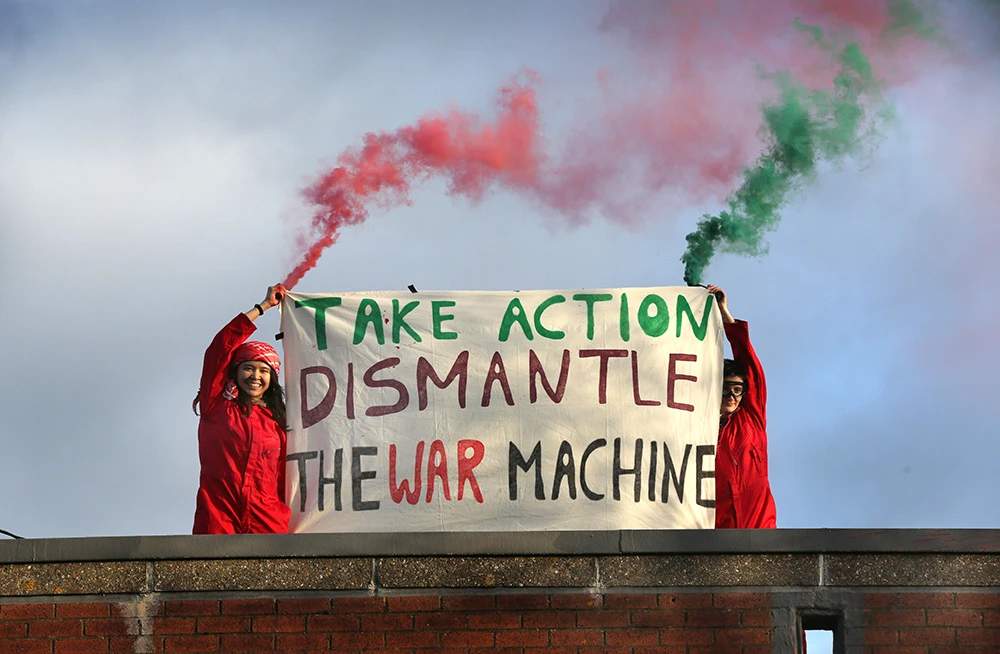

As NATO leaders descended on Ankara for the alliance's July 7-8 summit, Turkish authorities carried out one of the most sweeping crackdowns on dissent in the country's recent history. In coordinated pre-dawn raids spanning at least eight cities, police detained more than 200 people — including journalists, academics, lawyers, trade unionists, and environmental activists. A legally registered political party that organized anti-NATO protests saw 145 of its members seized. A comedian was jailed for calling President Recep Tayyip Erdoğan a dictator. An LGBTQ+ cruise ship was blocked from docking.
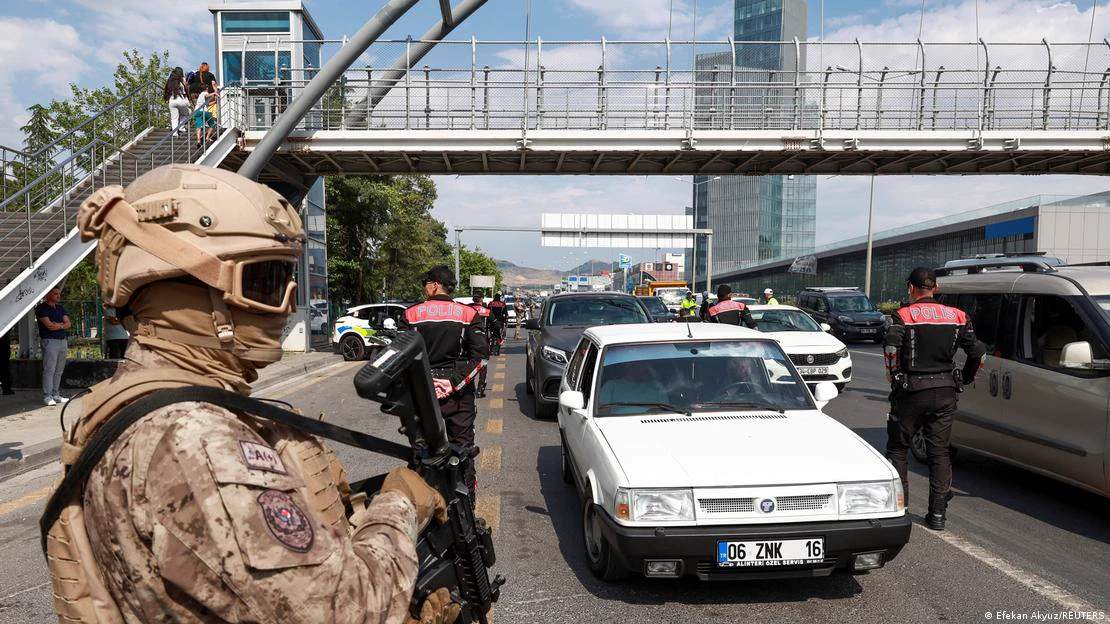
Ankara banned all demonstrations in the capital until July 10. Roads were closed, parks emptied, and Middle East Technical University students were ordered to evacuate their dormitories. Without formally declaring emergency rule, the governor's office turned the capital into a securitized zone where ordinary urban life and political expression were suspended.
This is not new behavior from the Erdoğan regime. As we documented in 2016, Erdoğan has repeatedly used crisis moments to seize more power and crush dissent — most dramatically after the failed 2016 coup, when nearly 3,000 soldiers were arrested, tens of thousands of public servants were purged, and fascism embedded itself deeper into the Turkish state. The pattern is not unique to Turkey. NATO member states across the alliance have embraced the same playbook. In the United Kingdom — another founding NATO member — the government has criminalized Palestine solidarity activists, arrested journalists under terrorism legislation, and allowed Zionist lobbying and Israeli Embassy interference to drive the prosecution of dissenters. In the United States, veterans have been arrested for protesting the Iran war, Trump's FCC has threatened to revoke broadcasters' licenses for coverage the administration dislikes, and the war comes home through the same counterinsurgency tactics exported to police departments from the battlefields NATO fuels.
A decade after the 2016 coup, the Erdoğan playbook is the same. Only the pretext has changed.
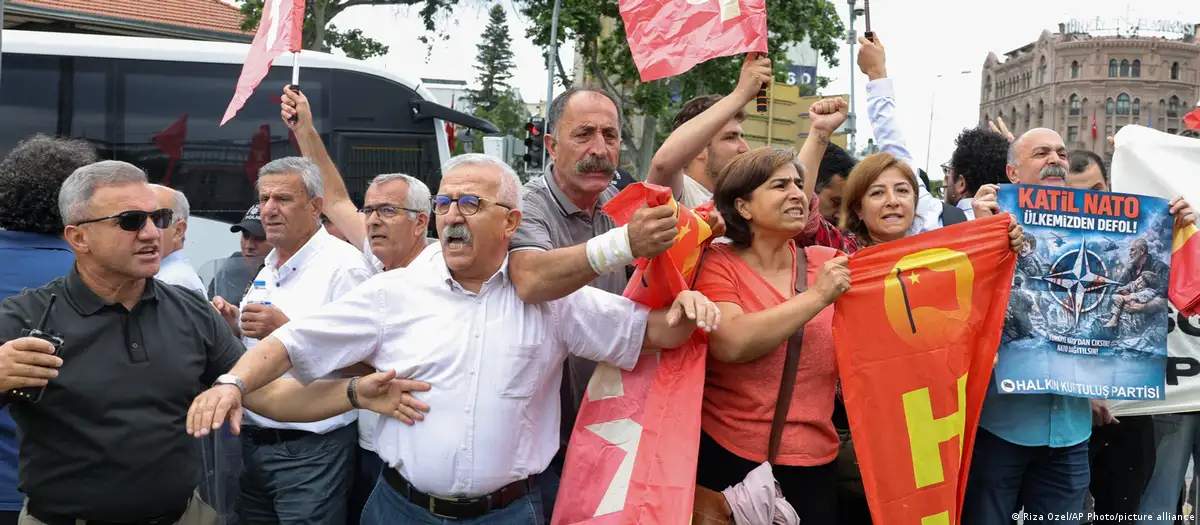
Supporters of the leftist HKP staged an anti-NATO rally in Ankara on Sunday July 5, 2026
"Murderer NATO, Get Out of the Country"
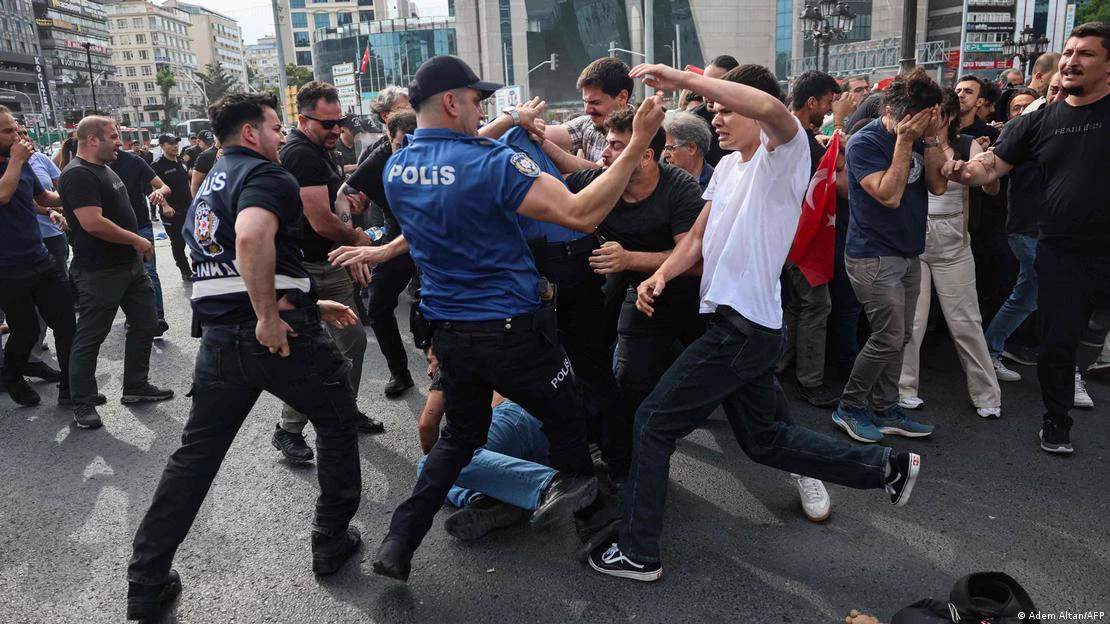
On July 5, Turkish riot police descended on Ankara's Kızılay Square and attacked an anti-NATO march organized by the Communist Party of Turkey (TKP) — a legally registered political party that appears in the official registry of Turkey's Court of Cassation Chief Public Prosecutor's Office. Police fired tear gas into crowds of demonstrators carrying party flags and chanting "Murderer NATO, get out of the country" and "No passage to NATO."
The TKP said 145 of its members were detained across Ankara, Kocaeli, and the western mining district of Soma. Among them were party officials, including the party's secretary general.
In a statement, the party refused to apologize for the march.
"Despite bans and pressure, we marched against NATO in the center of Ankara," the TKP said. "Protesting NATO is not a crime, it is an honor."
"NATO cannot be whitewashed by ministry or governor's office decrees," the statement continued. The party demanded the immediate release of all those detained and called the government's attempt to criminalize anti-NATO protests a political operation timed to the summit.
The protests were not confined to Ankara. In Istanbul, hundreds marched from Taksim Square toward Dolmabahçe, carrying a banner that read "Withdraw from NATO, seize the bases." In İzmir, demonstrators marched toward a NATO command facility. Protests also took place in Adana, Samsun, and Çanakkale. In Adana, participants called for Turkey to leave NATO and close the foreign military bases on its soil — including İncirlik Air Base, which the United States has used as a launch point for operations across the Middle East.
Protester Neslihan Koçaslan captured the mood in an interview with Democracy Now: "NATO's crimes around the world are apparent. They have also committed numerous offenses in Turkey, orchestrated coups, and have bases here."
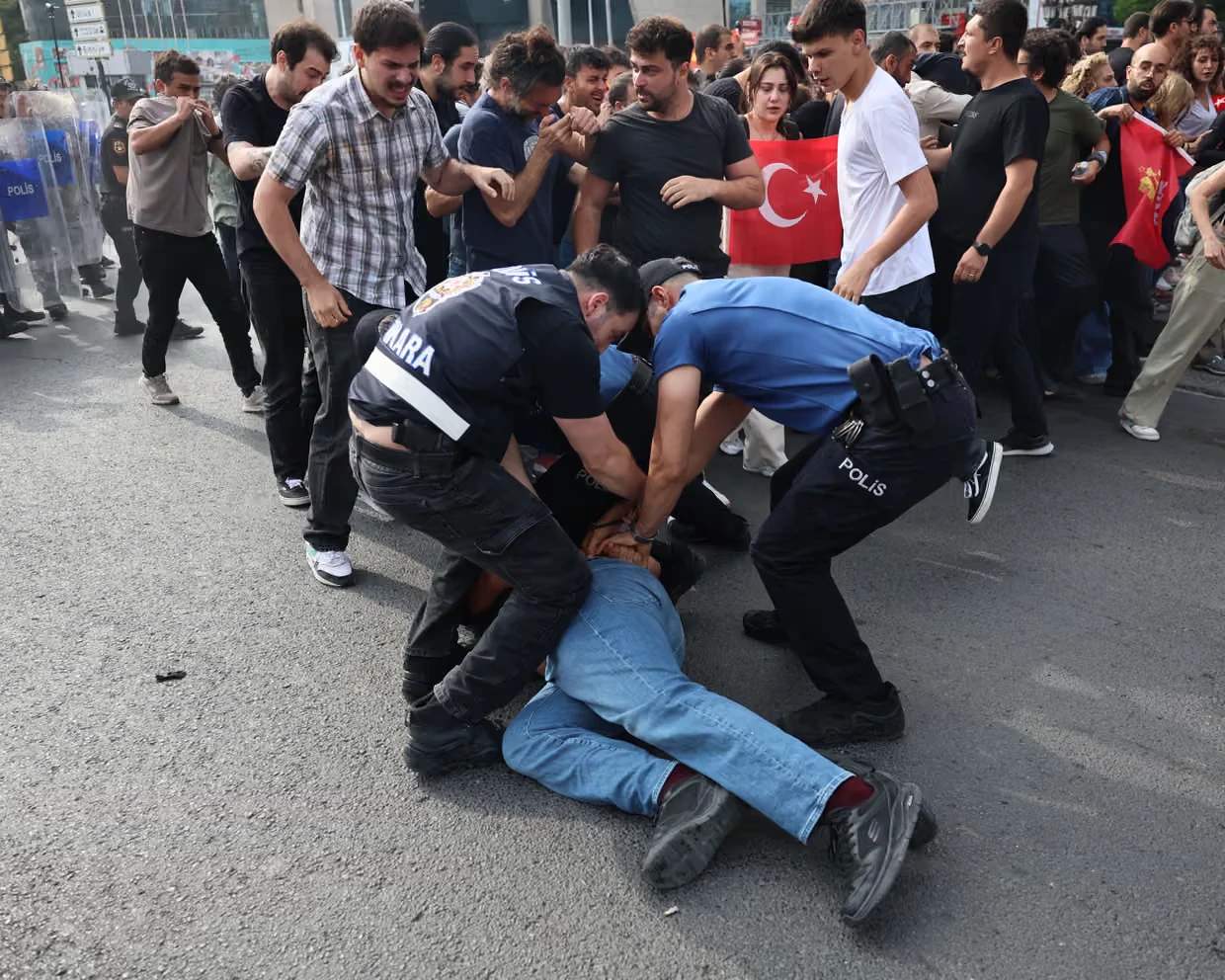
Turkish police detaining a demonstrator during an anti-NATO protest in Ankara on July 5, 2026
The Names of the Detained
The scope of the arrests is staggering, and the names tell the story.
Journalists arrested on July 5:
- Buse Söğütlü, international news editor at T24 — one of Turkey's most prominent independent online newspapers — was detained in a morning raid on her home. Her lawyer, Erman Öztürk, told Agence France-Presse the arrest was directly connected to the NATO summit.
- Ceren Erdoğdu, a journalist at the investigative outlet OdaTV, was also detained in a home raid. Erdoğdu had recently reported on a petition launched by the "No to NATO Initiative," formed by Muslim groups opposing the alliance.
- Abbas Vural, a journalist at Nihaplus and contributor to Bianet, was detained in the same wave of raids.
All three were denied the right to consult their lawyers for 24 hours.
Lawyers detained:
- Ezgi Önalan, head of the Istanbul branch of the Progressive Lawyers Association (ÇHD), was taken into custody.
- Yunusemre Işık, a member of the ÇHD, was also detained.
- Boran Işıldak and Burhan Can, law students in Ankara, were seized.
The ÇHD demanded their release, calling the operations a "political operation that promises a rose garden without thorns to NATO."
Academics and writers:
- Sibel Özbudun, an academic, was detained in Istanbul.
- Temel Demirer, a writer, was also taken into custody in connection with an investigation into social media posts.
Activists and civil society:
In Antalya alone, police raided homes and detained at least 35 people — including 11 members of the People's Houses (Halkevleri) group, among them central executive board member Gürkan Gülseven and Antalya branch head Gülcan Şahin. The entire local branch management was detained. Members of the Workers' Party of Turkey (TİP), Labor Youth, and the Kaldıraç Movement were also taken. Private Sector Teachers' Union central executive board member Yiğit Pertev and provincial spokesperson Diğde Simay Pertev were detained alongside provincial representative Mehmet Akif Karaca.
In Ankara's Tuzluçayır neighborhood, police raided a branch office of the Anatolia Culture and Research Association (AKA-DER) and detained at least nine people. At least six people were detained from Antakya, three from Adana, and five traveling from İzmir to Ankara.
In Kocaeli, members of the Labor Party (EMEP) and the Kaldıraç Movement were detained. In Urfa, members of EMEP, TİP, and the Socialist Laborers Party (SEP) were seized. Raids in Çanakkale and Bursa targeted Revolutionary Youth Associations and employees of the Devrimci Hareket magazine.
And from the earlier wave of arrests on June 23-24:
More than 220 people were detained in Ankara raids that week, including a 75-year-old retired teacher, Ayten Yakut, a TEMA environmental foundation volunteer, who was accused of membership in a Marxist armed group. Her lawyer filed an appeal for release citing lack of evidence and her health condition. Courts later formally arrested 103 of those detained in the June wave.
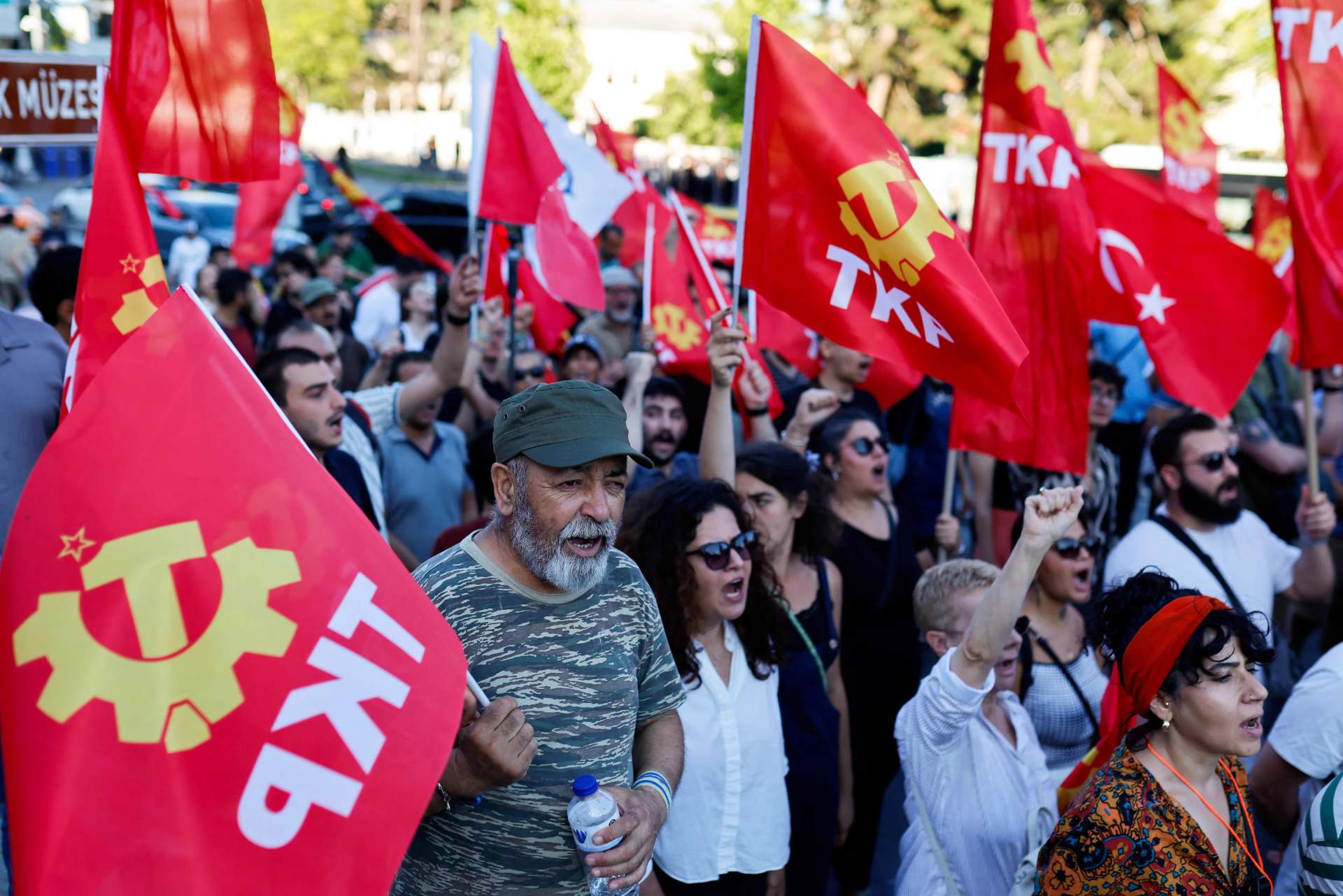
People take part in a protest, ahead of NATO leaders' summit, in Istanbul, Turkey, July 5, 2026
Why Turks Hate NATO
The protests were not an abstraction. They were rooted in a deeply held understanding, shared across Turkey's leftist, nationalist, Islamist, and anti-imperialist currents, of what NATO has done to their country and the region.
Turkey has been a NATO member since 1952. In the decades since, the alliance has used Turkish soil as a staging ground for wars across the Middle East and beyond. İncirlik Air Base near Adana was used by the United States for operations in Iraq, Syria, and elsewhere. The Kürecik radar site in Malatya, part of NATO's missile defense system, ties Turkey to a nuclear posture it does not control. NATO's Allied Land Command sits in İzmir.
As Jacobin noted in a July 7 analysis, Turkey's role in NATO has always depended on "the mutual reinforcement of external security priorities and internal authoritarianism." From the Cold War onward, Turkey functioned as an anti-communist frontier state — and the security apparatus built to fight foreign enemies was directed inward against the domestic left, trade unions, and political dissent.
This is not ancient history. Turkey's own intelligence service, working in tandem with NATO allies, orchestrated coups in 1960, 1971, 1980, and 1997. Each coup consolidated military power and crushed democratic movements. The 1980 coup alone led to the torture of hundreds of thousands, the imprisonment of hundreds of thousands more, and executions. NATO never condemned these coups. NATO never sanctioned Turkey for them. The alliance's "shared values of democracy and the rule of law," as Jacobin put it, were never a barrier to Turkey's membership.
Now those historical grievances are compounded by the wars of the present.
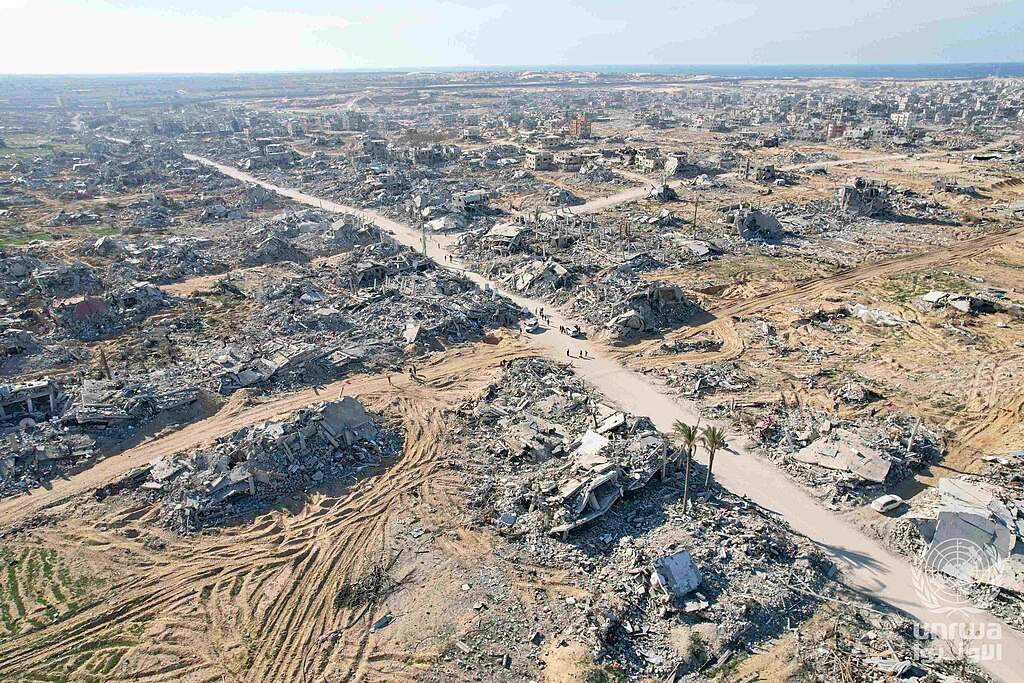
Protesters at the July 5 demonstrations explicitly connected Turkey's hosting of NATO to the ongoing genocide in Gaza, where Israel — a close US ally and de facto NATO partner — has killed more than 56,000 Palestinians since October 2023 with weapons supplied by NATO member states. As our own reporting has documented, Israel has used the cover of ceasefires to steadily expand a buffer zone covering 70% of Gaza, building permanent military infrastructure and killing hundreds of Palestinians who approach the ever-shrinking perimeter. Israel has bombed tent camps, wiped out entire families, and killed a 6-year-old girl in a helicopter strike on a displaced families' encampment — all while the world looked away. Israel has even admitted to photoshopping evidence to justify the killing of a journalist.
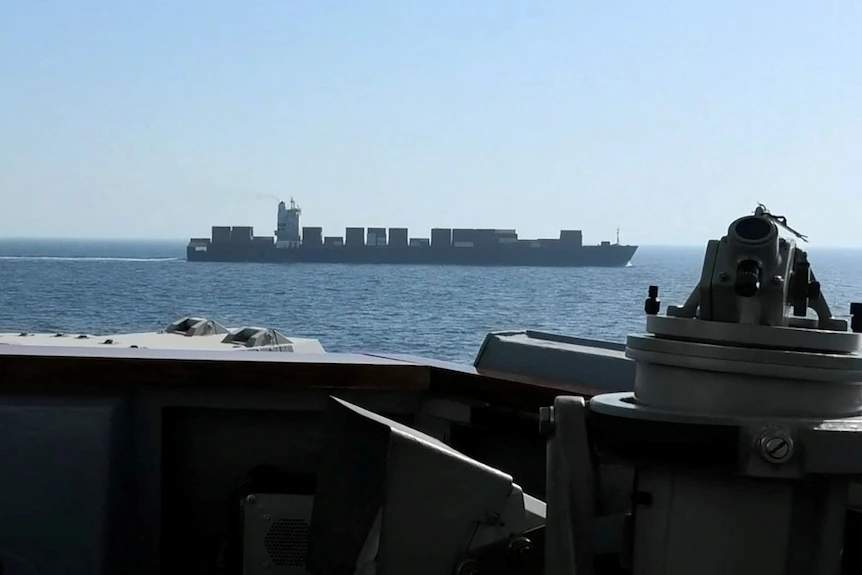
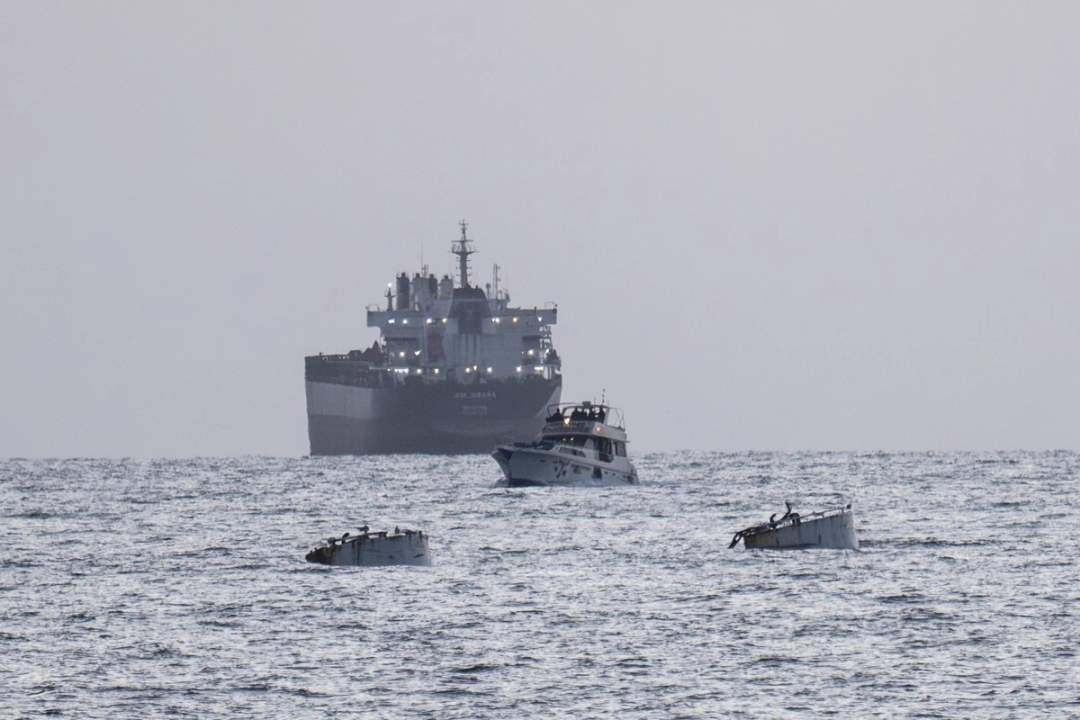
They connected Turkey's NATO hosting to the US-Israeli war on Iran, launched on February 28, 2026, which assassinated Supreme Leader Ayatollah Ali Khamenei and killed members of his family in a joint airstrike on Tehran — a war that Israel escalated after striking first, and in which Trump bragged about blowing a hole in an Iranian cargo ship, an act that constitutes a war crime under international law. Meanwhile, Trump's inner circle reportedly profited to the tune of $2.2 billion from suspiciously timed oil futures trades preceding his Iran policy announcements — the kind of corruption protesters see as inseparable from the wars NATO enables.
The chant "Murderer NATO" was not hyperbole. It was a direct indictment of an alliance whose member states have enabled and participated in multiple wars of aggression in the past year alone.
Image
Comedian Jailed, LGBTQ+ Cruise Ship Blocked
The crackdown extended into cultural life and personal freedom.
Standup comedian Deniz Göktaş was arrested and placed in pre-trial detention after arriving at Istanbul airport from a holiday. His crime: a routine in which he referred to Erdoğan as a dictator and made jokes about suicide bombers. The performance, recorded on June 1 and uploaded to YouTube on June 24, was viewed nearly 9 million times before his arrest. He was charged with "insulting the president" and "denigrating religious values."
Göktaş told prosecutors: "The word 'dictator' is a political term, a topic frequently discussed in public, and I have no intention of insulting or belittling anyone with this statement."
Separately, authorities in the coastal town of Aydın blocked an Atlantis cruise ship — a company specializing in gay-friendly holidays — from docking. The official justification: passengers were "known for behaviours" that "do not align with the structure of our society and our moral values." US actor and singer Patti LuPone, scheduled to perform on the cruise, wrote on social media: "The Atlantis cruise I am performing on next week has been banned from entering Turkey... simply because of who is onboard."
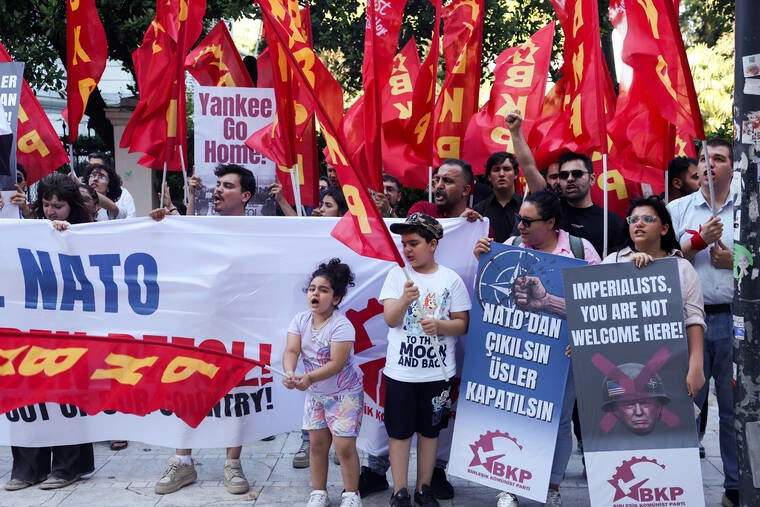
Leftist party BKP (The United Cyprus Party) March in Istanbul July 5th 2026
NATO's Silence
NATO has made no public statement on Turkey's mass detention of protesters, journalists, and activists. The alliance's silence is consistent with its history.
HRW called the crackdown evidence of "ruthless intolerance of freedom of speech and assembly." The watchdog said the summit was taking place against a backdrop of "intensifying violations of basic rights, including far-reaching restrictions on the main political opposition party, the media, and freedom of expression in general."
Turkey ranks 163rd out of 180 countries on Reporters Without Borders' press freedom index. The RSF has accused the Erdoğan government of using "all possible means to undermine critics."
The International and European Federations of Journalists, joined by five Turkish journalist unions, called for the immediate release of the detained journalists. "No journalist may be detained for reporting the news and no media organization may be subjected to pressure because of its reporting," the EFJ stated.
Ankara's prosecutor's office claimed the raids would "decipher the action and activities of terrorist organisations" and accused those detained of links to socialist, Marxist, and Islamic State groups. HRW said authorities provided no evidence of any crimes committed by those accused of terrorism.
The pattern is now familiar — and it is not confined to Ankara. Erdoğan's regime treats every crisis as an opportunity to expand authoritarian power. But so does Trump's administration in Washington, which has threatened broadcasters' licenses for unfavorable war coverage and arrested veterans for protesting the same wars NATO is summitting about. And so does the UK government, which has prosecuted Palestine solidarity activists at the behest of Israeli embassy interference.
The failed coup gave Erdoğan the pretext to purge tens of thousands. The NATO summit has given him the pretext to criminalize an entire political movement — one that opposes not just his rule but the imperial alliance that has enabled decades of repression, across Turkey and across the NATO member states whose leaders gathered in Ankara this week to pose for photographs while their hosts' prisoners sat in cells.
As NATO leaders posed for summit photos in Ankara on July 7, the more than 200 people detained in the lead-up remained in custody. Journalists sat in cells without access to lawyers. A 75-year-old retired teacher sat in prison on fabricated terrorism charges. A comedian sat in jail for telling a joke. Their crime was exercising the rights that NATO claims to defend — and that Turkey, with NATO's full complicity, has spent decades extinguishing.
Sources & Methodology(14 sources)
- The Guardian — Turkey Crackdown Ahead of NATO SummitVideo / Audio
- Turkish Minute — 100+ Detained in Anti-NATO ProtestsVideo / Audio
- Democracy Now — Headlines July 6, 2026Video / Audio
- The Media Line — Why Turkey Arrested ProtestersVideo / Audio
- T24 — NATO Summit Pre-Raid Operations (Turkish)Video / Audio
Methodology
Reported using cross-referenced coverage from The Guardian, Bianet, Turkish Minute, T24, Jacobin, Democracy Now, Human Rights Watch, the International and European Federations of Journalists, Bloomberg, The Media Line, Nordic Monitor, and the IFJ. Names and affiliations of detained individuals sourced from Bianet's original reporting on the raids. Analysis of anti-NATO sentiment grounded in Jacobin's historical analysis and Democracy Now's on-the-ground interviews.
Filed Under
Frequently Asked Questions
- How many people were detained ahead of the NATO summit?
- Over 200 people were detained in coordinated pre-dawn raids across at least eight cities (Istanbul, Ankara, Izmir, Kocaeli, Antalya, Dersim, Urfa, Canakkale, Bursa). On July 5 alone, 145 TKP members were detained during anti-NATO protests. In late June, an additional 220+ people were detained, with 103 formally arrested.
- Which journalists were arrested?
- Three journalists were detained on July 5: Buse Söğütlü (international news editor at T24), Ceren Erdoğdu (journalist at OdaTV), and Abbas Vural (journalist at Nihaplus and Bianet contributor). All were denied access to lawyers for 24 hours.
- Why are Turks protesting NATO?
- Anti-NATO sentiment in Turkey has deep roots. Protesters cited NATO's role in orchestrating coups in Turkey (1960, 1971, 1980, 1997), the use of Turkish bases like Incirlik for US wars in the Middle East, the alliance's complicity in Israel's genocide in Gaza, and the US-Israeli war on Iran. The TKP called for Turkey to withdraw from NATO and close all foreign military bases on its soil.
- What has NATO said about the crackdown?
- NATO has made no public statement on Turkey's mass detention of protesters, journalists, and activists ahead of the summit. Human Rights Watch called the crackdown evidence of 'ruthless intolerance of freedom of speech and assembly.'
- Who else was detained beyond the journalists?
- Detainees include lawyer Ezgi Önalan (Progressive Lawyers Association Istanbul head), law students Boran Işıldak and Burhan Can, academic Sibel Özbudun, writer Temel Demirer, 75-year-old retired teacher Ayten Yakut, and dozens of activists from Halkevleri, TIP, EMEP, Kaldıraç Movement, and other groups across Turkey.