
Eight people who attended a July 4 protest outside a Texas immigration detention center have been sentenced to a combined 450 years in federal prison — marking the first successful application of terrorism charges against alleged antifa members in U.S. history and establishing what legal observers call a devastating precedent for the criminalization of dissent.
Benjamin Hanil Song, a 32-year-old former Marine Corps reservist, received 100 years — the statutory maximum — for opening fire during the demonstration outside the Prairieland Detention Center in Alvarado, Texas. Seven others received sentences ranging from 30 to 70 years. None of the defendants killed anyone. The injured officer, Alvarado Police Lt. Thomas Gross, survived and has fully recovered.
What Actually Happened at Prairieland
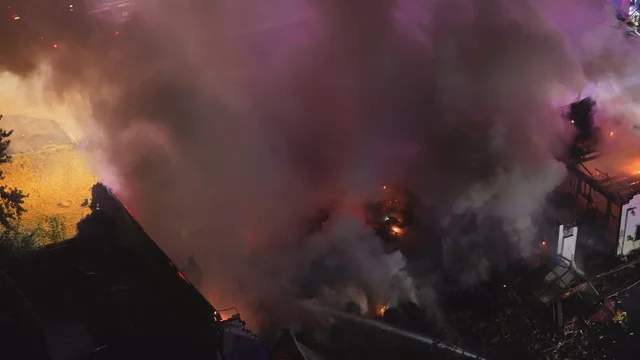
On the night of July 4, 2025, a group of activists arrived at the Prairieland ICE Detention Center south of Fort Worth to hold what they described as a "noise demonstration" — setting off fireworks to show solidarity with immigrants being held inside the facility. Some in the group wore black clothing and face coverings. Several brought legally-owned firearms.
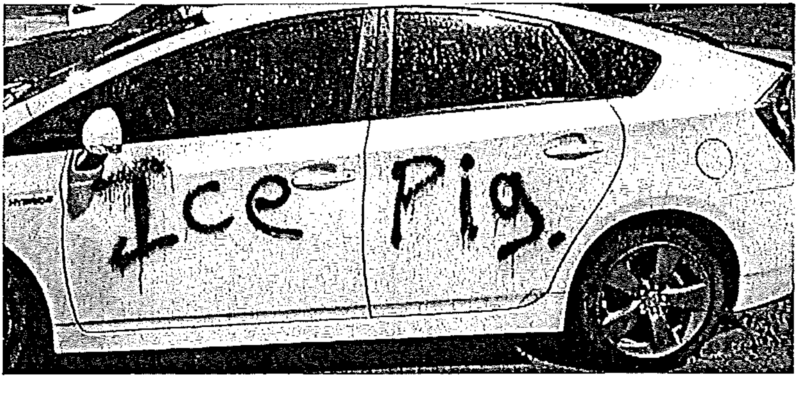
What happened next is contested, but the established facts from trial testimony are these: A subset of the protesters broke off and vandalized vehicles and a guard shack — spray-painting slogans, slashing tires, and breaking a security camera. When Alvarado police Lt. Thomas Gross arrived on scene and drew his weapon, Song opened fire with an AR-15, striking Gross in the neck. Gross returned fire. The bullet entered above Gross's collarbone and exited through his upper back. He was airlifted to a hospital and released within 24 hours.
Song fled the scene and was captured 11 days later after a manhunt. Eleven people were arrested that night.
The Charges: Guilt by Association as Prosecution Strategy
The Justice Department under Attorney General Pam Bondi and now Acting Attorney General Todd Blanche didn't just charge Song for the shooting. They swept every person connected to the demonstration into a single terrorism conspiracy case, charging nine people with 65 counts including providing material support to terrorists, conspiracy to use explosives, rioting, and — for most — attempted murder of a federal officer.
The "explosives" in question were fireworks. The "material support to terrorists" charge didn't require prosecutors to prove any connection to a terrorist organization — only that defendants supported one of several listed crimes. Antifa is an ideology, not an organization. It has no membership rolls, no leadership structure, no chain of command. The Trump administration designated it a "domestic terrorist organization" via executive order in September 2025, but legal experts noted that designation created no new criminal charges and no domestic equivalent to the State Department's foreign terror organization list exists.
Prosecutors branded the defendants a "North Texas Antifa Cell." The evidence for this alleged cell? They shared anti-fascist literature — zines produced on a small printing press — used the encrypted messaging app Signal, wore black clothing, and attended a left-wing book club. Some had met at gun ranges. The government introduced the books they read as evidence of ideology.
The Sentencing Table: Who Got What and Why
| Defendant | Age | Sentence | Key Convictions | Role Alleged |
|---|---|---|---|---|
| Benjamin Hanil Song | 32 | 100 years | Attempted murder of LE officer; discharging firearm during crime of violence; riot; material support to terrorists; conspiracy to use explosives | Fired the shot that injured Lt. Gross; alleged leader/"cell" organizer |
| Maricela Rueda | — | 70 years | Riot; material support to terrorists; conspiracy to use explosives; conspiracy to conceal documents | Present at protest; convicted of obstruction for allegedly directing Estrada to move zines |
| Zachary Evetts | — | 50 years | Riot; material support to terrorists; conspiracy to use explosives | Mechanical engineer; helped plan logistics; acquitted of attempted murder |
| Cameron "Autumn Hill" Arnold | — | 50 years | Riot; material support to terrorists; conspiracy to use explosives | Present at protest; acquitted of attempted murder and firearms charges |
| Savanna Batten | — | 50 years | Riot; material support to terrorists; conspiracy to use explosives | Arrived separately; not alleged to have participated in planning; no evidence she brought a weapon |
| Bradford "Meagan Morris" | — | 50 years | Riot; material support to terrorists; conspiracy to use explosives | Stayed in van with weapons cache during protest; did not exit vehicle |
| Elizabeth Soto | — | 50 years | Riot; material support to terrorists; conspiracy to use explosives | Arrived separately with spouse; operated small anarchist zine printing press |
| Daniel "Des" Sanchez Estrada | — | 30 years | Corruptly concealing a document/record; conspiracy to conceal documents | Not present at protest. Convicted for moving a box of his own zines, artwork, and journals at Rueda's request |
A ninth trial defendant, Ines Soto (Elizabeth Soto's spouse), was convicted and awaits sentencing on July 1. Seven additional defendants — Seth Sikes, Nathan Baumann, Joy Gibson, Susan Kent, Rebecca Morgan, Lynette Sharp, and John Thomas — pleaded guilty to material support for terrorists and face up to 15 years each, also to be sentenced July 1.
Song's Statement to the Court
Before receiving his sentence, Song addressed the court in an orange jumpsuit and handcuffs. He denied being part of any organization called antifa and defended anti-fascism as a principle.
"What kind of people are not against fascism?" Song told Judge Pittman.
He said he fired his weapon because he saw Gross draw his gun and point it at another protester who was fleeing — a fact Gross admitted during trial under cross-examination.
"I never want to see good people, standing for what they believe in, gunned down in the street," Song said. "Now 21 people have been arrested, have been persecuted, have been punished. For knowing me or being my friend? This is wrong. This is mass punishment. Collective punishment. This is guilt by association. This is injustice."
Song listed the names of people killed by police — Renee Good, Alex Pretti, Botham Jean, Atatiana Jefferson — and said he was glad the people at Prairieland didn't end up as statistics like them.
Judge Pittman repeatedly warned Song not to make political statements, then said Song had "obviously" not accepted responsibility and showed no remorse.
Song's attorney, Phillip Hayes, attempted to introduce evidence that Song fired at the ground as suppressive fire — not at the officer — and that a ricochet struck Gross. Pittman struck that argument down.
"It's by the grace of God that Song is not dead," Pittman said. "He managed to get 11 shots in seconds; then the officer shooting blindly happened to hit the magazine well of Song's rifle. Mr. Song's lucky he isn't dead. We had a guardian angel."
The Judges: "An Assault on Democracy"
Chief Judge Reed O'Connor — a George W. Bush appointee — sentenced several defendants and repeatedly called the demonstration not a protest but "an assault on democracy."
"What happened here was not by any stretch of the imagination a protest," O'Connor said during one sentencing. "The need to deter this type of conduct is high."
Judge Mark Pittman — a Trump appointee — oversaw the 12-day trial in which 46 witnesses testified and over 210 exhibits were entered. Notably, no defense witnesses were called. Defense attorneys rested immediately after the prosecution, arguing the government had failed to meet its burden of proof beyond a reasonable doubt.
Pittman had previously declared a mistrial on the first day after a defense attorney wore a shirt featuring the late Jesse Jackson — the same morning Jackson died. Around three-quarters of prospective jurors expressed opposition to Trump and ICE during jury selection.
Consecutive Stacking: How 50 Years Becomes Life
Former federal prosecutor Barbara McQuade, who served as U.S. Attorney for the Eastern District of Michigan under Obama, called the sentences "unusually long."
"Most often, judges will sentence defendants for separate counts concurrently," McQuade told The Guardian. "Here, it appears that the judge stacked the sentences for each count consecutively. I would have expected lengthy sentences here, more in the ballpark at 15 to 25 years, but nothing like 50 to 100 years."
For context: Enrique Tarrio, the Proud Boys leader convicted of seditious conspiracy for his role in the January 6 Capitol attack, received 22 years. Stewart Rhodes, the Oath Keepers founder convicted of the same charge, got 18 years.
People who attended a protest with fireworks and spray paint are now serving more than double what the architects of an actual armed insurrection received.
The Trump Administration's Antifa Playbook
The Prairieland case didn't happen in a vacuum. It is the crown jewel of a deliberate, systematic campaign to criminalize left-wing dissent using terrorism statutes designed for foreign combatants.
The timeline tells the story:
- July 4, 2025: Prairieland demonstration occurs.
- September 11, 2025: Conservative activist Charlie Kirk is killed. The killing becomes the catalyst for an escalation.
- September 22, 2025: Trump signs executive order designating antifa a "Domestic Terrorist Organization."
- September 2025: NSPM-7 presidential memo directs a broader crackdown on left-wing groups.
- October 16, 2025: DOJ unseals terrorism charges against Prairieland defendants. Bondi calls antifa a "left-wing terrorist organization."
- February 2026: Federal trial begins.
- March 2026: All nine defendants convicted.
- June 23, 2026: Sentencing — 450 combined years.
The DOJ itself called the Prairieland sentencing "the first sentencing of defendants affiliated with Antifa following President Donald J. Trump's executive order designating the group as a Domestic Terrorist Organization." The case was announced with statements from Acting AG Todd Blanche, FBI Director Kash Patel, Acting ICE Director David J. Venturella, and U.S. Attorney Ryan Raybould — the full weight of the national security apparatus mobilized for a noise demonstration at a county detention center.
The Template Is Already Spreading
The Prairieland playbook is being replicated across the country. In the weeks since the sentencing:
- Minneapolis: Federal prosecutors charged 15 people with criminal conspiracy for allegedly impeding ICE agents during deportation operations. The indictment centered on claims of antifa affiliation.
- Spokane, Washington: A federal jury convicted three protesters of conspiracy for a 2025 protest at an ICE facility.
- Chicago: Similar charges against protesters were dismissed after grand jury misconduct was revealed — but the chilling effect had already done its work.
- Alabama: Prosecutors brought material support for terrorism charges against two people who allegedly set a shopping cart on fire after a BLM protest.
Suzanne Adely, interim president of the National Lawyers Guild, told NBC 5: "That opposition is something that the government wants to squash so a case like this helps the government kind of see how far they can go in criminalizing constitutionally protected protests and also helps them kind of intimidate, increase the fear, hoping that folks in other cities then will think twice over protesting."
Tamera Hutcherson, a local activist who served on Savanna Batten's defense team, raised the fundamental question: "If we are to bring a medical kit to a protest, does that mean we are a criminal now? If we are to even just attend a noise demonstration, does that mean we are a criminal now, and we may not return home to our loved ones?"
The Voices They're Trying to Silence
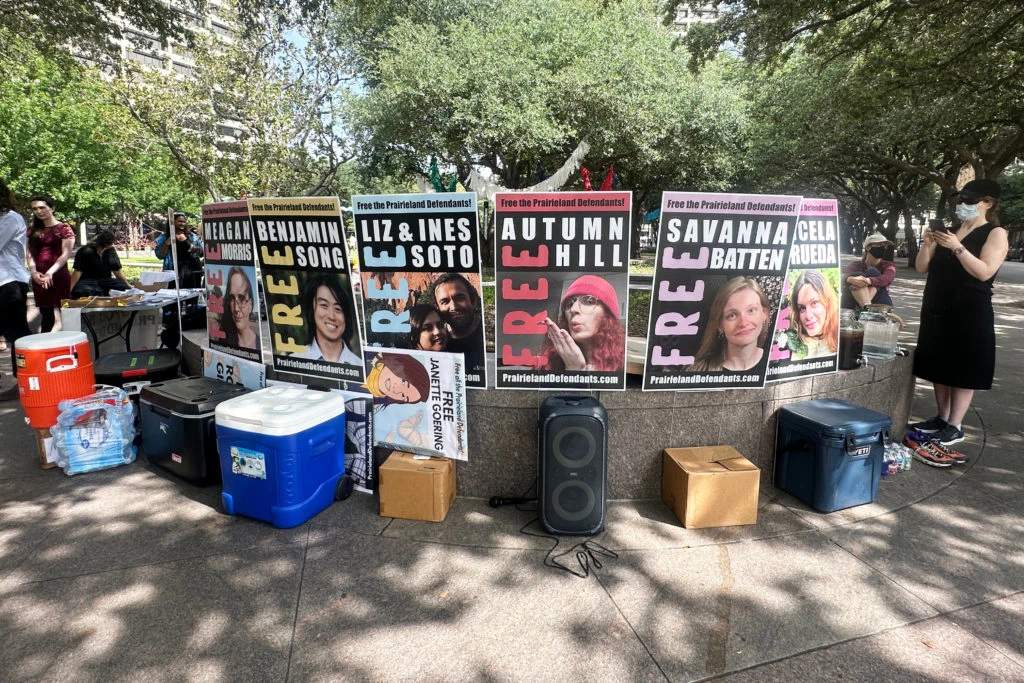
The defendants and their families spoke at sentencing hearings and at a press conference afterward. Their words deserve to be heard — because the state that sentenced them doesn't want you to hear them.
Autumn Hill told the court: "When I went to protest on the night of July 4, it seemed more like a party to me than anything else. We didn't expect or want any violence or destruction of property to occur." Her attorney noted there was no evidence she had a gun or believed in violence — and that she was so conscientious she picked up trash before leaving.
Zachary Evetts, a mechanical engineer with no criminal history, said the fireworks were meant solely to get the attention of people detained inside. His attorney said: "Zach has always been a caring and compassionate man. He continues to give compassionate help in the jail, as a detainee."
Daniel Sanchez Estrada, an artist, poet, father, husband, and teacher who was not at the protest, told Judge O'Connor: "I worked really hard every day in this country, and I believe in human rights and helping others in need. I'm a father, a husband and a teacher. But I'm not a terrorist."
His attorney Christopher Weinbel said the box he moved contained nothing illegal — his own artwork, poetry, journals, and zines. "At the heart of this case is a simple truth: Mr. Sanchez moved a box. He is not a murderer, he is not ISIS, he is not a foreign terrorist."
Song's mother, Hope Song, responded to the judge's claim that her son showed no remorse: "He's accepted full responsibility for what actually happened. But he will never accept responsibility for a lie — a government lie made to prosecute innocent people in order to get political persecutions."
Lydia Koza, Hill's wife: "In the face of this grotesque distortion of anything that could ever have called itself due process, I am livid. They have chosen to lay to ruin the lives of, not just all of the defendants, but their family members, their loved ones, their communities."
Amber Lowrey, Batten's sister: "This case has relied on lies and misinformation from the start. It is heartbreaking nonetheless. But we will keep fighting to overturn these unjust convictions and to free Savanna and all the Prairieland defendants. We will not rest until they are free!"
The DFW Support Committee, organized by family and friends of the defendants, issued a statement: "Our loved ones did nothing wrong and they are being thrown away for the rest of their lives. Not only does the evidence prove their innocence, but the actions of ICE and the federal government over the past year have proved the righteousness of their actions. This sentencing is a punishment for solidarity itself."
What This Means: The Authoritarian Spiral Accelerates
The Prairieland sentences are not about justice. They are about power. And they represent a clear, measurable escalation in the United States' descent into authoritarianism.
Consider what has now been established as legal precedent:
Attending a protest while wearing black clothing can be used as evidence of terrorism.
Owning legally purchased firearms — all 11 recovered guns were legally owned — can be used to justify consecutive terrorism sentences.
Reading radical literature — zines, books, political texts — can be introduced as evidence of a terrorist conspiracy.
Using encrypted messaging apps — Signal, used by journalists, activists, and ordinary citizens wary of surveillance — is evidence of criminal coordination.
Moving a box of books can get you 30 years in federal prison.
Being at the same protest as someone who commits violence — even if you didn't know about it, didn't participate in it, and left when it started — can result in a 50-year sentence.
Standing in solidarity with people in cages is now treated as an act of domestic terrorism.
The Prairieland defendants are not the first political prisoners in America. But their sentences — and the legal machinery used to produce them — represent a qualitative leap in the state's capacity to crush dissent. The terrorism statutes deployed here were written for foreign enemies. They are now being turned inward, against citizens who disagreed with government policy loudly enough to show up.
This is the point where the machinery of counterterrorism becomes the machinery of counter-dissent. The label "terrorist" — once reserved for those who targeted civilians for political ends — is now applied to people who brought fireworks to a detention center to let the people inside know they weren't forgotten.
The architects of this crackdown are not subtle. They want you to know. They want you to be afraid. They want you to calculate the cost of showing up before you decide whether to show up.
That's the whole point.
How to Support the Prairieland Defendants
The defendants are pursuing appeals. In the meantime, they need commissary funds, legal fees for state trials (nine of the federally-sentenced defendants also face state charges), and the knowledge that they are not forgotten.
- DFW Support Committee (General Fund): givesendgo.com/supportDFWprotestors
- Maricela Rueda Family Support: gofundme.com/f/help-maricelas-family-while-she-fights-for-justice
- Daniel "Des" Sanchez Estrada Legal/Immigration Fund: gofundme.com/f/get-artist-des-revol-an-immigration-attorney
- Janette Goering Defense Fund: fundrazr.com/a2jpW0
- Official Case Website: prairielanddefendants.com
- Write to the defendants: Addresses are posted on the defendants' profile page. Letters are essential.
- Contact: dfwsupportcommittee@hacari.com
The DFW Support Committee also encourages supporters to organize letter-writing nights, host fundraisers, carry out noise demonstrations at local detention centers, and start "Emma Goldman Book Clubs" to discuss the very literature that was used as evidence of terrorism in this case.
Sources & Methodology(16 sources)
Methodology
Reporting based on DOJ press releases, trial testimony reported by KERA News, AP, The Guardian, The Intercept, Al Jazeera, and BBC. Court documents and sentencing records reviewed. Defendant statements from KERA News and The Guardian reporting. Support committee information verified via official website.
Filed Under
Frequently Asked Questions
- What happened at the Prairieland Detention Center?
- On July 4, 2025, a group of activists held a noise demonstration outside the Prairieland ICE Detention Center in Alvarado, Texas. Some vandalized vehicles and a guard shack. When police arrived, Benjamin Song opened fire with an AR-15, striking an officer in the neck. The officer survived and has fully recovered.
- How long were the sentences?
- Eight defendants were sentenced to a combined 450 years. Benjamin Song received 100 years, Maricela Rueda 70 years, five defendants received 50 years each, and Daniel Sanchez Estrada received 30 years — for moving a box of zines despite not being at the protest.
- How do these sentences compare to January 6 cases?
- The Proud Boys leader Enrique Tarrio received 22 years for seditious conspiracy, and Oath Keepers founder Stewart Rhodes received 18 years. The Prairieland defendants — who attended a protest with fireworks — received significantly longer sentences.
- Is antifa actually an organization?
- No. Antifa is an ideology (short for anti-fascist), not an organization with membership rolls or leadership. The Trump administration designated it a 'domestic terrorist organization' via executive order in September 2025, but that designation created no new criminal charges.
- How can I support the defendants?
- Donate through the DFW Support Committee at givesendgo.com/supportDFWprotestors, write letters to the defendants (addresses at prairielanddefendants.com/meet-the-defendants/), or organize fundraisers and noise demonstrations at local detention centers.