
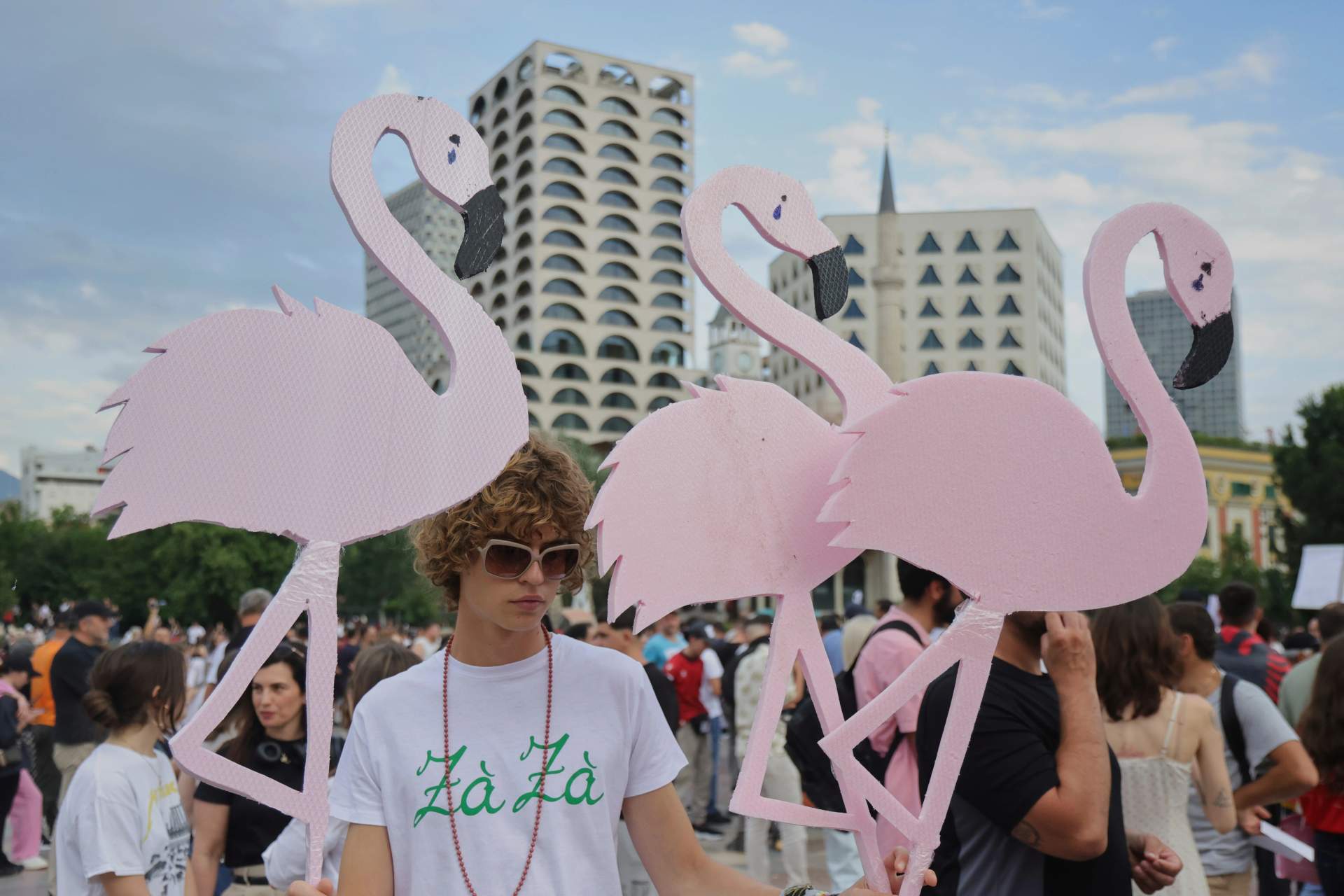
TIRANA, Albania — While Americans watch their own government auction off public land to the highest bidder, Albanians are showing the world what it looks like when people refuse to let it happen.
For four consecutive days, thousands of protesters have flooded the streets of Tirana in a swelling revolt against a luxury resort development linked to Jared Kushner — Donald Trump's son-in-law — and his wife, Ivanka Trump. The project would carve hotels, villas, a marina, and apartment complexes into one of the Mediterranean's last unspoiled coastlines, a protected wildlife reserve home to flamingos, Dalmatian pelicans, and the endangered Mediterranean monk seal.
The protests have turned violent. Police have deployed water cannons against crowds. Private security guards have attacked and injured demonstrators. Molotov cocktails have flown. And Albania's special anti-corruption prosecution body, SPAK, has opened a formal investigation into the suspicious land acquisitions and legislative changes that made the deal possible.
This is colonialism dressed in a resort brochure. And Albanians aren't buying it.
"Albania Is Not for Sale"
The protests began Saturday, May 31, when activists gathered at Zvërnec, a coastal village in southern Albania, to confront barbed wire fencing that had suddenly appeared around a stretch of public beach. Heavy machinery was already at work — excavators digging access roads, clearing ancient dune systems and Mediterranean pine forests, decimating habitats that had been protected for decades.
Private security guards moved in. Video circulated of an activist being dragged across the ground by a guard. Several protesters were injured. Authorities were forced to suspend police officers and revoke the licenses of two private security companies in response.
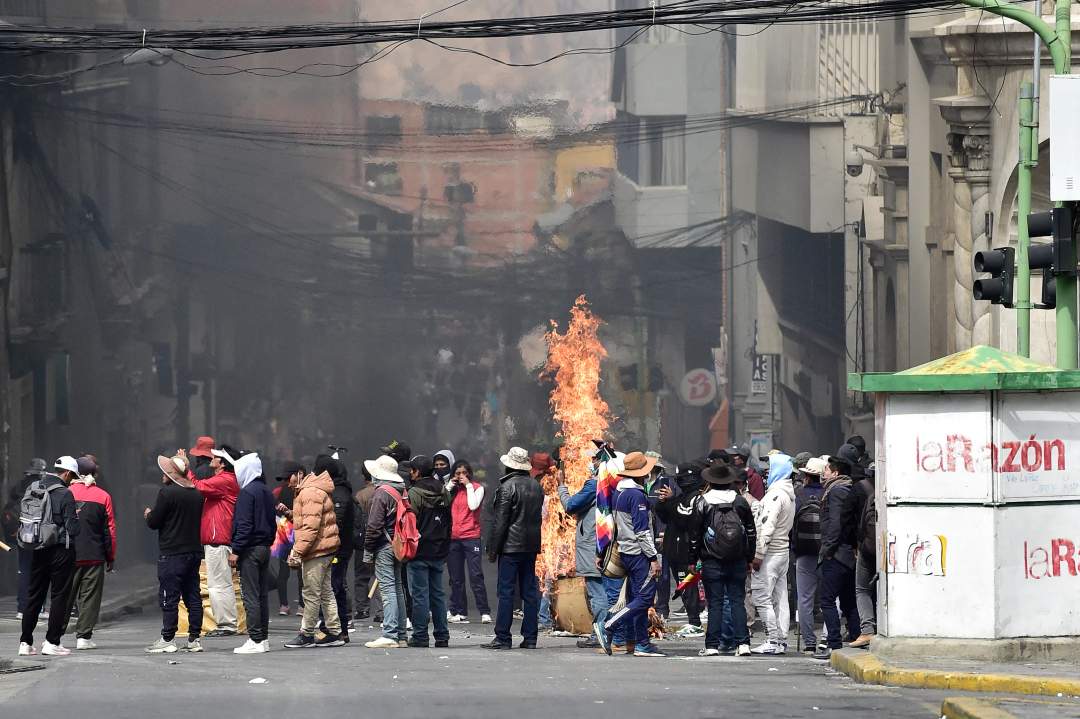
But the outrage had already ignited. By Tuesday, June 2, thousands descended on Tirana's government district, gathering outside the offices of Socialist Prime Minister Edi Rama. They carried banners reading "Albania is not for sale" and "I don't want Albania like Dubai." They chanted "Cancel the project" and held inflatable flamingos above their heads — a symbol of the protected bird species whose breeding grounds would be destroyed.
Rama offered to meet with a delegation of 20 protesters. They rejected it. Another protest was announced for Wednesday. Then Thursday. The streets kept filling.
Protest demonstration in Albania against the Kushner-linked luxury resort development
How Kushner Got His Footing in Albania
The project has two components: a coastal development in the Narta Lagoon area — a designated wildlife reserve — and a luxury resort on Sazan, a nearby uninhabited island that served as a secret military base during Albania's communist era.
Kushner's firm, Affinity Partners, has been granted special investor status by Albanian authorities — a designation that fast-tracks permits and overrides standard regulatory hurdles. The total development is valued at an estimated €4 billion ($4.6 billion).
But how did a former White House adviser with no experience in international resort development land a multi-billion euro project on a protected coastline in a small Balkan nation?
The answer is familiar: connections. The kind that flow from proximity to the American presidency.
In January 2025, Ivanka Trump made a surprise visit to Albania with a team of architects, touring the Sazan island site earmarked for development. In a podcast interview this week, she described discovering the location "by accident" during a swim from a friend's boat — a barefoot hike to the island's summit that left her "captivated."
What she didn't mention was that, by the time of that swim, Albanian authorities had already begun rewriting the rules to accommodate the project.
The Law Was Changed for the Deal
In 2024, the Albanian parliament passed controversial legislative amendments regarding protected areas — amendments that critics say were specifically designed to open ecologically sensitive coastline to private development. The changes removed barriers that had previously prevented construction in nature reserves and marine protected zones.
SPAK, Albania's anti-corruption prosecutor, confirmed this week it has opened an investigation into the funds used to acquire the land titles and their subsequent sale to investors. The investigation targets the murky chain of privatization that allowed supposedly public coastal land to end up in the hands of Kushner's development partners.
As Aleksandr Trajce, executive director of Albania's leading conservation group PPNEA, told the Guardian: "From start to finish there has been a total lack of transparency. We have seen no public consultation or public documentation regarding permits."
BirdLife International condemned the destruction, stating that Albania is "destroying a protected wild coast for President Trump's son-in-law and lying to parliament about it."
The Serbia Precedent: A Pattern of Exploitation
This isn't Kushner's first attempt to turn Eastern European heritage into a Trump family playground.
In Serbia, Kushner pursued a plan to build a luxury complex on a sprawling bombed-out military compound in Belgrade — a designated heritage zone. Serbia's parliament passed a special law to enable the development. Four people, including a government minister, were subsequently charged with abuse of office and falsifying documents to pave the way for the project.
Kushner withdrew from the Serbia deal — but only after the criminal charges. The damage to legal protections was already done.
Now the same playbook has arrived in Albania. Special investor status. Legislative changes. Bulldozers before permits. Private security deployed against citizens. And a prime minister who has publicly vowed: "There is no chance for this investment to stop as long as I am here."
Thousands of protesters crowd a street in Tirana holding pink flamingo cutouts above their heads in protest against a Kushner-linked resort development
What the "Flamingo Revolution" Is Really About
Despite Western media framing this as an environmental protest, the movement has become something broader — a popular uprising against corruption, foreign exploitation, and a government that has made clear it serves investors over its own people.
The Narta Lagoon-Vjosa area is one of Albania's most valuable biodiversity zones, sheltering more than 200 bird species — many of them endangered. The planned development would construct approximately 10,000 hotel rooms in an area that environmentalists describe as "irreversible destruction" of a critical migratory bird stopover along the Adriatic flyway.
But the愤怒 isn't only about flamingos. It's about a country where the prime minister can rewrite environmental law to benefit the son-in-law of a foreign president. It's about private security guards attacking citizens on public beaches. It's about a "democratic" government that installs barbed wire between people and their coastline to protect a billionaire's investment.
It's about sovereignty. And Albanians are defending theirs.
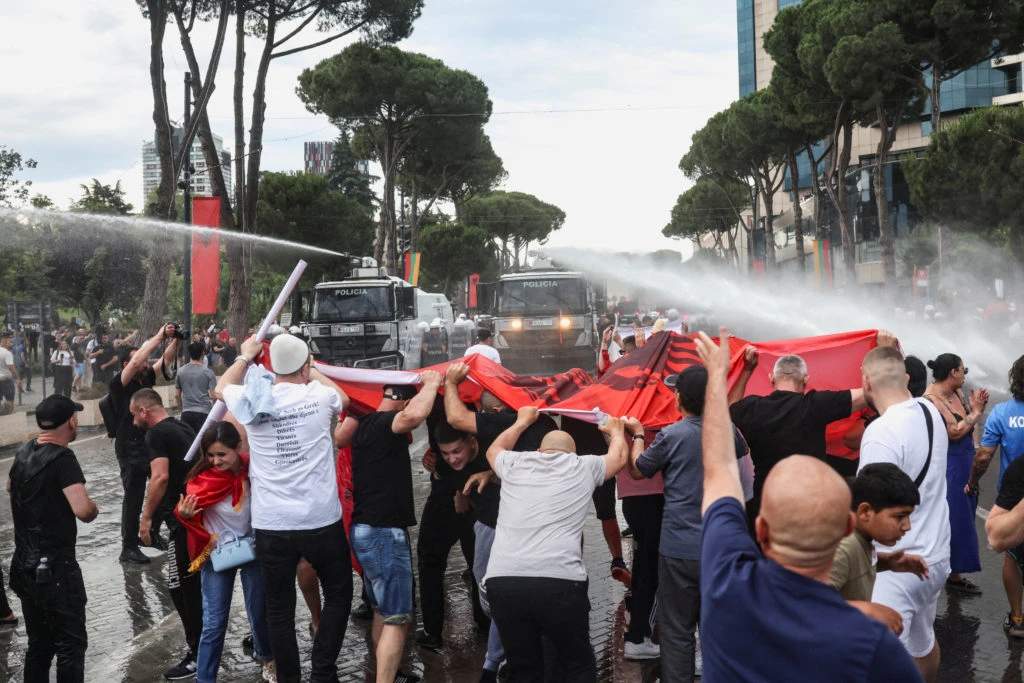
Albanian protesters push against police riot shields and water cannon during clashes in Tirana over Kushner-linked luxury resort
The Stakes for the Rest of Us
What's happening in Albania is a preview of the global playbook: foreign capital, enabled by compliant local leaders, carving up protected land for luxury developments that serve the ultra-wealthy while displacing communities and destroying ecosystems.
The same dynamics play out in Palestine, where Israeli settlers seize land under military protection. They play out in the American West, where corporate developers buy water rights from cash-strapped municipalities. They play out everywhere the powerful treat public goods as private opportunities.
Albania's protesters have drawn a line. They've rejected the trade-off — the false promise that surrendering their coastline to Kushner will somehow lift their country into prosperity. They know who profits from these deals, and it isn't them.
As of this writing, the protests continue for a fourth day. Rama shows no sign of backing down. The bulldozers haven't stopped. The barbed wire hasn't come down.
But neither have the people.
And in that refusal — that stubborn, unyielding, flamingo-waving refusal to submit — there's a lesson for every country watching its leaders sell them out to the highest bidder.
Sources & Methodology(9 sources)
Methodology
Reported using wire service coverage from AP, Reuters, and AFP; analysis from The Guardian, Euronews, Politico, Al Jazeera, and the New York Times; and statements from BirdLife International, PPNEA, and Albania's anti-corruption prosecution body SPAK. Reporting period: June 1-4, 2026.
Filed Under
Frequently Asked Questions
- What is the Kushner-linked resort project in Albania?
- Jared Kushner's firm, Affinity Partners, has been granted special investor status to develop a multi-billion euro luxury resort on Albania's southern coast, including the uninhabited island of Sazan and the protected Narta Lagoon area — home to flamingos, pelicans, and endangered Mediterranean monk seals.
- Why are Albanians protesting?
- Protesters are opposing the destruction of protected coastal habitats, the lack of transparency in the land deals, legislative changes that opened nature reserves to private development, and the use of private security forces against citizens on public beaches. Albania's anti-corruption prosecutor has opened an investigation into the land acquisitions.
- What happened during the protests?
- Protests began on May 31, 2026 at the Zvërnec coastal site where barbed wire fencing was erected around public beach. Private security guards injured several demonstrators. By June 3, thousands filled the streets of Tirana for a fourth consecutive day, with clashes involving water cannon, molotov cocktails, and police barricades. SPAK has opened a formal investigation.
- Is this connected to the Serbia resort project?
- Yes. Kushner previously pursued a similar luxury development in Belgrade, Serbia, which also required special legislation. Serbian prosecutors later charged four people including a government minister with abuse of office and document falsification. Kushner withdrew from that project after the criminal charges, but the same pattern has emerged in Albania.