
A Million Square Feet of Profit, Zero Square Feet of Protection
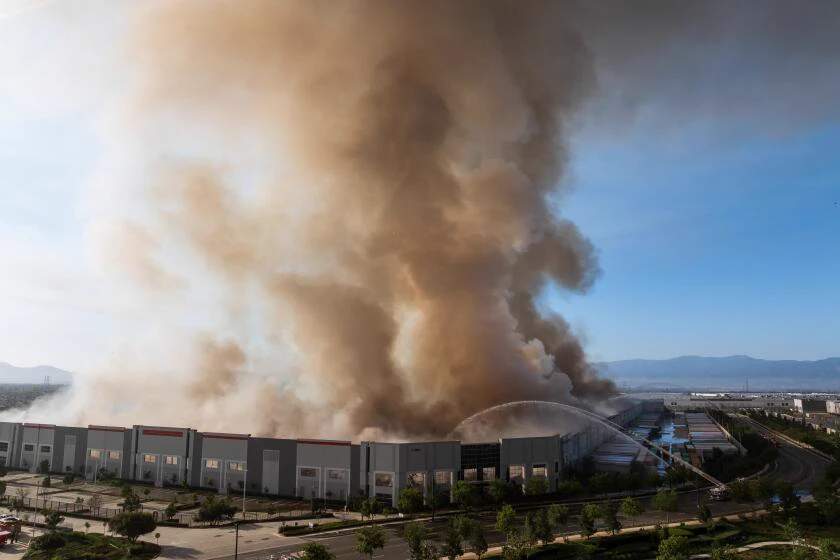
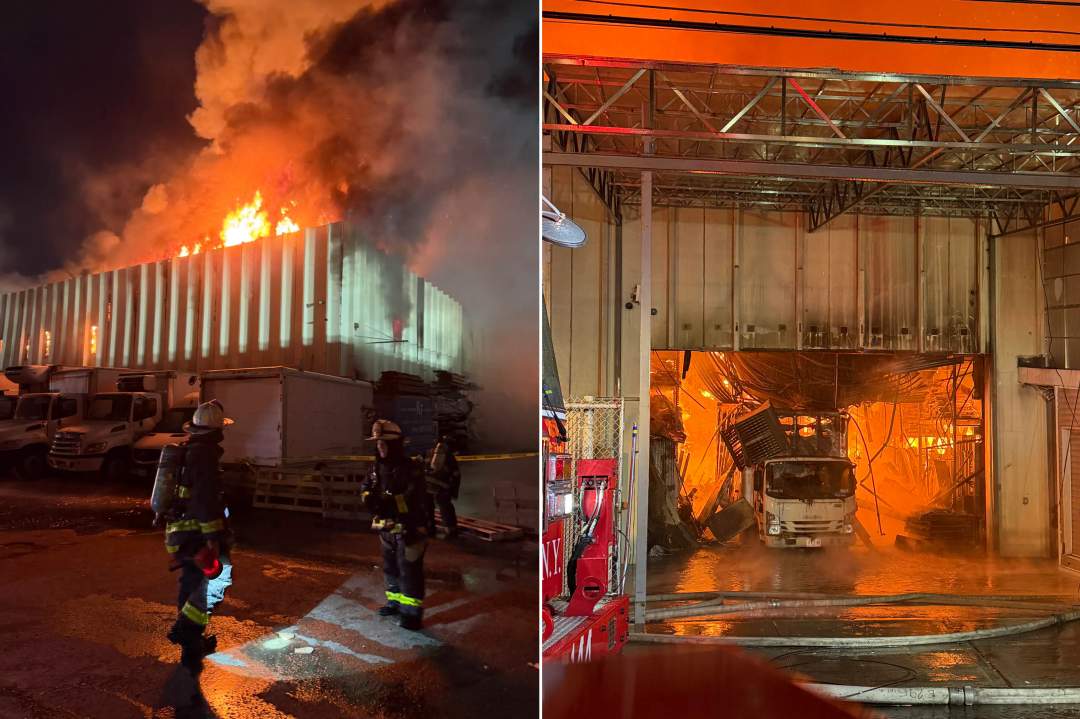
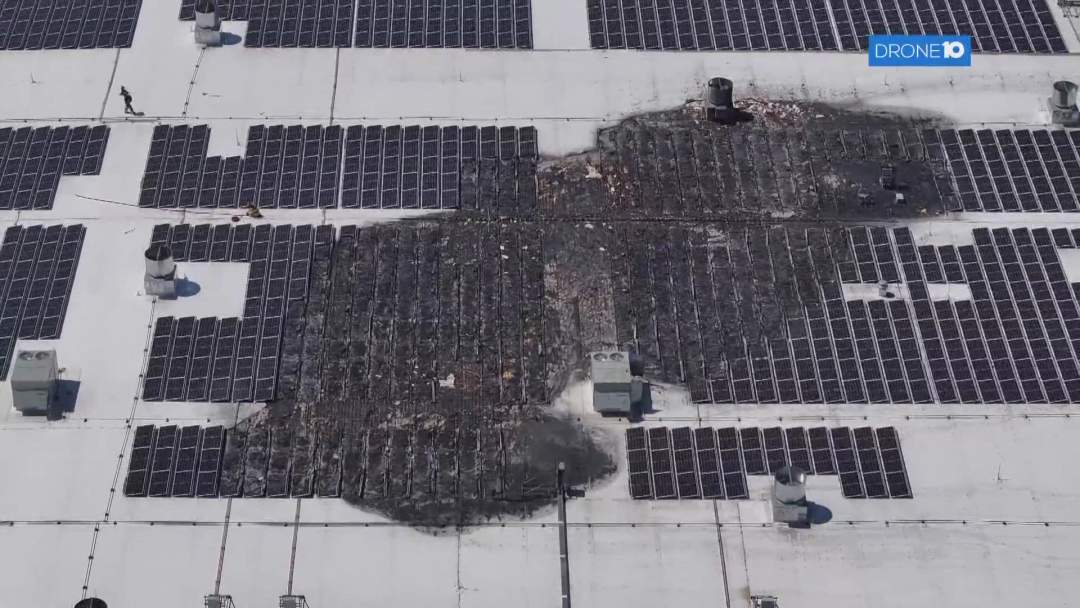
At approximately 1 p.m. on Thursday, June 11, 2026, fire crews responded to reports of heavy fire on the roof of a 1-million-square-foot medical supply warehouse at the Medline Industries distribution center on Promontory Parkway in Tracy, California. By the time they arrived, the flames had already breached the roof and begun racing laterally across high-rack storage piles — the kind of steel shelving that stretches floor to ceiling in every major distribution center in America.
Within 30 to 40 minutes, the entire building was fully consumed.
Tracy Fire Chief Randall Bradley called it "an extremely rare fire — not only in California but in the United States." Deputy Chief Brian Bagley, who has spent 20 years in the fire service, said it was the largest he had ever managed.
But what made this fire rare was not the flames. It was the building. Specifically, it was everything that building represented: a system that extracts every possible ounce of productivity from infrastructure, from equipment, and from the 900 workers who clock in there every day — while stripping away every layer of protection between them and disaster.
The sprinklers did not activate. The fire pump room, which feeds water to every sprinkler head and every yard hydrant on the facility, read at zero pressure. Firefighters on an interior attack for a solid ten minutes saw no water, no sprinkler activation, nothing. The system that was supposed to protect 1 million square feet of burning medical supplies, lithium-ion robot batteries, and hazardous chemicals was, in the decisive moment, dead.
The sprinkler system had passed its mandated inspection in January. Five months later, it was a corpse.
This is what capitalism does to infrastructure. It inspects. It checks boxes. It files paperwork. And when the fire actually comes, the system that was supposed to work doesn't work — because maintenance costs money, and money is for shareholders, not sprinkler pipes.
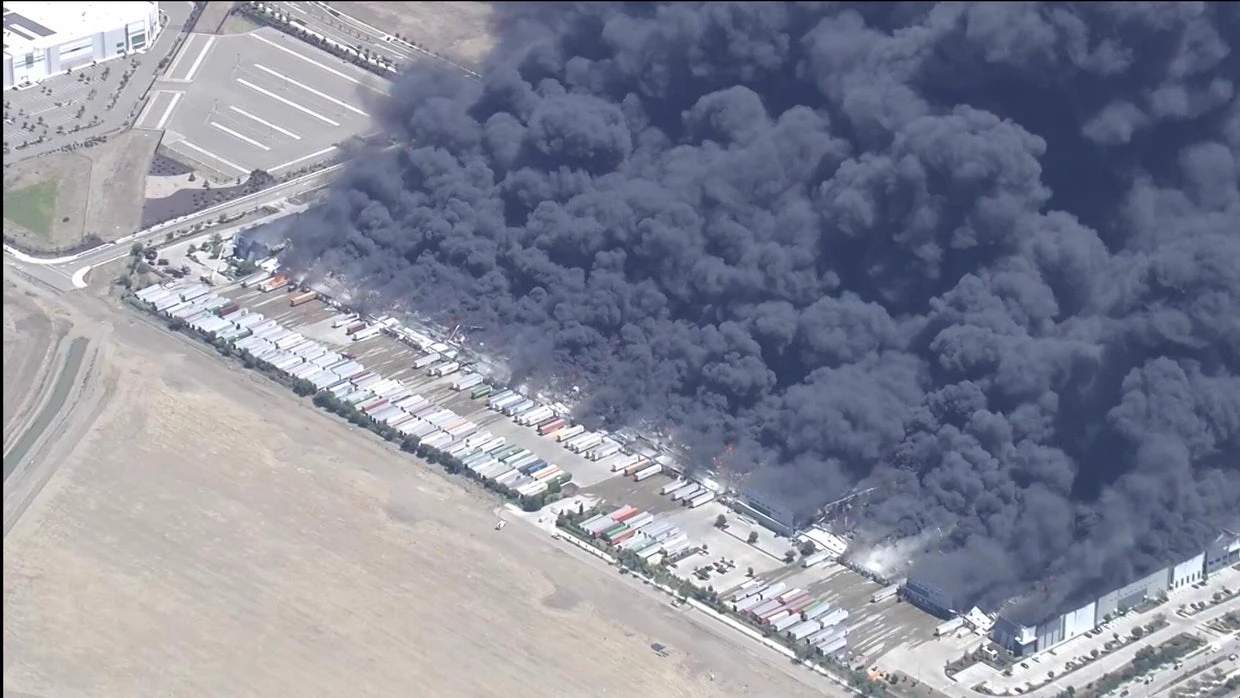
Helicopter aerial view showing a massive warehouse fire at the Medline Industries distribution center with thick black smoke billowing across the sky in Tracy, California.
Water Pressure, Low Humidity, and the Perfect Storm
Firefighters were met with water supply issues from the first moment. The private hydrants inside the facility had no pressure. Crews had to string two fire engines 1,600 feet to reach municipal fire lines just to get water on the building.
Chief Bradley described the conditions: "High winds, high temperatures, low humidities made firefighting very difficult." He called it "a little bit of the perfect storm."
"Things worked against us," he said.
But things didn't just "work against" the firefighters. Things were designed to work against them. When a corporation builds a 1-million-square-foot facility loaded with chemicals, lithium batteries, and medical products — and then underfunds the fire suppression system that keeps it from becoming an inferno — that's not bad luck. That's a business decision.
The building is about eight miles west of Tracy's city center, in an industrial corridor home to Amazon and FedEx warehouses. It sits in the San Joaquin Valley, where summer temperatures regularly exceed 100°F and winds sweep across open land with nothing to slow them down. This is not a surprise. This is a known risk that was known when the building was sited, known when it was stocked, and known when the fire suppression budget was approved.
Multiple explosions were heard as truck tires and medical products detonated inside the inferno. Several hundred warehouse robots — powered by lithium-ion batteries — were destroyed, releasing hydrogen fluoride gas into the smoke plume that drifted for miles.
The City of Tracy declared a local state of emergency that evening. Gov. Gavin Newsom deployed Cal OES and Cal Fire resources. About 200 fire personnel and 100 additional support staff responded.
Embers from the fire spread to the FedEx facility next door, igniting empty trailers. Spot fires erupted near Schulte Road, Larch Road, and the Tracy Municipal Airport. Debris — light, crispy, leaving charcoal stains on fingers, as one local resident described it — rained down on nearby neighborhoods.
The San Joaquin County public health officer confirmed that respiratory irritants, toxic gases, carcinogens, and at least one neurotoxin were present in the smoke. Sensitive populations — children, the elderly, anyone with respiratory conditions — were told to stay indoors.
The system built a box of toxins in the middle of a working-class community, underfunded the safety mechanisms, and when it burned, it rained poison on the people who live there.
This Fire Has a Family
The Medline fire did not happen in a vacuum. It is the latest in a wave of industrial and warehouse fires that has swept across the United States in 2026 — a wave so pronounced that independent trackers have cataloged at least 165 incidents since the beginning of the year, spanning most states in the country. Warehouses, factories, distribution centers, fulfillment hubs, chemical plants, lumber yards, and commercial facilities — the nation's industrial infrastructure is burning at a rate that has no recent precedent.
As we reported in depth, these fires are not random. They are a symptom of a system that treats infrastructure as a cost center and workers as disposable inputs.
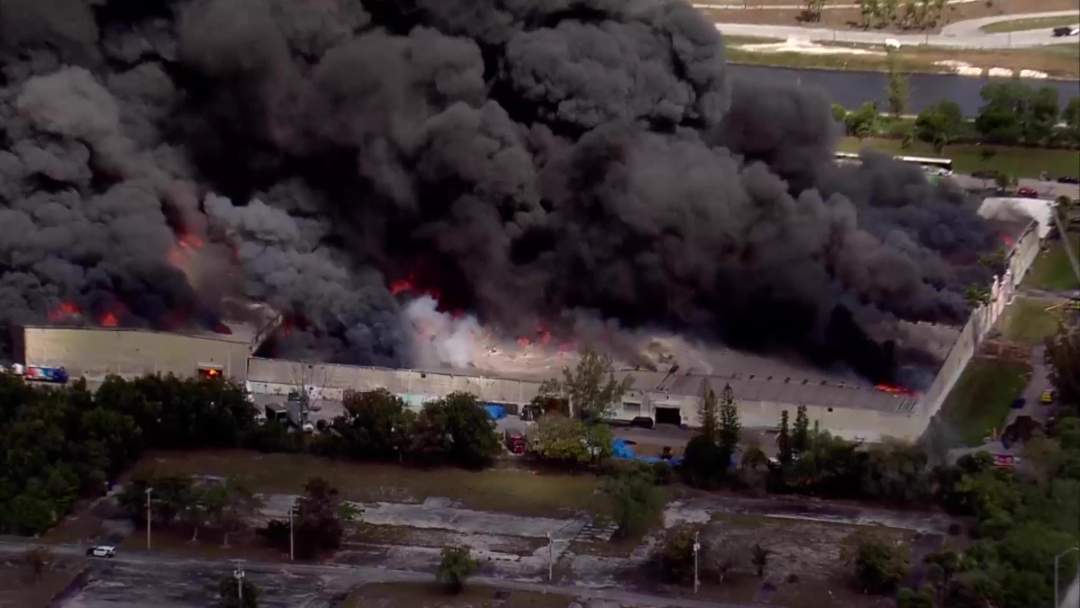
The pattern began in earnest on March 5, when a five-alarm fire tore through the Global Warehouse Solutions 3PL facility in Miami Gardens, Florida — a blaze that required 200+ firefighters and water-dropping helicopters to contain. We covered that fire in detail, and the through-line was unmistakable: cost-cutting logistics operations pushing facilities and workers to the breaking point.
Then came the Kimberly-Clark Distribution Center in Ontario, California, on April 7 — a six-alarm arson that destroyed a 1.2-million-square-foot facility. A worker filmed himself committing the act and stated the motive plainly: "All you had to do was pay us enough to live." That fire and its explicit wage protest became a flashpoint in the national conversation about warehouse labor conditions.
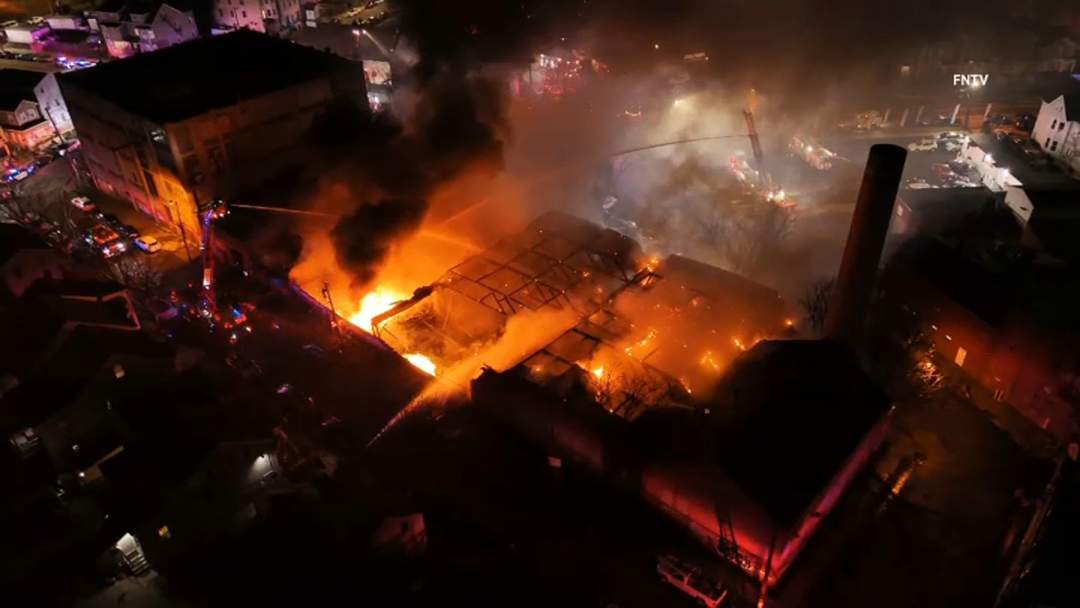
In the nine days that followed that arson alone, at least 14 additional fires broke out across the country. But the wave didn't stop. It hasn't stopped. We documented the early cluster: Queens lumber yards, chemical warehouses in Newark, pallet fires in Lubbock, Amazon fulfillment centers in Ohio, manufacturing plants in East Providence. Since then, the fires have continued — facility after facility, state after state, month after month. Independent research documented at warehousefire.watch tracks the full scope: hundreds of incidents across the country, from major conflagrations to smaller industrial fires that barely make local news but follow the same pattern. Most states have seen at least one. Some have seen many.
But as we argued then, the distinction between arson and accident misses the point. Both are symptoms of the same disease: a system that strains every component — pipes, wires, pumps, batteries, workers — to maximum capacity in pursuit of profit, and then acts surprised when something snaps.
The Medline fire in Tracy fits this pattern with grim precision. A 1-million-square-foot building. A fire suppression system that had been inspected but was non-functional. A private water system with zero pressure. Lithium-ion batteries. Hazardous chemicals. 900 workers. Low humidity. High winds. And a building fully consumed in 40 minutes.
The Medical Supply Chain on Fire
Medline Industries is not a generic warehouse. It is the largest provider of medical-surgical products in the United States, distributing approximately 335,000 healthcare products through 70 global distribution centers. The Tracy facility was a primary distribution hub for Northern California, serving hospitals and health systems including Sutter Health, Stanford Medicine, UC Davis Health, Kaweah Health, Enloe Health, Carson Tahoe Health, and the U.S. Department of Veterans Affairs.
Deputy Chief Bagley was blunt: "This devastating fire is going to affect the commerce throughout the nation... as this was the main distribution center for all medical supplies."
UC Davis Health sent an email to all clinical staff asking them to "use supplies wisely, until we know the impact of this fire." Sutter Health activated contingency plans. Medline scrambled to reroute distribution through secondary and tertiary facilities.
Hospitals across Northern California were told to ration medical supplies because a distribution center burned down — a distribution center whose fire suppression system was, in the words of the fire chief himself, reading at zero.
This is capitalism's healthcare infrastructure in action. A system that nominally serves patients, but is actually organized around profit margins, just-in-time logistics, and cost minimization. When the logistics break — when the building burns, when the sprinklers don't work, when the water pressure fails — it is patients who pay the price.
The system pretends to value their lives. Until the infrastructure that supports those lives is on fire. And then it's "just an accident."
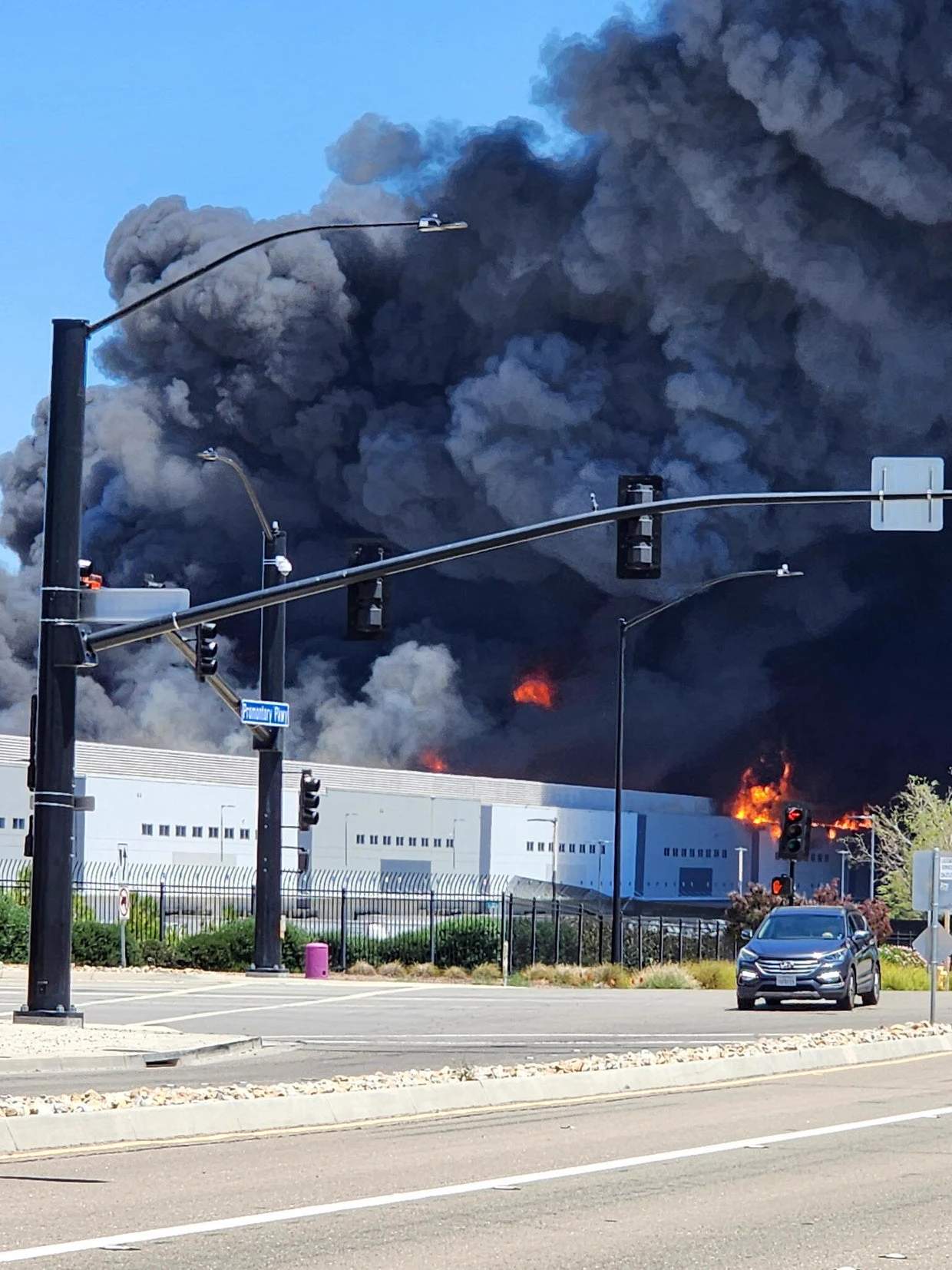
A massive plume of black smoke rises from the Medline warehouse fire, visible across the Tracy, California skyline as the fire continues to burn.
Tracy: A Working-Class City Breathing Capitalism's Exhaust
Tracy is a city of about 100,000 people in California's Central Valley — working class, overwhelmingly. The Promontory Parkway industrial corridor where the Medline facility sits is home to Amazon warehouses, FedEx hubs, and distribution centers that employ thousands of workers at wages that rarely keep pace with the Central Valley's cost of living.
The people of Tracy did not choose to live next to a 1-million-square-foot chemical and battery storage facility. The facility was sited there because land is cheap, labor is plentiful, and regulation is forgiving. The workers at Medline did not choose a fire suppression system that would fail when they needed it. That was a corporate decision, made in a boardroom, signed off by executives who will never breathe the smoke.
Now those residents are breathing the aftermath. Respiratory irritants. Carcinogens. Neurotoxins. The San Joaquin Valley Air Pollution Control District told them to stay indoors. The county public health officer told them to go to the emergency room if they experienced headaches, dizziness, or nausea from the smoke.
When the Global Warehouse Solutions facility burned in Miami Gardens, we saw the same pattern: a working-class community, an industrial facility pushed to capacity, and a fire that blanketed the neighborhood in toxic smoke. The names change. The cities change. The math is always the same: private profit, public cost.
Arson, Accident, or Collapse — Pick Your Euphemism
The cause of the Medline fire remains under investigation. As of Monday, four days after the blaze, crews were still unable to enter the building due to residual heat. An excavation company began removing exterior walls to give firefighters access to hot spots.
Fire officials are reviewing the products stored in the facility, the status of the fire suppression system, and the sequence of events captured on warehouse video. The investigation will take weeks, possibly months.
But the cause, ultimately, does not matter.
If it was arson — a worker driven to desperate action by conditions that the system created — then the fire is an expression of rage against a machine that grinds people into components.
If it was an electrical malfunction — a wiring failure in a building that was pushed to maximum capacity and maintained to minimum standard — then the fire is a consequence of cost-cutting that prioritized quarterly earnings over functional infrastructure.
If it was negligence — a fire suppression system that passed inspection in January but delivered zero water pressure in June — then the fire is a documentation of corporate indifference to human safety.
In every case, the root cause is the same: a system that treats buildings, equipment, and workers as inputs to be optimized, not as obligations to be protected. The fire suppression system was inspected. The inspection passed. And when the fire came, the system was dead. That is not an accident. That is the design.
The Verdict Is Already Written
As we wrote when fires were burning across the country at a pace that shocked even veteran observers, the working class has handed down its verdict. With at least 165 fires and similar acts of industrial destruction cataloged across the United States in 2026 — spanning most states and touching every corner of the nation's logistics infrastructure — this is no longer a cluster. It is a movement. Some of those verdicts are written in accelerant and match strikes. Others are written in the slow corrosion of underfunded pipes, the silent failure of pumps that were supposed to work, the accumulation of lithium batteries in buildings that were never designed to contain their combustion.
The Medline fire in Tracy is both. It is infrastructure pushed to the breaking point. It is a system that inspects and certifies and files paperwork — and then fails when it matters.
The fire burned a medical supply warehouse that served hospitals across the western United States. It scattered toxic debris across working-class neighborhoods. It required 200 firefighters and a state of emergency to contain. It forced hospitals to ration supplies. And it will be called an "accident" — a word that absolves everyone involved.
Chief Bradley said: "There's probably three or four of these in the history of our country... this size of warehouse fire."
That number is going to grow. Not because of bad luck. Because the system does not learn, does not reinvest, does not protect. It extracts. And when it extracts enough, something breaks.
The fire in Tracy is a message. We've been translating it for months.
From Ontario to Queens, from Miami Gardens to West Jefferson, from Longview to Tracy, California — the buildings burn, the smoke rises, and the system pretends it doesn't know why.
It knows.
Sources & Methodology(6 sources)
Methodology
Reported using coverage from CBS Sacramento, KCRA 3, ABC7 San Francisco, KTVU, AP News, Los Angeles Times, and official updates from the City of Tracy. Cross-referenced with independent tracker data from warehousefire.watch, the UTM warehouse fire tracking database, and prior reporting on the 2026 industrial fire wave. Air quality and health risk data from San Joaquin County Public Health Services and the San Joaquin Valley Air Pollution Control District.
Filed Under
Frequently Asked Questions
- What happened at the Medline facility in Tracy, California?
- On June 11, 2026, a fire broke out on the roof of the 1-million-square-foot Medline Industries medical supply warehouse on Promontory Parkway in Tracy, California. The facility's sprinkler system failed to activate, fire hydrants on site had zero water pressure, and the building was fully consumed within 30 to 40 minutes. About 200 firefighters responded, the city declared a local state of emergency, and the blaze burned for multiple days.
- Why did the fire spread so quickly?
- The fire suppression system — including sprinklers and yard hydrants — was non-functional despite passing a mandated inspection in January. Deputy Chief Brian Bagley confirmed the fire pump room was reading at zero pressure. Combined with high-rack storage, hazardous chemicals, lithium-ion robot batteries, high winds, high temperatures, and low humidity, conditions allowed the fire to spread laterally across the facility in minutes.
- What are the health risks from the fire's smoke?
- San Joaquin County public health officials confirmed that the smoke contains respiratory irritants, toxic gases, carcinogens, and at least one neurotoxin. Hundreds of lithium-ion warehouse robots burned, releasing hydrogen fluoride gas. Sensitive populations — children, the elderly, and those with respiratory conditions — were advised to stay indoors and seek medical attention if they experienced headaches, dizziness, nausea, or throat irritation.
- How does this fire connect to the broader pattern of warehouse fires in 2026?
- The Medline fire is one of at least 165 industrial fires and similar acts documented across the United States in 2026, spanning most states. The independent tracker at warehousefire.watch catalogs the full scope. It follows the Kimberly-Clark arson in Ontario, CA (where a worker cited wages as motive), warehouse fires in Miami Gardens, Queens, Newark, and dozens more across the country. As UnTelevised has documented, these fires reflect a system that pushes infrastructure, equipment, and workers to maximum capacity while underfunding safety.