
For two months, a fragile ceasefire held between Iran and the US-Israel alliance — papered over by negotiations, diplomatic theater, and the relentless fiction that Israel was not still bombing Lebanon. On June 7, 2026, the paper ripped.
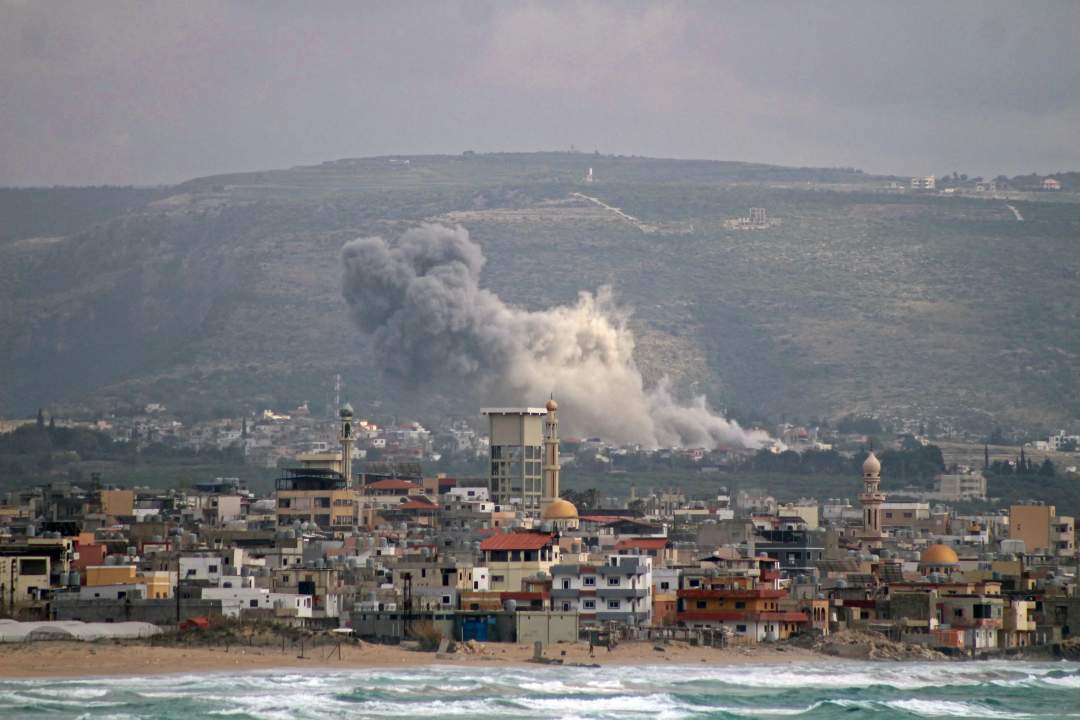
Israel struck Beirut's southern suburb of Dahiyeh, killing at least two people and wounding twenty. It was a calculated escalation — a direct hit on the Lebanese capital despite a US-brokered ceasefire announced just three days earlier. Iran had warned, repeatedly and publicly, that any strike on Beirut would trigger a response beyond Lebanon's borders.
Tehran kept its word.
Within hours, Iran fired a wave of ballistic missiles toward northern Israel — the first direct Iranian missile attack on Israel since the Pakistan-brokered ceasefire took effect on April 8. Israel responded with overnight airstrikes across Iran, hitting targets in Tehran, Tabriz, Karaj, Isfahan, and a petrochemical complex in Mahshahr. By Monday, Iran had launched approximately 30 ballistic missiles. The Houthis resumed attacks from Yemen. Hezbollah kept fighting in southern Lebanon.
The ceasefire is not holding. It is collapsing in real time — and Israel lit the match.
How We Got Here: Israel's Escalation in Lebanon
The immediate trigger was Israel's strike on Dahiyeh. But the fuse has been burning for months.
Despite the April 8 ceasefire between Iran and the US, and despite a separate April 16 ceasefire between Israel and Lebanon, Israel never stopped fighting in southern Lebanon. Israeli forces occupy roughly 2,000 square kilometers of Lebanese territory — nearly one-fifth of the country. That is Israel's deepest incursion into Lebanon in more than a quarter century.
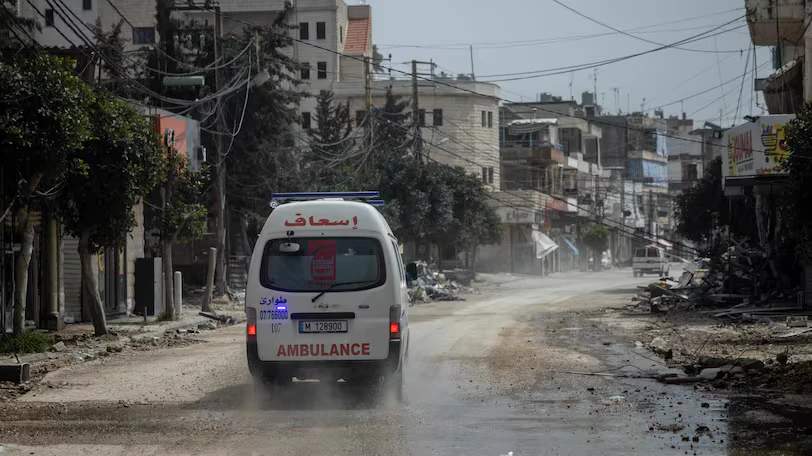
More than 3,000 people have been killed in Lebanon since early March. More than one million have been displaced. And since the ceasefire technically took effect, more than 600 additional people have been killed in Lebanon — a fact that mainstream coverage routinely buries in the eighth paragraph.
Israel frames its continued attacks as targeting Hezbollah. But the reality is that Israel has been using the ceasefire as cover to deepen its occupation, expand its territorial control, and redefine the boundaries of acceptable violence. When it threatened to attack Dahiyeh last week — issuing forced displacement warnings to civilians — it crossed a line that Iran had drawn clearly and repeatedly.
Washington tried to separate the Lebanon conflict from US-Iran negotiations. Israel made that impossible.
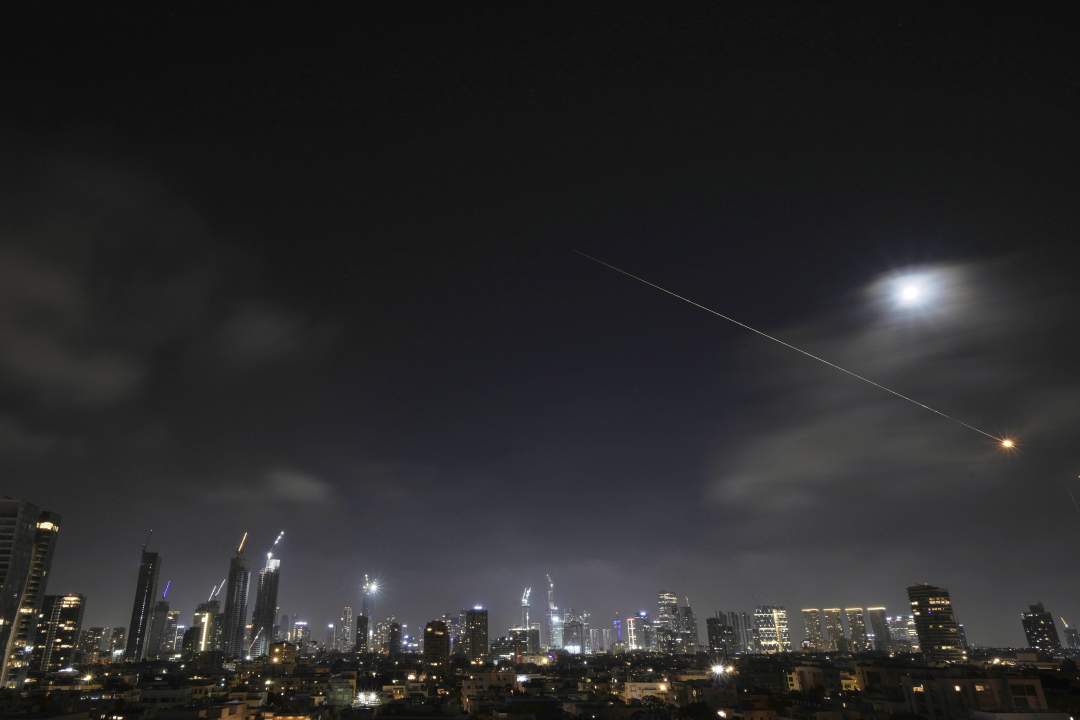
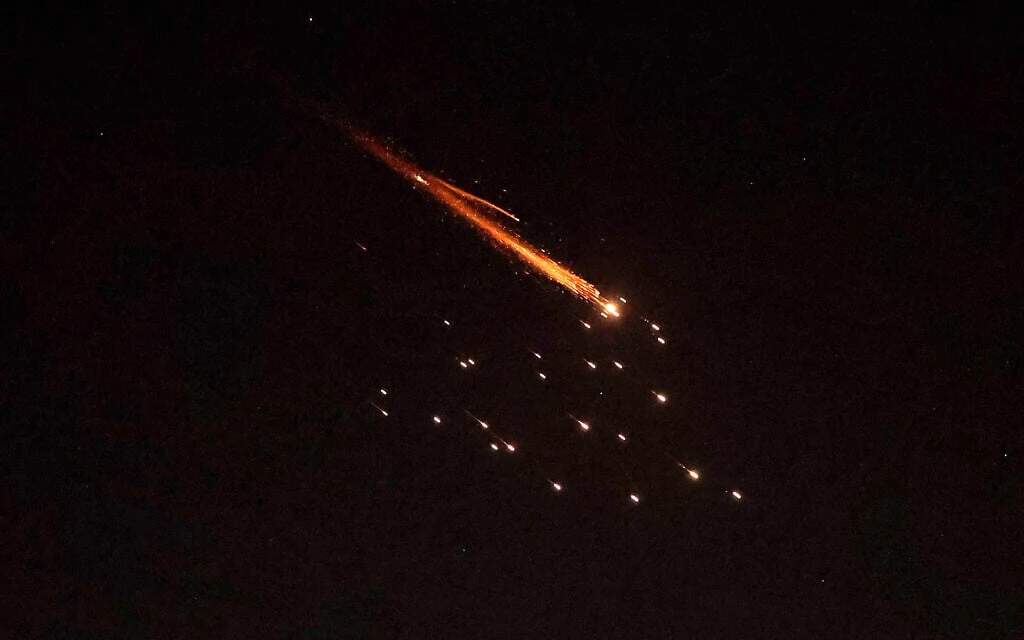
Iranian ballistic missiles streak across the night sky above the Israeli coastal city of Netanya during a retaliatory strike
The Missile Exchange: A Timeline
Sunday, June 7: Israel strikes Dahiyeh, the southern suburbs of Beirut. At least two killed, twenty wounded.
Sunday night: Iran launches its first missile barrage toward northern Israel, targeting two military bases in what the IRGC called "Operation Victory." Israel's Iron Dome intercepts most incoming missiles. Debris falls as far as Jordan and the West Bank. An Iranian missile fragment damages homes in a West Bank settlement.
Monday, June 8 (early morning): Israel retaliates with airstrikes across Iran. Explosions reported in Tehran, Isfahan, Karaj, and Tabriz. Israel targets a petrochemical complex in Mahshahr and claims to have dismantled Iranian defense systems across multiple areas. The Israeli military says it used air-launched ballistic missiles.
Monday morning: Trump posts on Truth Social: "Israel and Iran must immediately stop 'shooting'." The White House claims Trump called Netanyahu and convinced him to hold off retaliation.
Monday afternoon: Despite the claim, Israel strikes Iran anyway. Netanyahu later says Israel "hit the terror regime in Tehran" and halted strikes at Trump's request — but warns Israel will respond "with force" if Iran resumes.
Monday evening: Iran announces it is halting attacks — but warns that any renewed Israeli aggression will be met with a response that will be "much more severe" and accompanied by "crushing measures." Iran's parliament speaker declares US bases "legitimate targets."
The Houthis, Iran's allies in Yemen, announced a missile attack on Israel — their first since April — and declared a "complete and total ban on Israeli maritime navigation in the Red Sea," threatening a return to the shipping disruptions that paralyzed global trade earlier in the conflict.
The US-Israel Fracture: Trump vs. Netanyahu
This escalation has exposed a growing rift between Washington and Tel Aviv — though "fracture" may be generous. What's actually happening is that Israel is acting with impunity while Trump pretends to be in control.
Before Israel struck Iran, Trump told the Financial Times in a phone interview that Netanyahu "won't have any choice" but to accept any deal Washington negotiates. "I call the shots," Trump said. "I call all the shots. He doesn't call the shots."
Hours later, Israel struck Iran anyway.
A senior US official told the Associated Press that Trump had called Netanyahu to urge restraint after the Iranian missile attack, and that the president "got Bibi to hold off for the time being." Netanyahu's office offered no comment. Israel then launched strikes regardless.
Trump's response was a post on Truth Social: "Israel and Iran must immediately stop 'shooting'." It was a demand, not a strategy. And Israel ignored it within hours.
Iranian officials don't buy the narrative that Israel defied Washington. "No one believes that the Zionist regime would carry out any action without prior coordination and cooperation with the United States," said Esmaeil Baqaei, Iran's foreign ministry spokesperson.
Trita Parsi of the Quincy Institute was more blunt: "By defying Trump, Israel has done more than challenge Iran's new equation; it has also undermined Trump's credibility. If Israel's defiance carries no consequences, it will reinforce the view in Iran that Trump either cannot or will not restrain Israel."
The reality: Israel is not a client state waiting for instructions. It is a nuclear-armed regional hegemon that acts when it wants, where it wants, and expects Washington to clean up the diplomatic mess afterward. This is not new. It is the defining feature of the US-Israel relationship.
The Ceasefire That Wasn't
Let's be precise about what "ceasefire" has meant since April 8.
Iran stopped direct attacks on Israel — until Israel forced its hand. Israel continued attacking Lebanon every single day. More than 600 Lebanese people have been killed since the ceasefire took effect. Israel expanded its occupation of southern Lebanese territory. Israel struck Beirut repeatedly. Israel threatened to flatten Dahiyeh and issued displacement warnings to civilians.
And when Iran responded to these violations — as it had explicitly warned it would — the framing from Washington and most Western media was that Iran had "escalated." Iran was the aggressor. Iran was the threat to peace.
This is the same pattern that has defined coverage of every Israeli war for decades: Israel bombs, the target responds, and the response is treated as the provocation. It is propaganda dressed up as journalism, and it depends on the reader not knowing the timeline.
Iran's position has been consistent since April. Foreign Minister Abbas Araghchi argued that the ceasefire must apply across all fronts — including Lebanon — and that a violation in one theater constituted a violation everywhere. Until June 7, that position was largely rhetorical. Israel called the bluff. Iran proved it wasn't one.
What Happens Next
By June 10, the situation had deteriorated further. The US launched new airstrikes on Iran after Trump warned Tehran would "pay the price" for stalled negotiations. Iran responded by striking targets in Bahrain, Kuwait, and Jordan. Iran's parliament speaker declared all US bases in the region "legitimate targets." Kuwait closed its airspace. Bahrain sounded missile alert sirens. An American Apache helicopter was downed over the Strait of Hormuz.
Trump told reporters at the White House: "We were really close to a deal, but they keep tapping us along, they keep playing us for suckers."
In the same breath, Trump claimed — without evidence — that the US has been "taking out millions of barrels of oil" from Iran every night, and that this is why prices are at $85-$90 a barrel instead of $250. The statement was so incoherent that oil analysts struggled to determine whether it referred to military seizures of Iranian oil or a hallucination.
Brent crude hit $97 a barrel. Asian markets fell sharply. The global economy shuddered.
Iran holds one card that changes everything: the Strait of Hormuz, through which roughly 20% of the world's oil supply passes. As long as Iran controls the strait, it has leverage that no amount of US airstrikes can negate. Every missile exchange raises the probability that Iran simply closes it — and with it, the global economy.
The Bottom Line
There was never going to be peace as long as Israel remained in Lebanon. There was never going to be a ceasefire that Israel actually honored. There was never going to be a deal that constrained Israeli violence while leaving the victims of that violence without recourse.
Iran offered a framework: the ceasefire applies on all fronts, or it applies on none. Israel rejected that framework by continuing to bomb Lebanon. Iran responded. Now the ceasefire is functionally dead, the region is spiraling, and the same people who broke it are pointing at the people who warned them not to.
This is not complicated. Israel is the aggressor in the region. It expects America to intervene when it steps out of line and save it from the consequences. It holds peace hostage while violating every agreement, every ceasefire, every red line. It sabotages negotiations by making them impossible — then claims the other side is unwilling to deal.
The people who will suffer are not in Tel Aviv or Washington. They are in Beirut, in Tehran, in Sanaa, in the displacement camps across Lebanon where a million people wait for a ceasefire that Israel never intended to keep.
There will never be peace as long as Israel remains unchecked.
Sources & Methodology(7 sources)
Methodology
Reported using real-time coverage from Al Jazeera, The Guardian, Reuters, Time, and CNBC. Timeline reconstructed from official statements, military claims, and diplomatic reporting. All claims verified against at least two independent sources. Expert analysis from Trita Parsi (Quincy Institute) and Dr. Hamidreza Azizi (German Institute for International and Security Affairs) cited.
Filed Under
Frequently Asked Questions
- What triggered the June 2026 Iran-Israel missile exchange?
- Israel struck Beirut's southern suburb of Dahiyeh on June 7, killing at least two people and wounding twenty, despite a US-brokered Lebanon ceasefire announced just days earlier. Iran had repeatedly warned that strikes on Beirut would trigger a direct response, and kept its word by firing ballistic missiles at northern Israel.
- Is the April 2026 ceasefire still in effect?
- Functionally, no. While neither side has formally declared the ceasefire dead, the June 7-10 exchanges of direct strikes between Iran, Israel, and the US represent the most serious breach of the truce since it was established. Iran has declared all US bases in the region 'legitimate targets.'
- How many missiles did Iran fire at Israel?
- According to Israeli media, Iran launched approximately 30 ballistic missiles in total since June 7. Most were intercepted by Israel's Iron Dome system, with debris falling as far as Jordan and the West Bank. Iran's IRGC called the operation 'Operation Victory.'
- What is Israel's role in the collapse of the ceasefire?
- Israel continued military operations in southern Lebanon throughout the ceasefire period, killing more than 600 people and occupying 2,000 square kilometers of Lebanese territory since April. Israel's June 7 strike on Beirut crossed a red line Iran had drawn publicly, triggering Iran's first direct missile attack on Israel since the truce.
- What happened between the US and Iran after the initial Israel-Iran exchange?
- By June 10, the US launched new airstrikes on Iran after Trump accused Tehran of 'playing us for suckers' in negotiations. Iran responded with strikes targeting US bases in Bahrain, Kuwait, and Jordan. Kuwait closed its airspace and Bahrain activated missile alert sirens.