
UN Experts Say What Palestinians Have Said for Decades: Settler Violence Is Ethnic Cleansing
Thirteen Palestinians killed in five months. Nearly five hundred injured. Entire villages encircled and squeezed into oblivion. The United Nations has finally put a name to what Israel has been doing in the West Bank — and the word is "ethnic cleansing."
In the strongest warning issued to date, a coalition of 14 UN human rights experts declared on June 1 that Israeli settler violence in the occupied West Bank has reached "unprecedented" levels in 2026, explicitly naming it as an "instrument of coercion in the hands of the occupying power, facilitating ethnic cleansing."
The statement, signed by Special Rapporteurs covering everything from extrajudicial executions to adequate housing, cultural rights, and the rights of internally displaced persons, pulled no punches. "Relentless attacks by the settler-colonial movement, carried out with the support and acquiescence of the Israeli State, have become a daily terror in Palestinian lives," they wrote. "The escalating violence, carried out with full impunity, serves as an instrument of coercion in the hands of the occupying power, facilitating ethnic cleansing."
It is a remarkable admission from an institution that has spent decades couching its language in diplomatic euphemism. But for Palestinians on the ground, none of this is new. They have been living it — and dying from it — for generations.
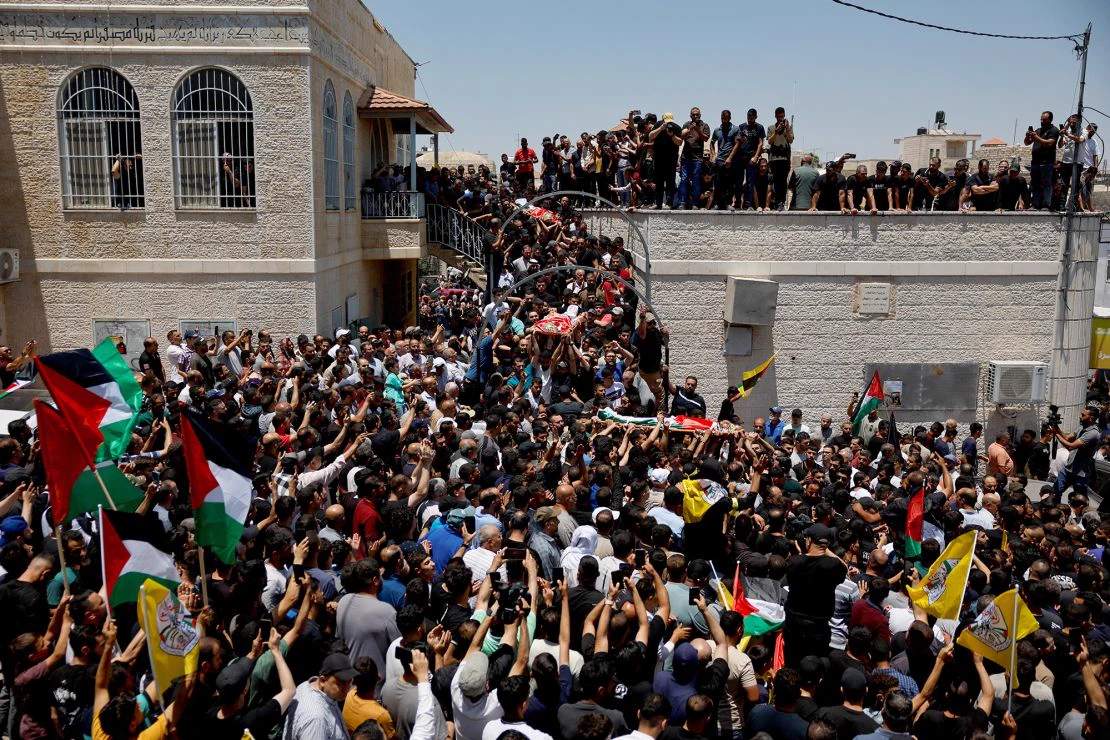
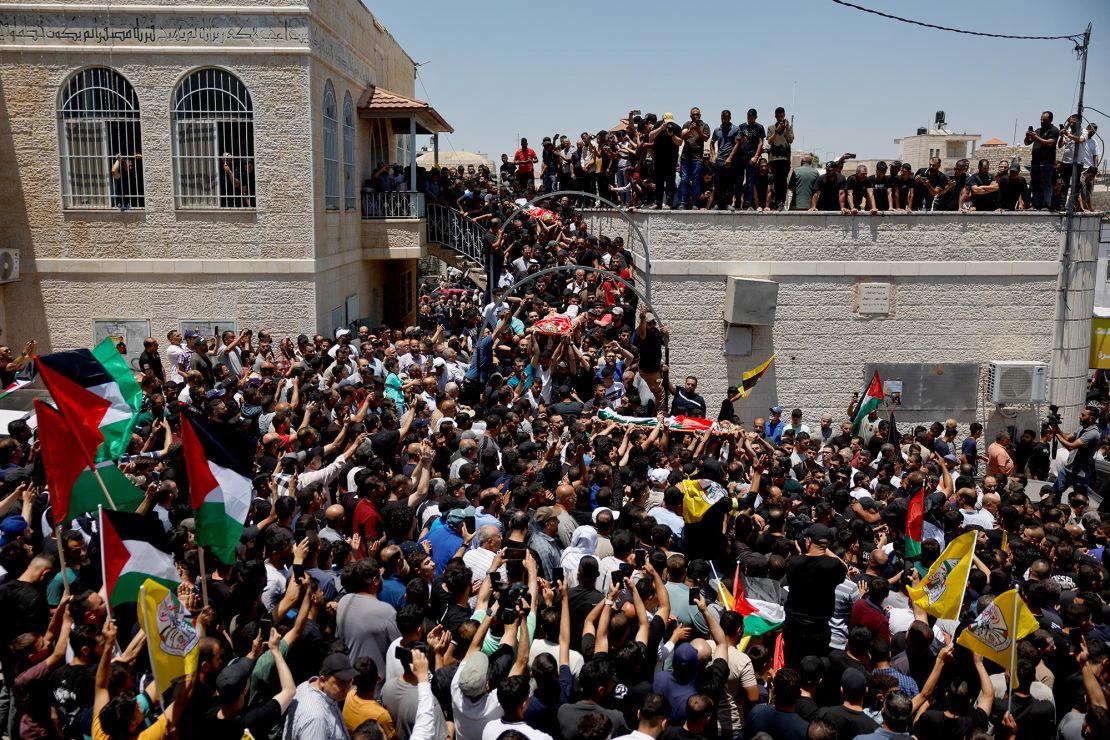
Mourners carrying bodies wrapped in shrouds during funeral procession for Palestinians killed by settlers in the West Bank
"Unprecedented" Violence: The Numbers Tell the Story
The statistics the UN experts cited are staggering, but they only capture what can be counted. In just the first five months of 2026, at least thirteen Palestinians have been killed and nearly five hundred injured in settler attacks across the occupied West Bank. Both figures outpace every previous year on record.
These are not isolated incidents. They are not the work of rogue individuals. They are the predictable output of a system designed to drive Palestinians off their land — and they are accelerating.
The violence is not evenly distributed. While no part of the West Bank has been spared, communities in Area C — the 61% of the territory under full Israeli military and civil control — bear the heaviest burden. The Jordan Valley and South Hebron Hills have become zones of systematic terror, where Palestinian existence is being methodically erased under the cover of war and international distraction.
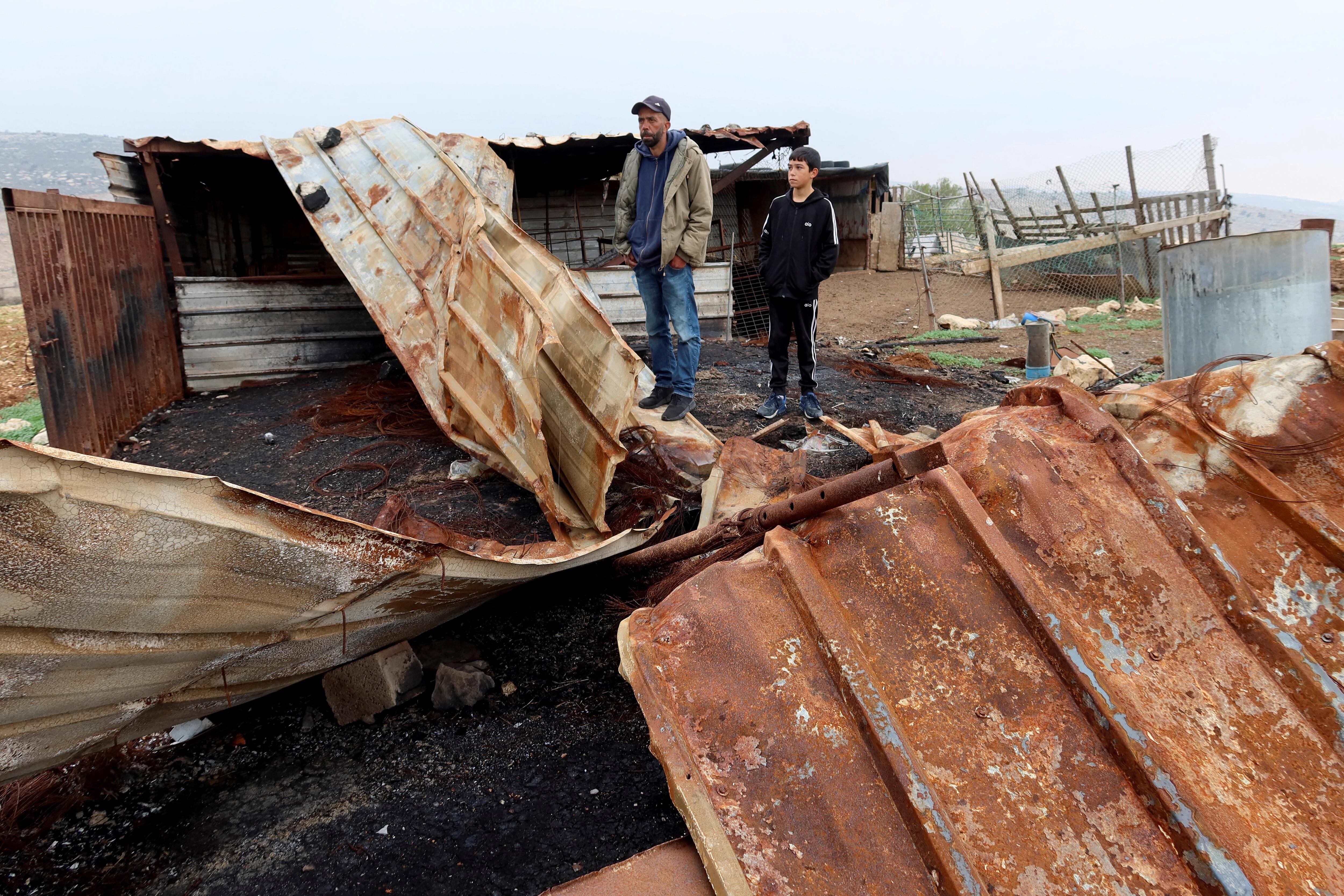
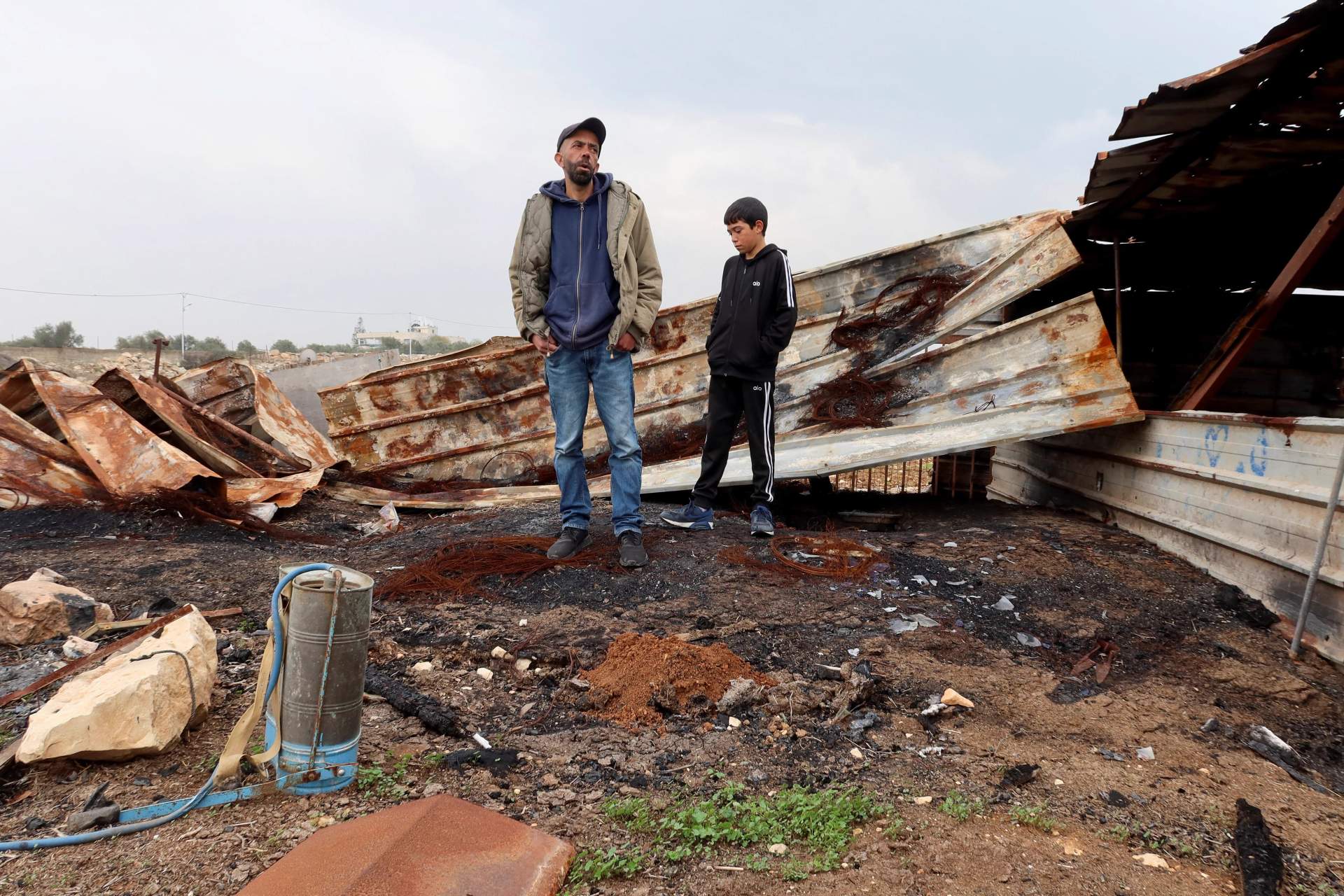
In Masafer Yatta, a collection of pastoral communities in the South Hebron Hills, near-daily raids by armed settlers and Israeli occupying forces have become what the UN describes as "a pervasive feature of daily life." Residents are beaten, their homes demolished, their water sources destroyed, their grazing lands seized. The goal is not punishment. The goal is departure.
As the experts made clear: "Violence is used as a calculated, targeted tool to deny Palestinians access to essential services, agricultural and grazing areas, with the ultimate aim of severing the people's connection to the land."
!Mourners carry the bodies of Palestinians killed by Israeli settlers in the occupied West Bank
Umm al-Kheir: A Village Being Erased in Real Time
Perhaps no single community encapsulates the scale of this campaign quite like Umm al-Kheir, a small Palestinian village in the South Hebron Hills that has become ground zero for state-backed ethnic cleansing.
The village is now fully encircled by the Carmel settlement and a new outpost whose construction began in July 2025. Since then, the community has endured a cascade of horrors: repeated water and electricity cuts, home demolitions, violent attacks by armed settlers, arbitrary detention of residents, torture, and systematic attacks on children.
In July 2025, a human rights defender from Umm al-Kheir was shot and killed — allegedly by an armed, sanctioned settler — during protests against the outpost construction. His killing was not investigated. No one was held accountable. Instead, the violence against the village only intensified.
Infrastructure has been destroyed. Farmland has been scorched. Water sources have been contaminated or sealed off. Grazing areas have been declared "state land" and seized. And now, demolition orders threaten the village with total erasure.
Umm al-Kheir is not alone. Since 2023, new outpost installations across Areas B and C of the West Bank have consistently preceded and driven the forcible transfer of Palestinian communities. The villages of Khan al-Ahmar, Abu Falah, Al Hathroura, Bariyyat Z'tara, Abo El-Henna, and Khallet a-Thabe' all face imminent risk of forcible transfer, demolition, and displacement.
The pattern is consistent and deliberate: an outpost goes up, the violence begins, the community is squeezed until it breaks, and the land is absorbed into the settlement project. This is not a side effect of occupation. This is the occupation's core function.
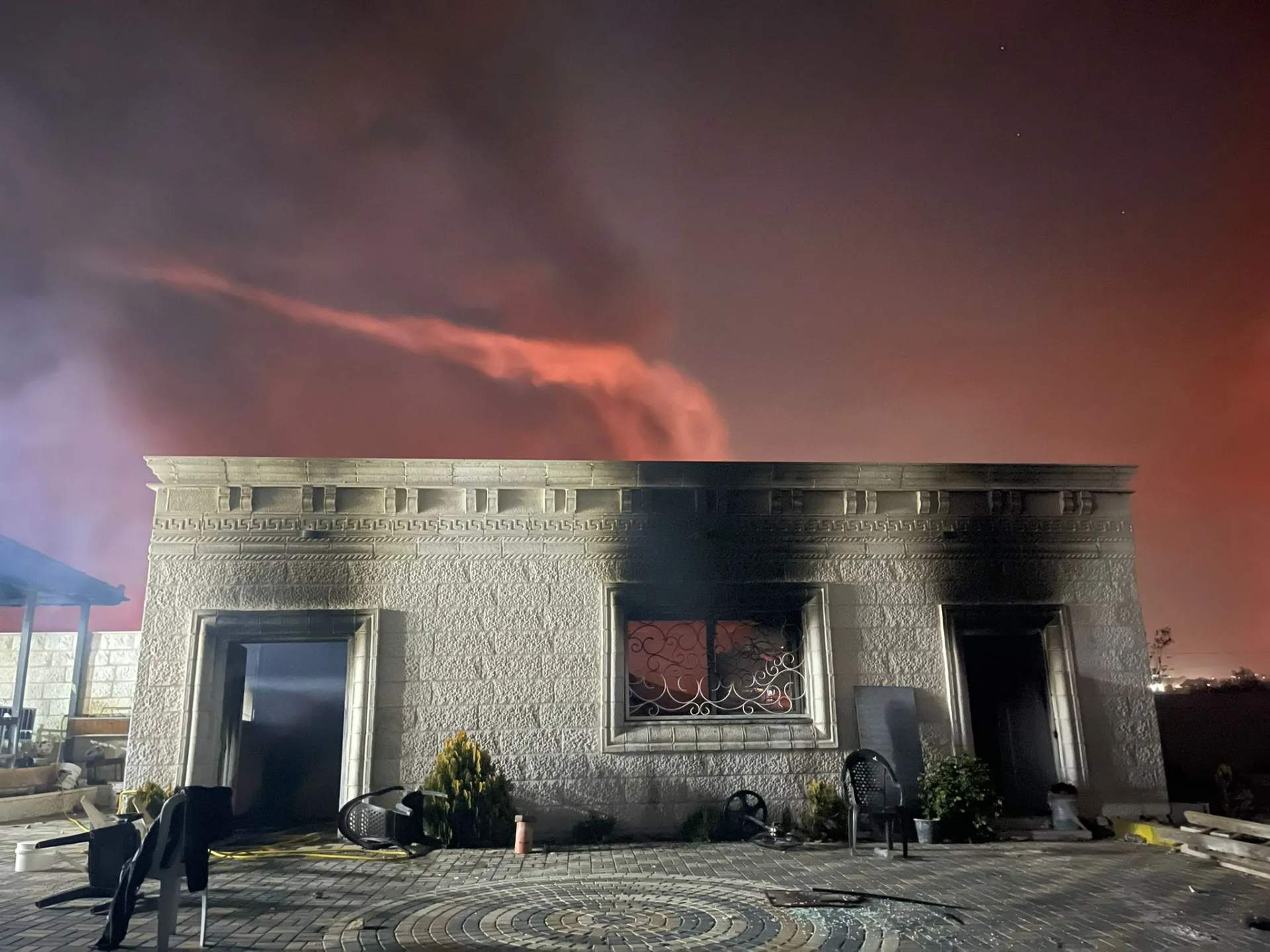
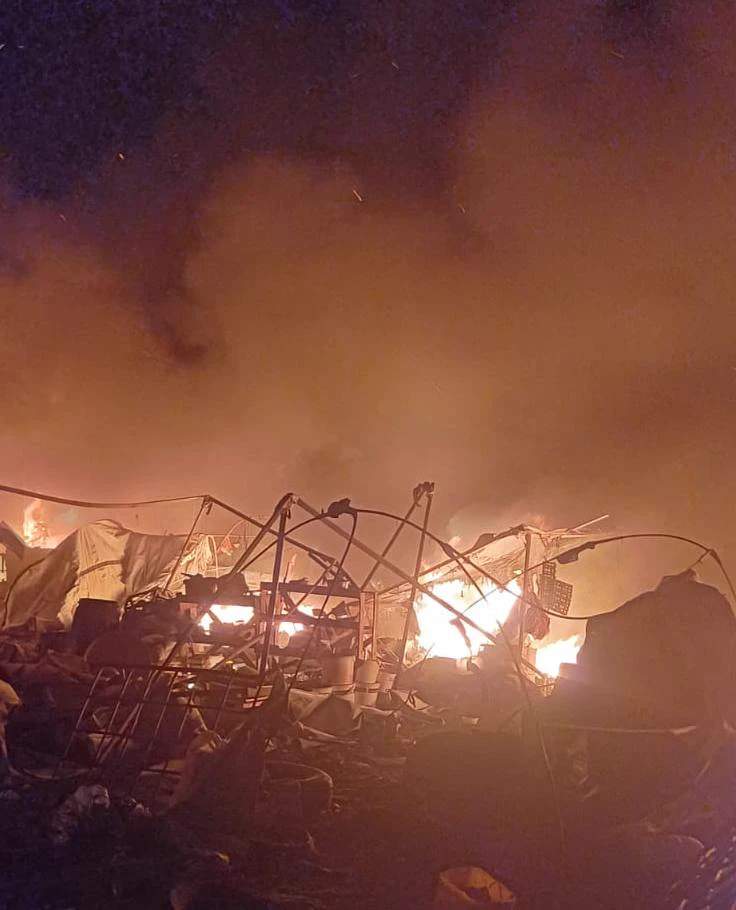
Buildings and vehicles on fire during a settler rampage in the Palestinian town of Huwara in the occupied West Bank
The Khan al-Ahmar Precedent: Ethnic Cleansing as Political Theater
The case of Khan al-Ahmar deserves special attention because it demonstrates the extent to which ethnic cleansing has become normalized — even celebrated — within Israel's political establishment.
On May 19, 2026, reports emerged that ICC Prosecutor Karim Khan had requested an arrest warrant for Israeli Finance Minister Bezalel Smotrich for war crimes. Smotrich's response was not contrition. It was escalation. He announced at a press conference that he was ordering the demolition of Khan al-Ahmar, a Bedouin village east of Jerusalem that has stood for decades in the path of Israel's E1 settlement expansion corridor.
As UnTelevised reported at the time, Smotrich vowed this would be "only the beginning" of his response to international accountability. American journalist Jasper Nathaniel put it plainly: "Smotrich just announced the official ethnic cleansing of a Palestinian village in response to the ICC warrant for his arrest."
On May 22, the UN's own OHCHR issued an urgent statement calling on Israel to "immediately cease its measures to forcibly displace the Khan Al Ahmar community" and halt settlement expansion in the E1 corridor. The statement went unheeded.
The message from Israel's leadership is unmistakable: international law does not apply to us. Accountability will be met with more violence, more displacement, more erasure. And the world will watch.
!Damaged Palestinian property after coordinated settler attacks in the occupied West Bank
Impunity as Policy: 1,500 Killings, One Conviction
The UN experts' statement highlighted a statistic that should haunt every Western government that arms and shields Israel: out of approximately 1,500 Palestinians killed by settlers and Israeli forces between 2017 and September 2025, Israeli authorities opened only 112 investigations. The result? A single conviction.
One. Out of 1,500.
This is not a broken justice system. This is a justice system functioning exactly as designed — to provide the veneer of legal process while guaranteeing that no settler, soldier, or politician ever faces meaningful consequences for violence against Palestinians.
The impunity is structural. Settlers who attack Palestinian communities do so with the knowledge that Israeli forces will not intervene — and in many cases, will actively protect them. The Israeli military and police routinely arrive at the scene of settler attacks only to detain the Palestinian victims. Homes are demolished under military orders that cannot be appealed. Water is cut off by authorities who simultaneously approve new settlement swimming pools.
As the UN experts noted, "Facing no pushback and no censure, Israel continues irreversibly eroding the Palestinians' right to self-determination enshrined in international law."
The Distraction: War as Cover for Annexation
There is a cruel arithmetic to the timing of all this. As the region's attention has been consumed by the broader Israeli-Iranian escalation and the ongoing genocide in Gaza, the pace of West Bank annexation has dramatically accelerated.
"Recent regional escalation has drawn international attention away from the realities unfolding in the occupied Palestinian territory," the UN experts wrote. "As diplomatic efforts are concentrated elsewhere in the region, accountability for the increasing violence of settlers and resulting displacement of people has slipped further from sight."
This is not accidental. It is the same playbook Israel has used for decades: create a crisis, flood the zone with chaos, and while the world watches the fire, quietly annex more land. The ceasefire in Gaza has not meant peace for Palestinians anywhere — not in Rafah, not in the West Bank, not in East Jerusalem.
Since the so-called ceasefire, Israel has continued killing Palestinians at a staggering pace. Over 900 Palestinians have been killed since the ceasefire agreement. The violence in the West Bank is part of the same machine — just a different gear.
The UN estimates that the continued displacement of Palestinian communities would expose approximately 663 square kilometers of land to further settlement expansion. That is an area larger than Chicago's city limits — handed over to settlers, one village at a time, one family at a time, one bullet at a time.
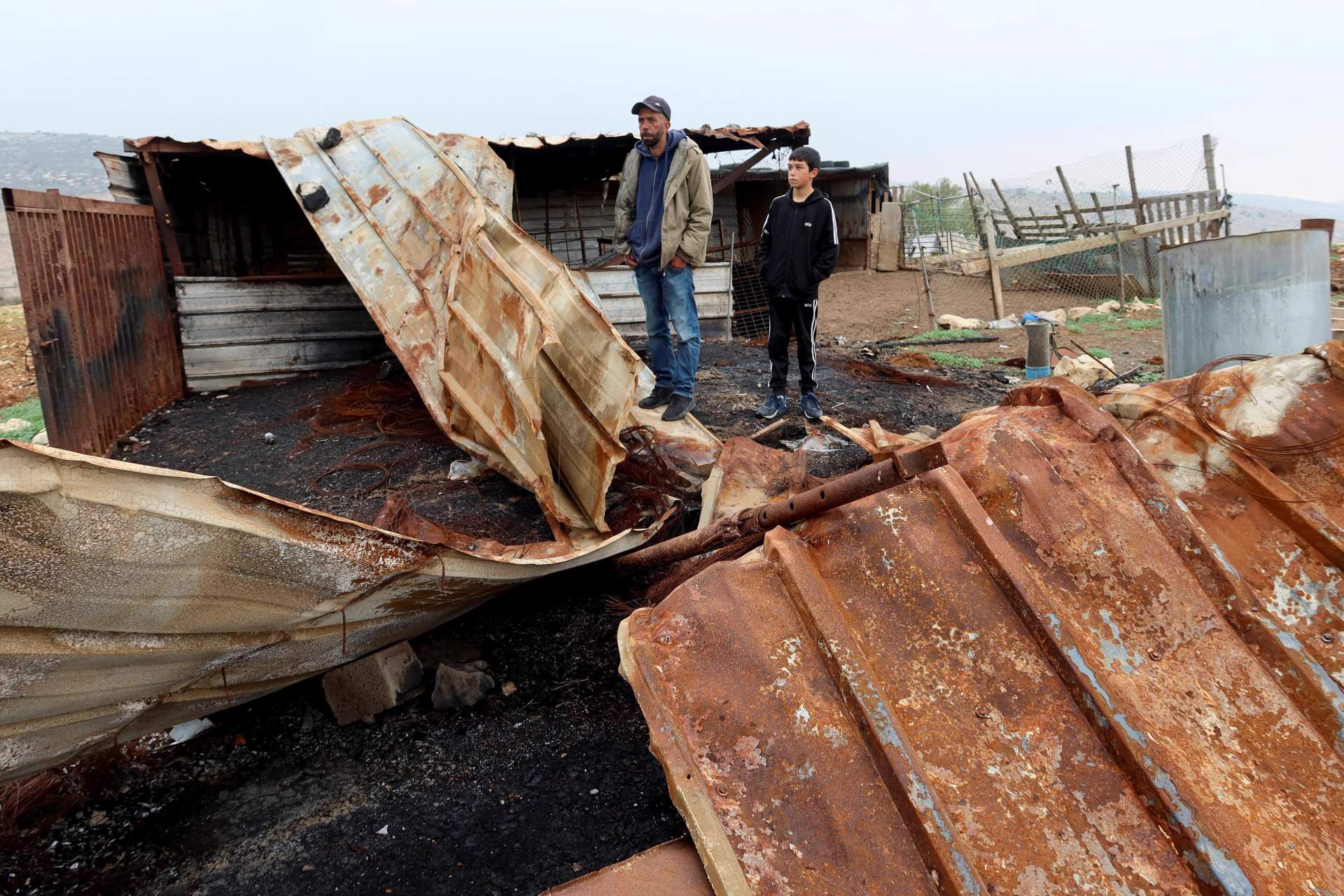
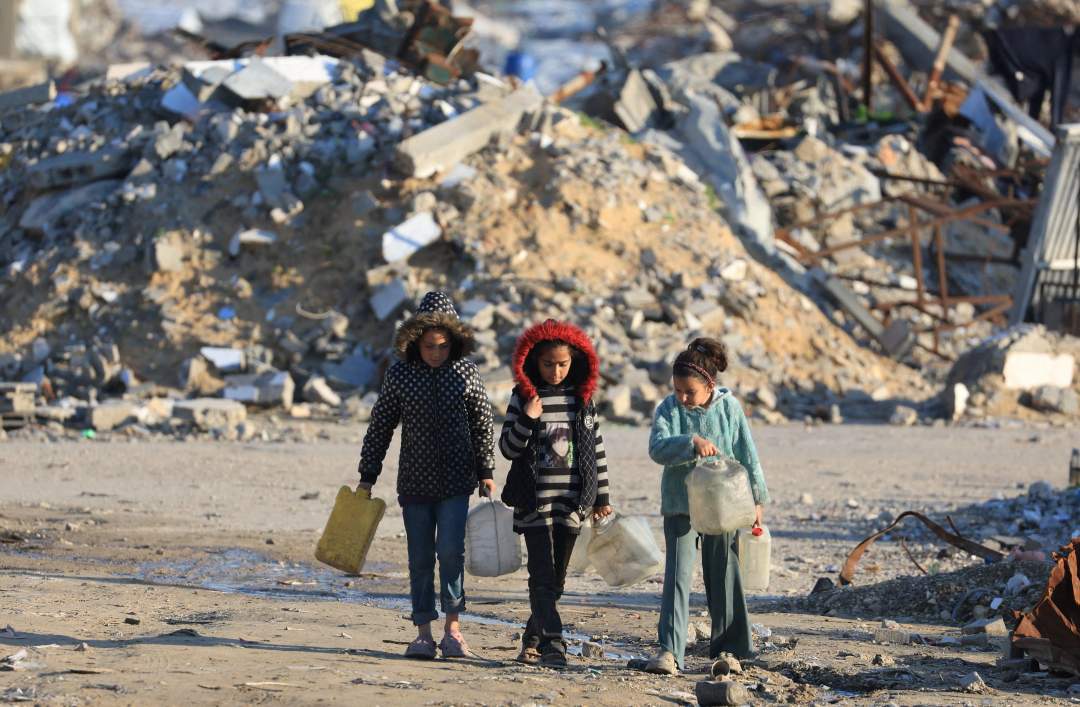
Destroyed Palestinian home with belongings scattered after coordinated settler attack in the occupied West Bank
What Happens When the World Looks Away
The UN experts urged Israel to "immediately cease facilitating settler violence and forced displacement," called for the safe return of displaced residents, and demanded guaranteed access to residential, agricultural, and grazing lands. They reminded Israel that despite the "blatant unlawfulness of its occupation" — confirmed by the International Court of Justice — it remains bound by its obligations as an occupying power under the Geneva Conventions.
These calls will be ignored. They have been ignored for 58 years.
What will not be ignored is the reality on the ground. Every day that passes without accountability is a day that another family is driven from their home, another olive grove is burned, another child is beaten by settlers who will never face trial. The UN's language may be getting stronger, but the machinery of erasure grinds on regardless.
The question is no longer whether what is happening in the West Bank constitutes ethnic cleansing. The United Nations has answered that. The question is whether anyone with the power to stop it will bother to try.
History is not kind to those who looked away.
Sources & Methodology(9 sources)
Joint statement by 14 UN Special Rapporteurs warning of unprecedented settler violence serving as instrument of ethnic cleansing in the occupied West Bank
Official UN publication of the Special Rapporteurs joint statement on escalating settler violence and displacement
UN humanitarian data on settler violence casualties in the occupied West Bank through 2026
Report on Smotrich ordering demolition of Khan al-Ahmar in response to ICC warrant
Analysis of Smotrich ordering ethnic cleansing of Khan al-Ahmar as retaliation for ICC arrest warrant
UN statement calling for immediate halt to forcible displacement of Khan al-Ahmar and E1 settlement expansion
Report on Hamas describing Khan al-Ahmar displacement as systematic ethnic cleansing
Reuters investigation into coordinated settler attacks designed to expel Palestinian communities
International Court of Justice advisory opinion declaring Israeli occupation of West Bank unlawful
Methodology
Analysis based on UN Special Rapporteurs joint statement (June 1, 2026), UN OCHA data, ICC filings, Reuters investigative reporting, and UN OHCHR statements. All claims cross-referenced with official UN documentation.
Filed Under
Frequently Asked Questions
- What did the UN experts actually say about settler violence?
- Fourteen UN Special Rapporteurs stated that settler violence in the occupied West Bank has reached "unprecedented" levels in 2026 and that the violence, carried out with full impunity, "serves as an instrument of coercion in the hands of the occupying power, facilitating ethnic cleansing."
- How many Palestinians have been killed by settlers in 2026?
- According to the UN experts citing OCHA data, at least 13 Palestinians have been killed and nearly 500 injured in settler attacks in just the first five months of 2026. Both figures outpace previous years.
- What is the conviction rate for settler violence?
- Out of approximately 1,500 Palestinians killed by settlers and Israeli forces between 2017 and September 2025, Israeli authorities opened only 112 investigations resulting in a single conviction — a near-total impunity rate of 99.9%.
- What is happening in Umm al-Kheir?
- Umm al-Kheir, a Palestinian village in the South Hebron Hills, has been encircled by the Carmel settlement and a new outpost. Residents have faced water and electricity cuts, home demolitions, violent attacks, arbitrary detention, and torture. A human rights defender was killed in July 2025, allegedly by a sanctioned settler. Demolition orders now threaten the village with total erasure.
- How does the Khan al-Ahmar case relate to this?
- When the ICC reportedly requested a warrant for Finance Minister Smotrich in May 2026, he responded by ordering the demolition of Khan al-Ahmar — using international accountability as pretext to accelerate ethnic cleansing. The UN OHCHR called on Israel to halt the forcible displacement immediately.