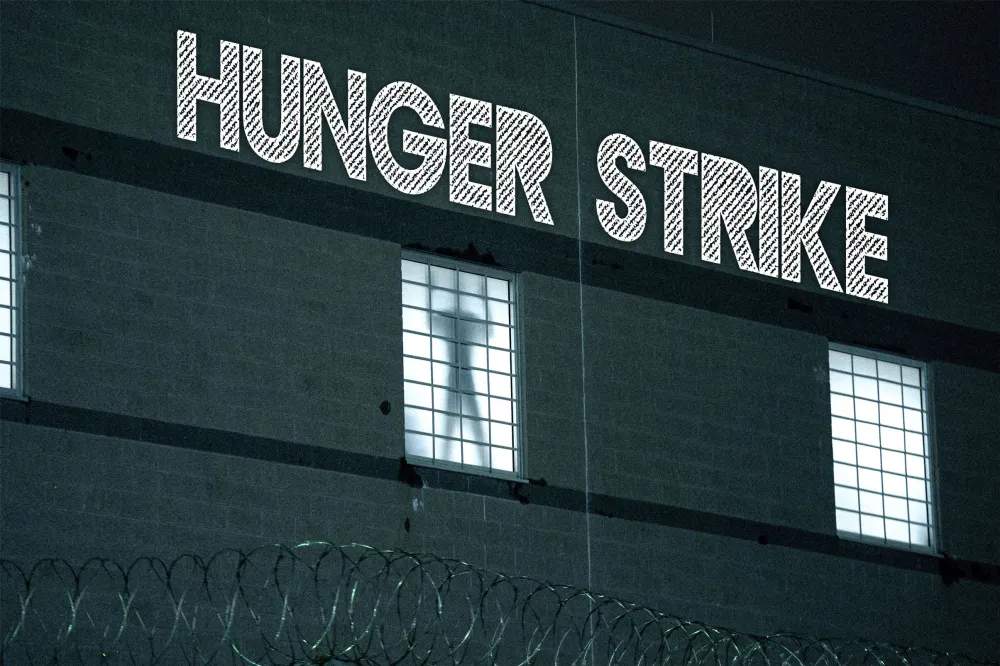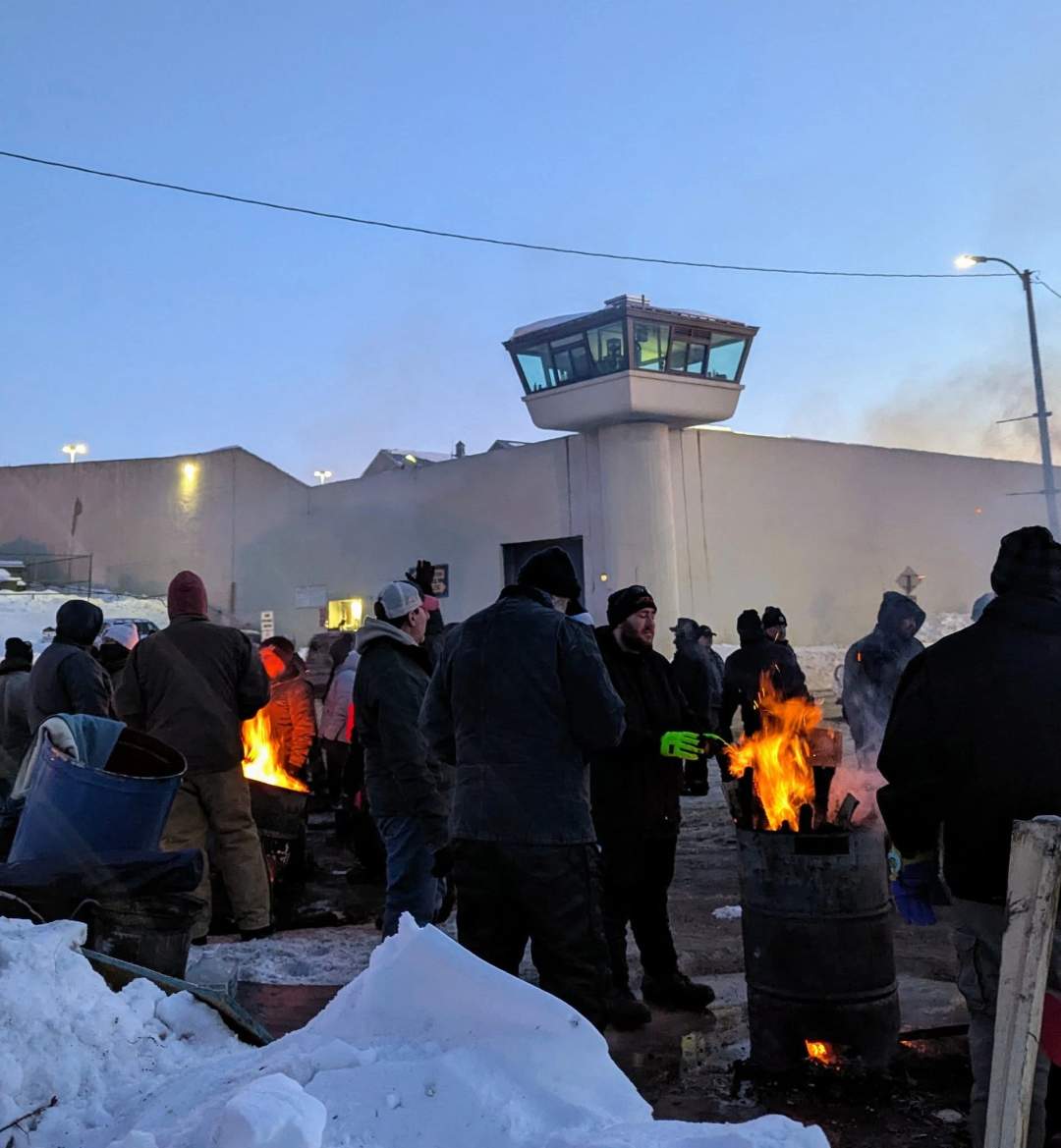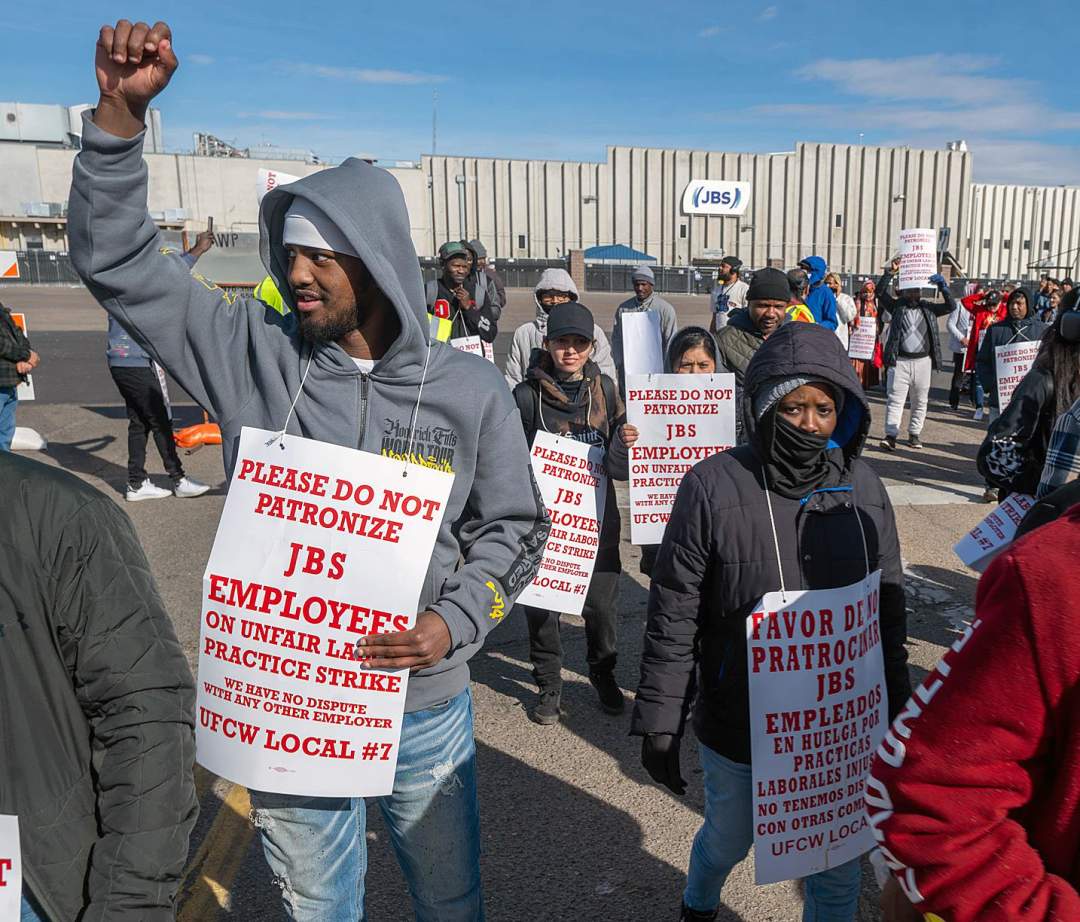

Last month on the 45th anniversary of the Attica Prison Uprising, an international industrial labor union, organized a nationwide prison strike against prison labor. The famous Anarchist union, known as the IWW or Industrial Workers of the World, organized strikes that affected 29 different prisons. Despite this they were virtually ignored by the media. Now a new wave of strikes have begun, starting Saturday Oct. 15th.
prison flag
I know some of you are probably reading this and thinking "WTF?!". Which is why I must give some background to this story that many of you may not be aware of. Simply put, the 13th Amendment of the United States Constitution DID NOT END SLAVERY. Yes, you read that right. In fact what it did was make slavery legal as long as the state is the slave master and the slave is a felon. This is why prisoners are allowed to be treated the way they are and allowed to be worked with no compensation. Presently there is a large movement to abolish the 13th Amendment. And just in case you don't believe me I have included the full wording of the amendment.
AMENDMENT XIII
Section 1.
Neither slavery nor involuntary servitude, except as a punishment for crime whereof the party shall have been duly convicted, shall exist within the United States, or any place subject to their jurisdiction.
Section 2.
Congress shall have power to enforce this article by appropriate legislation.
Passed by Congress January 31, 1865. Ratified December 6, 1865.
Note: A portion of Article IV, section 2, of the Constitution was superseded by the
13th amendment.
Strikes Affect 29 Prisons, Alabama Guards Join Prisoners On Strike
Last month the legendary Anarchist Union, the Industrial Workers of the World, organized a mass work and hunger strike in prisons across the U.S., even reaching as far as Guantanamo Bay. The strike came on the 45th Anniversary of the Attica Prison Uprising. The action affected more than 29 prisons and more than 29,000 prisoners missed work. While the mainstream media largely ignored the extent of the strike, it was not without significant results. Starting back in April with prisons in Texas and Michigan , the idea quickly evolved into a nationwide plan of action. With riots and resistance in several prisons, leading up September 9th, the official day the strike was to begin. Prisoners in several states began earlier in the week, with prisons in Florida, Austin, and Alabama being put on lockdown. Actions ranged from hunger strikes, to non violent resistance, to full out revolt.
Two facilities in Florida, Gulf and Mayo, were put on lockdown, following prisoner strikes, and hundreds of inmates rioted at Holmes Correctional on the panhandle. One prisoner was killed in South Carolina's Turbeville Facility sparking a massive uprising where an officer was reportedly injured. Activists also took to the streets in cities across the country to show solidarity, but most noteworthy is what transpired at Alabama's Holman prison...
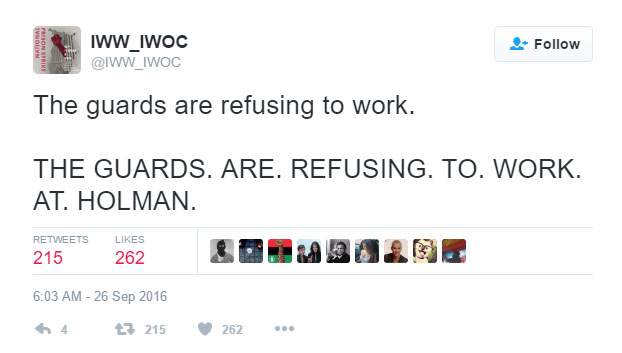
The guards are refusing to work.
THE GUARDS. ARE. REFUSING. TO. WORK. AT. HOLMAN.
— IWW_IWOC (@IWW_IWOC) September 26, 2016
...where after a month of strikes and uprisings the guards finally joined the prisoners in a strike, while albeit maybe not for the same reasons, a strike none the less. Although mainstream media managed to ignore the protest, on Oct. 6th the Dept. Of Justice announced it is opening a statewide investigation into the conditions of Alabama prisons!
A glimpse into the world of a Freedom Fighter... FREE ALABAMA! pic.twitter.com/0fzOFUet4H
— FREEDOM FOR KINETIK (@for_kinetic) September 25, 2016
tweet
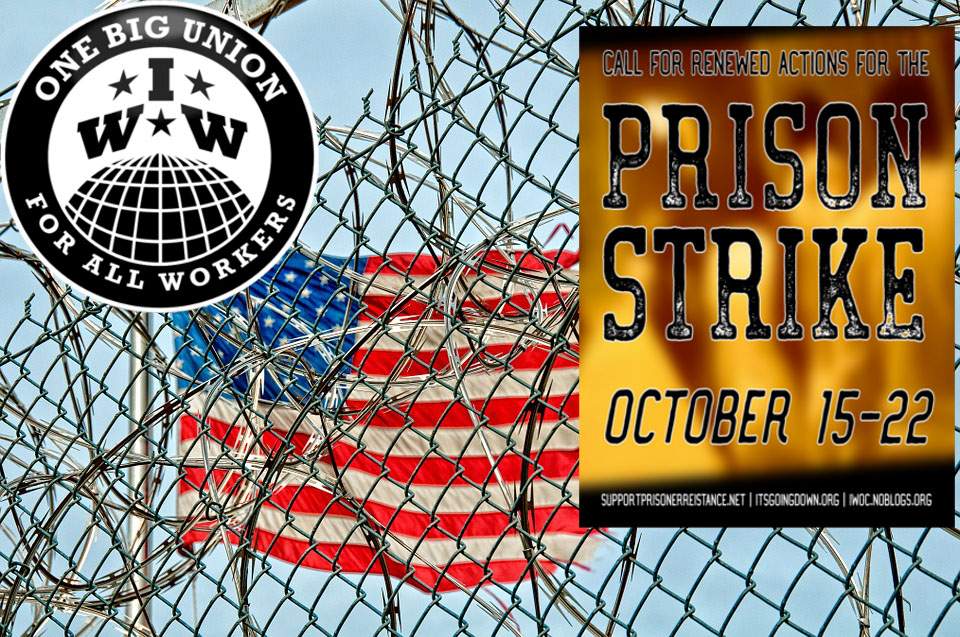
Call For Renewed Actions
Starting Saturday a new wave of strikes began, with expectations high after seeing results from last months efforts. The statement calling for renewed action has been published below. It is at this point that I must offer some suggestions to Anons looking for a theme or sign idea for their local Million Mask March. With the number of Anons in prison for resistance to the system, supporting this strike at the march will help show solidarity with not only incarcerated Anons, but also with groups like the IWW, who are the real forerunners of Anonymous.
Therefore, we would like to offer a call for renewed actions in solidarity with the prison strike and the struggle against prison society. Right now many are organizing anti-repression campaigns for striking prisoners and that is of course very necessary and not nearly as exciting work. But it would be a mistake to conceive of this struggle in a linear fashion—that is to say, a single wave where we demonstrate as it crests and write letters as it crashes. How many prisoners hadn’t heard about the strike until after it had started? How many knew but didn’t think people would actually be there to support them? Three weeks after the start of the strike, inmates in Turbeville, South Carolina rebelled against a guard and took over their dorm . How can we stop while inmates are still risking their lives for freedom?
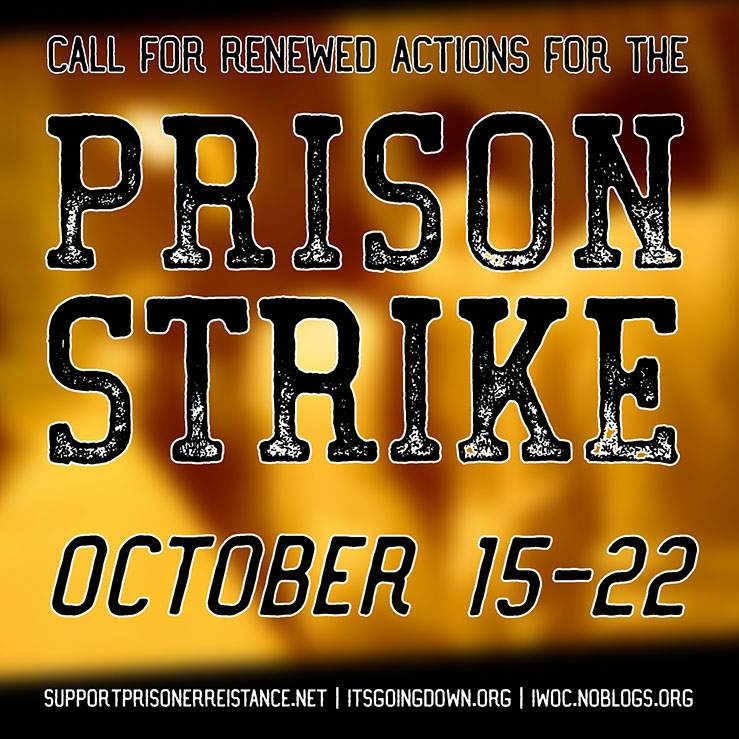
We propose the week of October 15th – 22nd for a concentration of actions to remind everyone locked up by the State that we will always have their back. Once again, it is important to take these dates with a grain of salt. No one’s going to judge you if you take action on October 23rd, or in November, or even in 2017. Neither should anyone sit on their hands waiting for the 15th to get going. New Year’s Eve should also be kept in mind, which has traditionally seen noise demonstrations outside of prisons every year, despite being an equally arbitrary date.
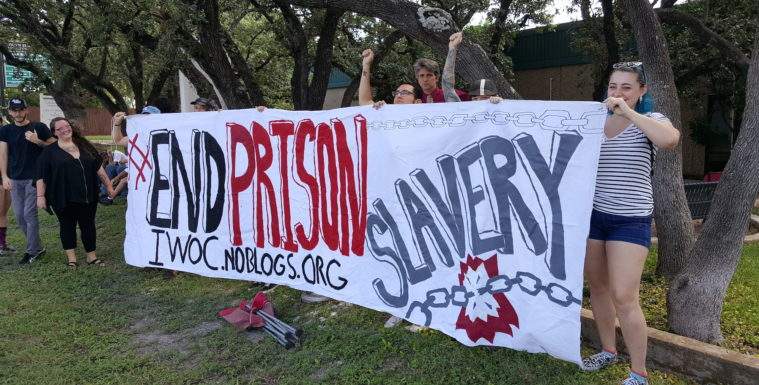
prison protest
How to Help the Strike
- Share these concrete tools with prison strikers and those taking action. Write to prisons, get involved.
- Make a donation to IWOC, subscribe to their newsletter, and buy a t-shirt from Free Alabama Movement.
- Cover the walls with graffiti and posters.
- Organize an action and send in a report to IGD.
- Support those arrested taking action in solidarity with the strike.
- Expand the strike, deepen it, and make it grow.
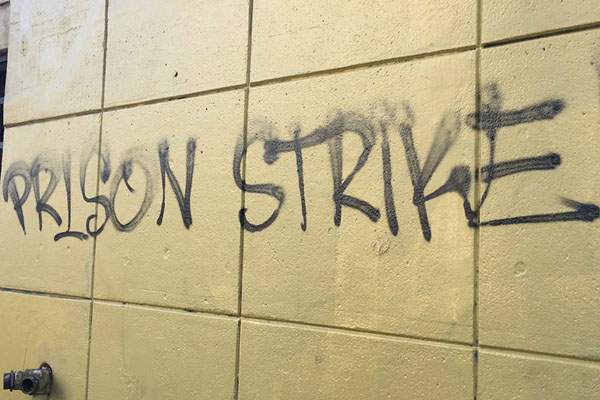
prison strike
Announcement of Nationally Coordinated Prisoner Work stoppage for Sept 9, 2016
The following is a press release from the IWW's Incarcerated Workers Organizing Committee from Sept. 9th . As always I have included more links in the sources below if you wish to learn more.
Prisoners from across the United States have just released this call to action for a nationally coordinated prisoner work stoppage against prison slavery to take place on September 9th, 2016.
This is a Call to Action Against Slavery in America
In one voice, rising from the cells of long term solitary confinement, echoed in the dormitories and cell blocks from Virginia to Oregon, we prisoners across the United States vow to finally end slavery in 2016.
On September 9th of 1971 prisoners took over and shut down Attica, New York State’s most notorious prison. On September 9th of 2016, we will begin an action to shut down prisons all across this country. We will not only demand the end to prison slavery, we will end it ourselves by ceasing to be slaves.
In the 1970s the US prison system was crumbling. In Walpole, San Quentin, Soledad, Angola and many other prisons, people were standing up, fighting and taking ownership of their lives and bodies back from the plantation prisons. For the last six years we have remembered and renewed that struggle. In the interim, the prisoner population has ballooned and technologies of control and confinement have developed into the most sophisticated and repressive in world history. The prisons have become more dependent on slavery and torture to maintain their stability.
Prisoners are forced to work for little or no pay. That is slavery. The 13th amendment to the US constitution maintains a legal exception for continued slavery in US prisons. It states “neither slavery nor involuntary servitude, except as a punishment for crime whereof the party shall have been duly convicted, shall exist within the United States.” Overseers watch over our every move, and if we do not perform our appointed tasks to their liking, we are punished. They may have replaced the whip with pepper spray, but many of the other torments remain: isolation, restraint positions, stripping off our clothes and investigating our bodies as though we are animals.
Slavery is alive and well in the prison system, but by the end of this year, it won’t be anymore. This is a call to end slavery in America. This call goes directly to the slaves themselves. We are not making demands or requests of our captors, we are calling ourselves to action. To every prisoner in every state and federal institution across this land, we call on you to stop being a slave, to let the crops rot in the plantation fields, to go on strike and cease reproducing the institutions of your confinement.
This is a call for a nation-wide prisoner work stoppage to end prison slavery, starting on September 9th, 2016. They cannot run these facilities without us.
Non-violent protests, work stoppages, hunger strikes and other refusals to participate in prison routines and needs have increased in recent years. The 2010 Georgia prison strike, the massive rolling California hunger strikes, the Free Alabama Movement’s 2014 work stoppage, have gathered the most attention, but they are far from the only demonstrations of prisoner power. Large, sometimes effective hunger strikes have broken out at Ohio State Penitentiary, at Menard Correctional in Illinois, at Red Onion in Virginia as well as many other prisons. The burgeoning resistance movement is diverse and interconnected, including immigrant detention centers, women’s prisons and juvenile facilities. Last fall, women prisoners at Yuba County Jail in California joined a hunger strike initiated by women held in immigrant detention centers in California, Colorado and Texas.
Prisoners all across the country regularly engage in myriad demonstrations of power on the inside. They have most often done so with convict solidarity, building coalitions across race lines and gang lines to confront the common oppressor.
Forty-five years after Attica, the waves of change are returning to America’s prisons. This September we hope to coordinate and generalize these protests, to build them into a single tidal shift that the American prison system cannot ignore or withstand. We hope to end prison slavery by making it impossible, by refusing to be slaves any longer.
To achieve this goal, we need support from people on the outside. A prison is an easy-lockdown environment, a place of control and confinement where repression is built into every stone wall and chain link, every gesture and routine. When we stand up to these authorities, they come down on us, and the only protection we have is solidarity from the outside. Mass incarceration, whether in private or state-run facilities is a scheme where slave catchers patrol our neighborhoods and monitor our lives. It requires mass criminalization. Our tribulations on the inside are a tool used to control our families and communities on the outside. Certain Americans live every day under not only the threat of extra-judicial execution—as protests surrounding the deaths of Mike Brown, Tamir Rice, Sandra Bland and so many others have drawn long overdue attention to—but also under the threat of capture, of being thrown into these plantations, shackled and forced to work.
Our protest against prison slavery is a protest against the school to prison pipeline, a protest against police terror, a protest against post-release controls. When we abolish slavery, they’ll lose much of their incentive to lock up our children, they’ll stop building traps to pull back those who they’ve released. When we remove the economic motive and grease of our forced labor from the US prison system, the entire structure of courts and police, of control and slave-catching must shift to accommodate us as humans, rather than slaves.
Prison impacts everyone, when we stand up and refuse on September 9th, 2016, we need to know our friends, families and allies on the outside will have our backs. This spring and summer will be seasons of organizing, of spreading the word, building the networks of solidarity and showing that we’re serious and what we’re capable of.
Step up, stand up, and join us.
Against prison slavery.
For liberation of all.
Sources & Methodology(24 sources)
- anonresistance.am.dxNews Article
- twitter.com/anonyresistanceNews Article
- anarchylive.noblogs.orgNews Article
- iwoc.noblogs.orgNews Article
- www.texasobserver.org/austin-iwoc-protestNews Article
- iww.orgNews Article
- twitter.com/IWW_IWOC/status/780392240740904960News Article
Methodology
This article was originally published on the Anon Resistance News website (anonresistance.news) and has been migrated to UnTelevised Media.
Filed Under
Frequently Asked Questions
- What is the IWW prison strike?
- The Industrial Workers of the World (IWW) organized a nationwide prison strike on the 45th anniversary of the Attica Prison Uprising. Prisoners in 29 facilities refused to work in protest of prison slave labor conditions, with a new wave of strikes beginning October 15, 2016.
- Why is prison labor considered a form of slavery?
- The 13th Amendment abolished slavery "except as a punishment for crime." This constitutional exception allows prisons to compel inmate labor — often for cents per hour supplied to corporations — which critics including the IWW call modern-day slavery.
- Why did the media largely ignore the prison strike?
- Despite affecting 29 prisons in a coordinated nationwide action, the prison strike received virtually no mainstream media coverage. The media silence was highlighted as part of the broader pattern of ignoring issues affecting incarcerated people.
- What was unique about the Alabama prison guard strike?
- In a historic development, Alabama prison guards joined prisoners in a work stoppage, refusing to report to work in solidarity. This cross-class action between guards and prisoners was unprecedented in US prison history.