
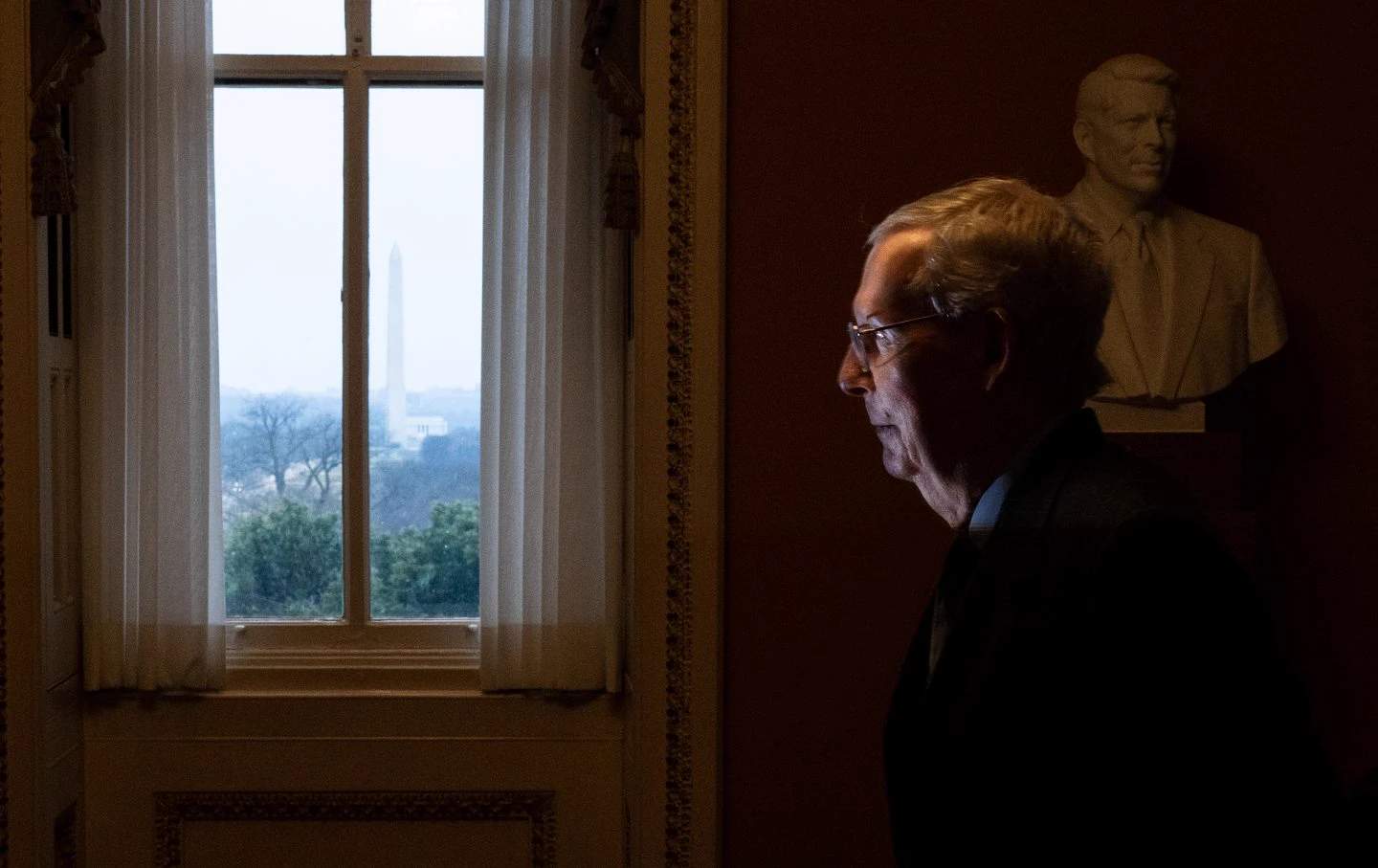
Mitch McConnell entered the United States Senate in 1985 and immediately began selling access, blocking reform, and using his power to enrich the industries that bought him. From his days as an interloper on behalf of tobacco giants to his decades-long campaign to flood American politics with dark money, McConnell has been the single most destructive force in the modern corruption of American governance.
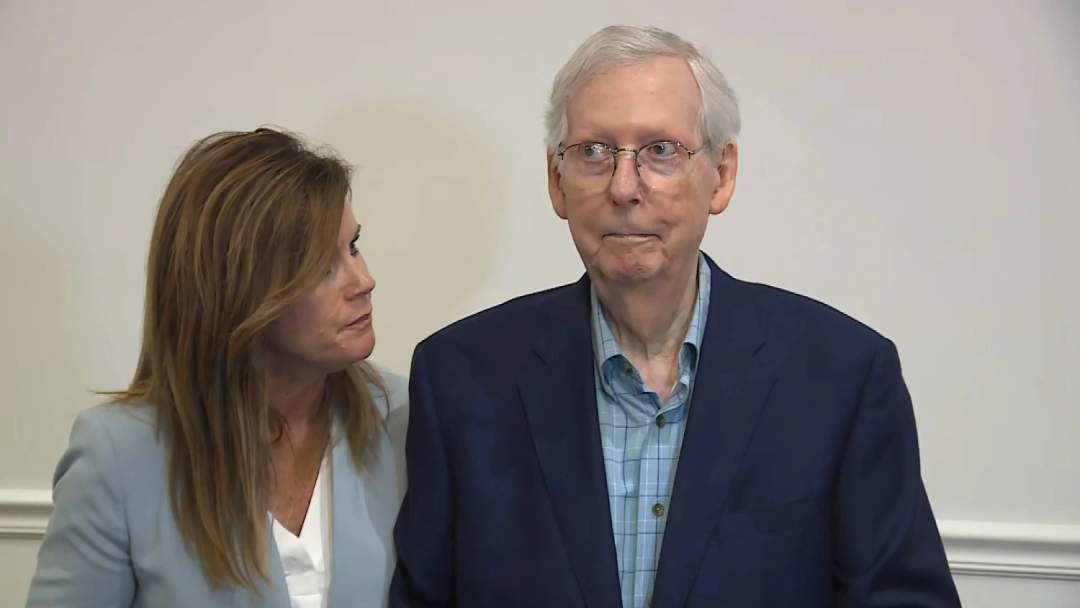
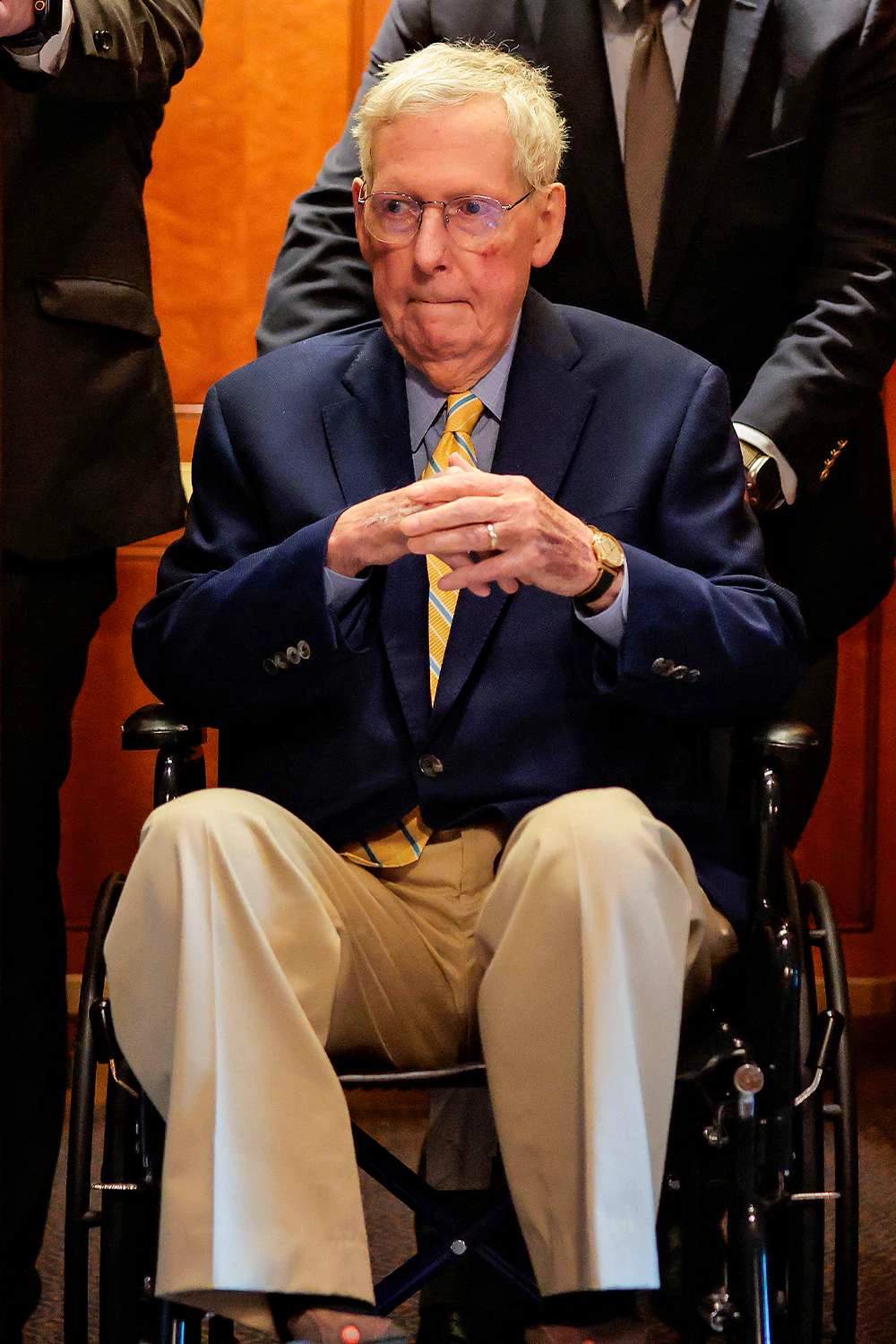
Now, as the 84-year-old senator lies in a hospital bed after cardiac arrest — possibly unconscious, possibly in a vegetative state, certainly unable to perform his duties — his party is engaged in a desperate cover-up to exploit his heartbeat for political advantage. The same man who spent four decades treating institutions as instruments is now being treated as one himself. But before we get to that grotesque endgame, it is worth examining the full scope of the damage one man has inflicted on the republic.
This is not a story about policy disagreements. It is a story about corruption — the legal, systematic, deliberate corruption of American democracy by its most dedicated practitioner.
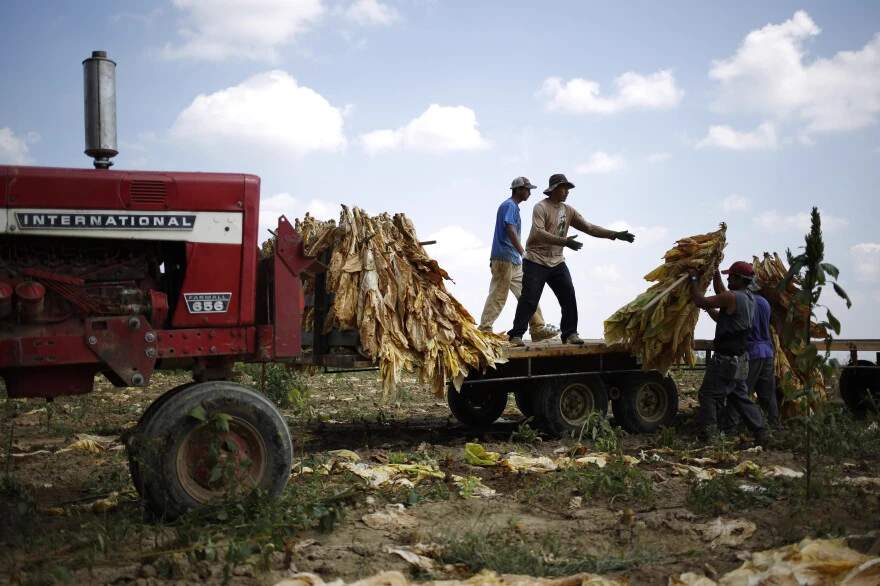
Workers in a field of tall green tobacco plants harvesting tobacco leaves in rural Kentucky
Chapter one: tobacco's "special friend"
Before Mitch McConnell was a senator, he understood the game. He clerked for a federal judge, worked in the Nixon administration, and served as a deputy assistant attorney general — but his real education came from the intersection of Kentucky politics and the tobacco industry that dominated his home state.
Kentucky was tobacco country. The cash crop defined the economy, the politics, and the culture. And when McConnell ran for the Senate in 1984, he understood which side his bread was buttered on.
Internal tobacco industry documents — released through litigation and now searchable online — reveal the depth of McConnell's relationship with the industry that would become his longest and most profitable partnership. An R.J. Reynolds lobbyist called McConnell a "special friend" to the company in a 1996 memo. The tobacco industry provided McConnell with millions of dollars in speaking fees, personal gifts, campaign contributions, and charitable donations to the McConnell Center at the University of Louisville, which houses his personal and professional archives.
In return, McConnell delivered.
NPR's investigation into the documents found that McConnell repeatedly cast doubt on the health consequences of smoking, repeated industry talking points word-for-word on the Senate floor, attacked federal regulators at the industry's request, and opposed bipartisan tobacco regulations going back decades. He received more than $600,000 in campaign contributions from tobacco interests over his career — more than any other member of Congress.
The toll of McConnell's obstruction was measured in lives. Cigarette smoking kills an estimated 480,000 Americans every year. Nearly 9,000 Kentuckians die annually from smoking-related illness. Kentucky spends $1.9 billion on smoking-related health problems. And for decades, the senator representing the state with the highest cancer rate in the nation was doing the tobacco industry's bidding in Washington.
When Senator John McCain confronted McConnell on the Senate floor about a colleague encouraging senators to vote against tobacco regulation because "the tobacco companies will run ads in our favor," McCain didn't need to name names. Everyone knew who he was talking about.
"For there to be corruption," McConnell responded, "someone must be corrupt."
Chapter two: the dark money architect
McConnell's most consequential contribution to American corruption was not any single vote or any single industry deal. It was his philosophical and legal crusade to ensure that money could flow freely into politics without restriction or disclosure.
Long before the Supreme Court's Citizens United decision in 2010, McConnell was the Senate's most vocal opponent of campaign finance reform. He opposed the Bipartisan Campaign Reform Act of 2002 (McCain-Feingold), which banned soft money in federal elections. He filed lawsuits against it. He argued that any restriction on political spending was a violation of free speech — and that the American people had no right to know who was buying their elections.
His position was consistent, and it was devastating. By framing unlimited corporate spending as a First Amendment right, McConnell laid the intellectual groundwork for the Citizens United decision that opened the floodgates. When the ruling came down, he celebrated. "For all the gloom and doom you've been hearing, what happened today is that the First Amendment was vindicated," he said.
Since Citizens United, billions of dollars in dark money have poured into American elections. Super PACs, 501(c)(4) organizations, and shell entities have made it possible for wealthy donors and corporations to influence elections without any public disclosure. McConnell didn't just enable this system — he architected it.
He argued for more money in politics. He fought disclosure requirements. He defended anonymous political spending. And every dollar of dark money that corrupts American democracy today carries McConnell's fingerprints.
Chapter three: Moscow Mitch and the Deripaska deal
McConnell's corruption is not limited to domestic policy. His relationship with Russian oligarch Oleg Deripaska — a close ally of Vladimir Putin who was under FBI investigation for involvement in 2016 election meddling — revealed the international dimension of his transactional politics.
In 2019, McConnell took a leading role in lifting sanctions on Deripaska, overriding bipartisan objections and torpedoing an effort by Republican and Democratic senators alike to maintain the penalties. Within months of the sanctions being lifted, Deripaska's aluminum company, Rusal, announced a $200 million investment in an aluminum plant in Kentucky.
The plant was never built. The jobs never materialized. But the transaction was clear: McConnell protected a Russian oligarch under federal investigation, and in return, his home state was promised an economic windfall that never arrived.
Former U.S. Ambassador to Russia Michael McFaul called the arrangement "shocking" in its blatancy. Russia itself was so grateful that it banned McConnell from entering the country — alongside other American officials sanctioned in retaliation, a designation McConnell seemingly wore as a badge of honor.
This was the man who earned the nickname "Moscow Mitch" — not for being a Russian agent, but for being willing to sell out American national security for the promise of economic development in his home state, even when that development was a mirage.
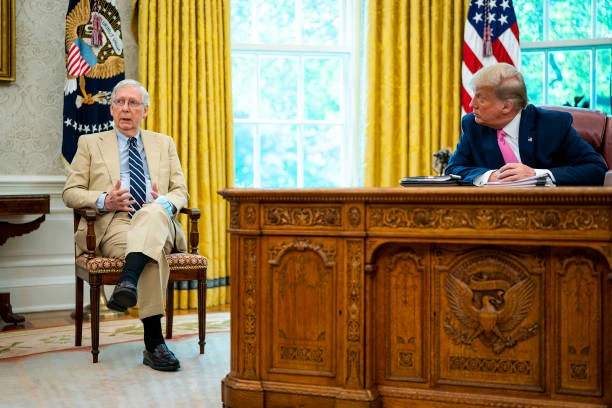
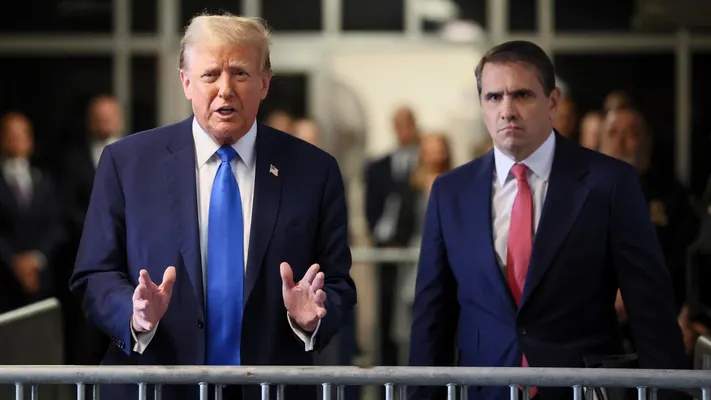
Mitch McConnell seated and listening as Donald Trump speaks at a meeting with other officials present
Chapter four: the Supreme Court heist
No single act of McConnell's career was more consequential — or more corrosive to democratic norms — than his manipulation of the Supreme Court confirmation process.
In February 2016, Justice Antonin Scalia died unexpectedly. President Barack Obama, with nearly a year remaining in his term, nominated Merrick Garland — a moderate, widely-respected appellate judge — to fill the vacancy. McConnell blocked the nomination entirely, refusing to even hold a hearing. His rationale: it was an election year, and the American people should decide.
Never mind that Obama had been elected by the American people. Never mind that he had 11 months left in his term. Never mind that the Senate had confirmed justices in election years before. McConnell invented a new rule, held the seat open for 14 months, and handed it to Donald Trump, who nominated Neil Gorsuch.
Then, in 2020, when Justice Ruth Bader Ginsburg died just 46 days before the presidential election, McConnell abandoned his own invented rule entirely. He rushed Amy Coney Barrett's confirmation through the Senate in barely a week, creating a 6-3 conservative majority that has since dismantled abortion rights, gutted environmental protections, and undermined the administrative state.
"I said that we would fill it," McConnell later said, explaining his reversal without embarrassment. "I said it because we could."
The hypocrisy was not a bug. It was the entire point. McConnell's guiding principle was never consistency or principle — it was power. Whatever configuration maximized Republican advantage at any given moment was the configuration McConnell pursued. The Supreme Court is his monument: three justices confirmed through processes he manipulated, serving lifetime appointments that will shape American law for a generation.
Chapter five: the voting rights warrior against voting rights
Throughout his career, McConnell has been the Senate's most reliable opponent of voting rights legislation. He opposed the Voting Rights Act reauthorization. He opposed the John Lewis Voting Rights Advancement Act. He opposed the For the People Act. He opposed every effort to expand access to the ballot.
His opposition was rooted in the same political calculation that drove everything else: fewer voters meant better outcomes for Republicans. Study after study has shown that higher turnout favors Democratic candidates. McConnell understood this at a molecular level, and he used every tool at his disposal — from legislative obstruction to judicial appointments — to keep turnout as low as possible.
He opposed automatic voter registration. He opposed mail-in voting. He opposed early voting. He opposed measures to make Election Day a holiday. When states implemented reforms that increased turnout, he attacked them as threats to "election integrity."
The irony is that McConnell built his career on a system he worked relentlessly to undermine. He understood, perhaps better than any of his colleagues, that democracy's greatest vulnerability is the willingness of its custodians to subvert it.
Chapter six: Elaine Chao and the family business of politics
McConnell's marriage to Elaine Chao in 1993 opened a second front in his corruption career. Chao, who served as Labor Secretary under George W. Bush and Transportation Secretary under Donald Trump, brought with her connections to her father's shipping empire and deep ties to the Chinese Communist Party.
James Chao, Elaine's father, is a Chinese-American shipping magnate and close friend of former Chinese dictator Jiang Zemin. In 2008, he and his wife gave McConnell and Elaine a personal gift that boosted the senator's net worth from less than $8 million to nearly $20 million — a transaction that raised eyebrows but was never investigated.
As Transportation Secretary, Elaine Chao set up a pipeline to funnel grants to Kentucky, raising questions about whether taxpayer money was being directed to boost her husband's political prospects. An Inspector General investigation found that Chao's staff coordinated extensively with McConnell's office on grant announcements.
The intersection of McConnell's Senate seat, Chao's cabinet position, and the Chao family's international business interests created a web of conflicts of interest that would have been scandalous in any normal political environment. In McConnell's Washington, it was just business as usual.
Those same Chao family connections to Beijing are now casting a shadow over McConnell's deathbed. As we reported in our breaking investigation of McConnell's health crisis, Elaine Chao was photographed meeting with Chinese Vice President Han Zheng in Beijing just three days after her husband suffered cardiac arrest and received CPR. The person closest to McConnell — the one with presumably the most authority over his medical decisions — was on another continent, conducting personal diplomacy while her husband potentially lay unconscious in a Washington hospital. The pattern holds: the Chao family's priorities have always run through Beijing, and McConnell's health is no exception.
Chapter seven: the black lung miners McConnell abandoned
Perhaps no story better encapsulates McConnell's relationship with the working people of Kentucky than the black lung miners of Harlan County.
In 2019, a group of former coal miners suffering from black lung disease — a debilitating, often fatal respiratory condition caused by years of breathing coal dust — caravaned to Washington to ask their senator for help. Their company had declared bankruptcy without warning and refused to pay their final paychecks. The miners were blocking railroad tracks in Harlan County to prevent the shipment of $1 million worth of coal.
McConnell met with them for two minutes. Two minutes. Men dying from a disease they contracted working in Kentucky's mines got 120 seconds with the senator who had represented them for 34 years.
He did not visit the protest. He did not support their cause. He did nothing.
Practically every story about the Harlan County blockade featured the miners cursing McConnell by name. "He's not pro-coal," said miner Collin Cornette. "I don't even think he's pro-Kentucky."
The legacy of a man who sold America
Mitch McConnell's career is a masterclass in how corruption operates in plain sight. He never went to prison. He was never indicted. He operated entirely within the boundaries of a system he helped design — a system in which campaign contributions are speech, corporate money is freedom, and the only crime is getting caught.
But the damage is quantifiable. The tobacco lives lost. The dark money flooding elections. The Supreme Court stolen. The voting rights suppressed. The Russian oligarch protected. The miners abandoned. The democratic norms demolished.
McConnell called himself the "Grim Reaper" — the senator who buried progressive legislation. But the body count of his career extends far beyond failed bills. He has been the architect of American democratic decline for forty years, and the institutions he corrupted will take generations to repair.
Now he lies in a hospital bed, attended by a staff that will not tell the American people the truth about his condition, while his party calculates whether his heartbeat can be exploited to hold a Senate seat through January 2027. His public deterioration — including those disturbing speaking freezes we documented where he went rigid and unresponsive on camera — was the warning. The June 14 cardiac arrest was the crash. And the cover-up that followed is the final chapter of a career built on the principle that power is all that matters, and people are merely instruments.
Mitch McConnell never cared about democracy. He cared about winning. The difference is the measure of his corruption, and the tragedy of the country he leaves behind.
Sources & Methodology(6 sources)
NPR investigation into internal tobacco industry documents revealing McConnell decades-long relationship with the industry.
- Rolling Stone - The Man Who Sold AmericaNews Article
Rolling Stone deep investigation into McConnell career of selling access and blocking reform.
Center for Public Integrity investigation into the industries that funded McConnell career.
NPR report on McConnell decades-long crusade against campaign finance reform and for unlimited political spending.
Investigation into McConnell role in lifting sanctions on Russian oligarch Oleg Deripaska and the Kentucky aluminum plant deal.
Lexington Herald-Leader yearlong investigative series examining McConnell career and ethical record.
Methodology
Reported using internal tobacco industry documents obtained through litigation, investigative reporting from NPR, Rolling Stone, the Center for Public Integrity, and the Lexington Herald-Leader, congressional records, and campaign finance disclosures spanning McConnell's 40-year Senate career.
Filed Under
Frequently Asked Questions
- What was McConnell's relationship with the tobacco industry?
- Internal industry documents revealed McConnell was called a 'special friend' by R.J. Reynolds. He received over $600,000 in tobacco campaign contributions — more than any other member of Congress — and repeatedly defended the industry on the Senate floor.
- How did McConnell enable dark money in American politics?
- McConnell was the Senate's most vocal opponent of campaign finance reform for decades. He framed unlimited corporate spending as a First Amendment right, laying the intellectual groundwork for the Citizens United decision that opened the floodgates to billions in anonymous political spending.
- What was the Deripaska connection?
- McConnell led the effort to lift sanctions on Russian oligarch Oleg Deripaska, who was under FBI investigation for 2016 election meddling. Months later, Deripaska's company promised a $200 million aluminum plant in Kentucky that was never built.
- How did McConnell manipulate the Supreme Court confirmation process?
- In 2016, McConnell blocked Merrick Garland's nomination for 14 months by inventing a new rule about election-year confirmations. In 2020, he abandoned his own rule to rush Amy Coney Barrett's confirmation 46 days before the election.
- What was the Elaine Chao conflict of interest?
- McConnell's wife Elaine Chao served as Transportation Secretary while her father's shipping company had deep ties to the Chinese Communist Party. An Inspector General investigation found her staff coordinated extensively with McConnell's office to direct grants to Kentucky.